
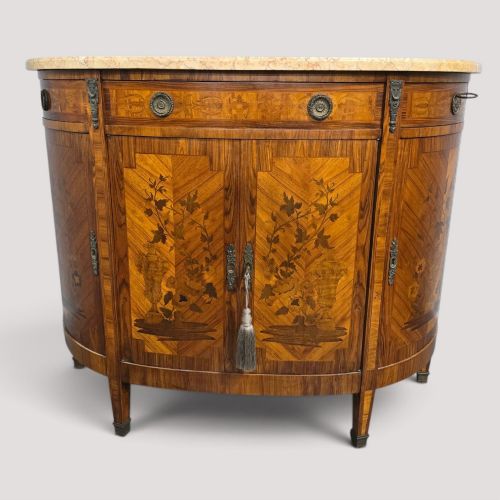

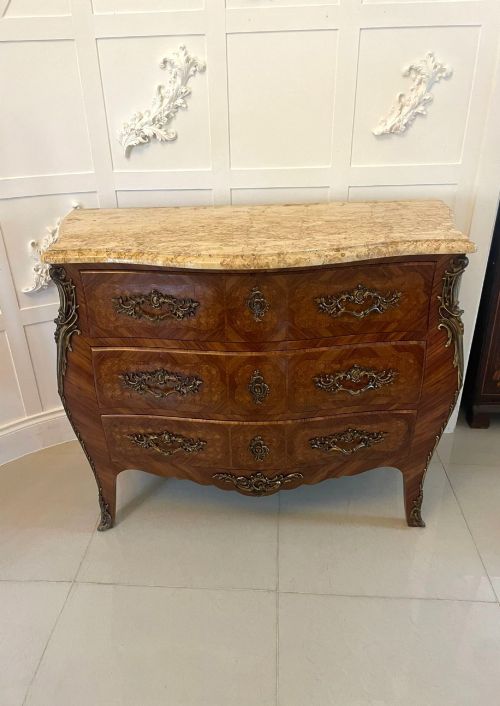
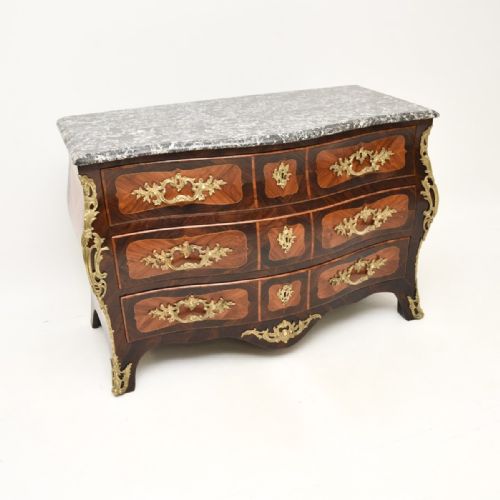
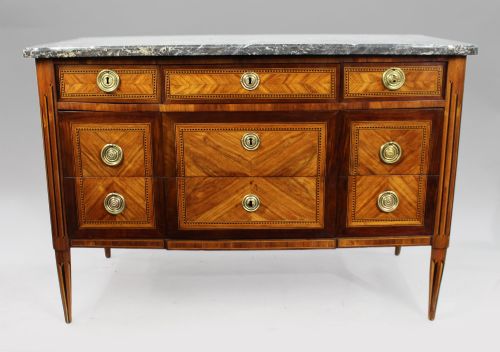
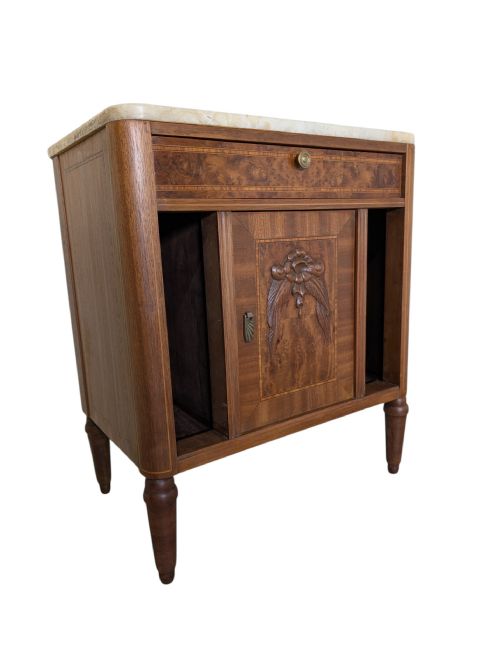
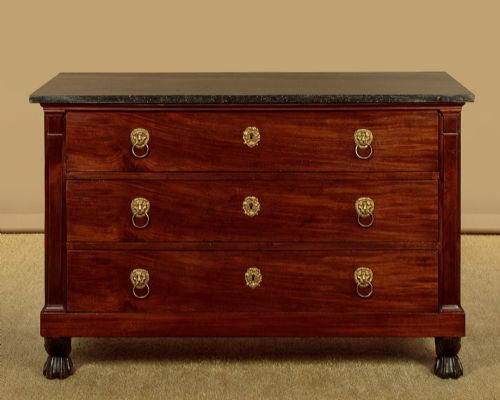
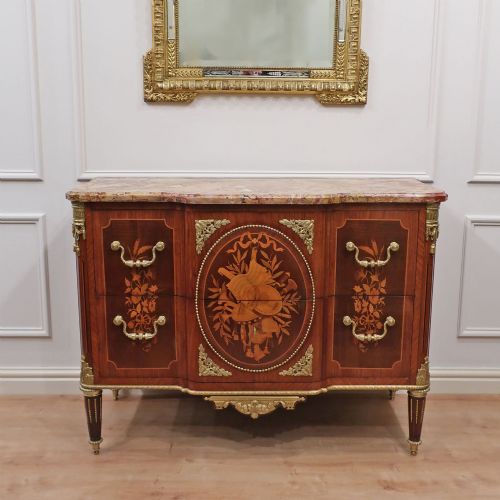
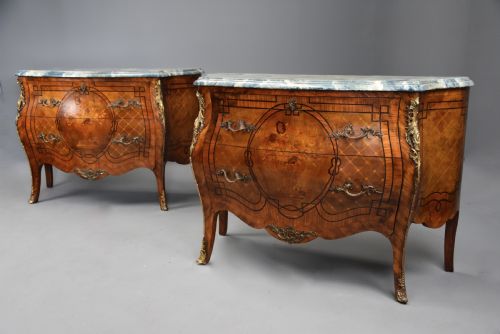
French Marble Commode
When choosing a french marble commode, consider the weight of the stone and the rhythm of the marquetry.

French Marble Commode
A french marble commode is a low chest of drawers topped with polished stone, built primarily for domestic storage in French interiors. The form emerged strongly in the eighteenth century and persisted through later revival periods.
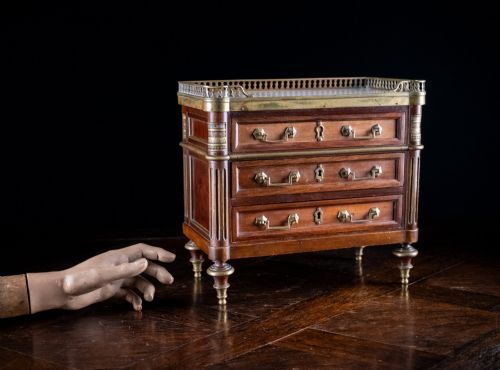
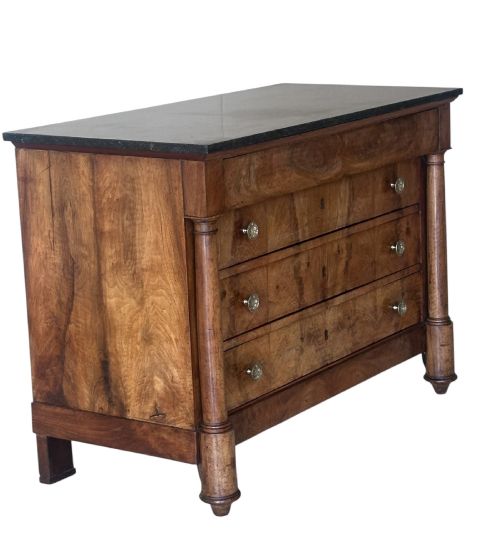
Most examples encountered here date from the nineteenth century or the early twentieth century, drawing heavily on earlier royal motifs. Buyers find everything from substantial walnut chests to petite bedside cabinets.
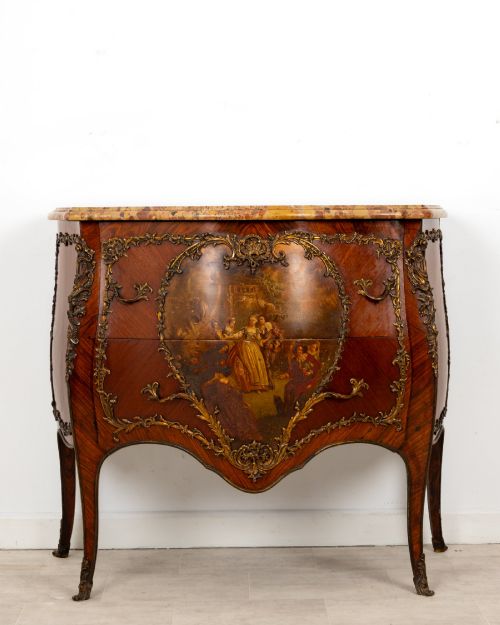
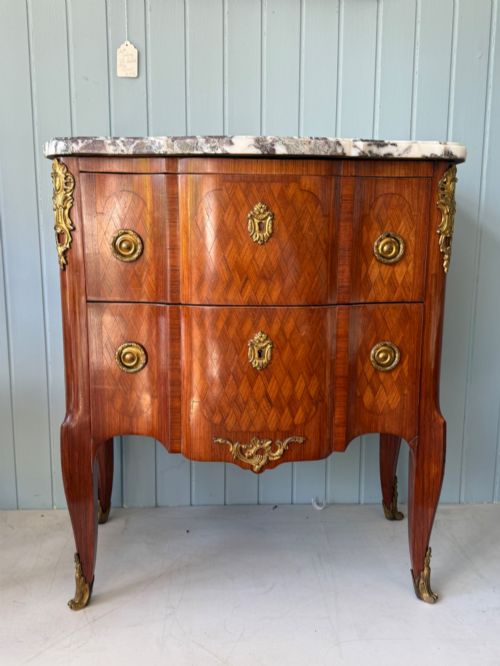
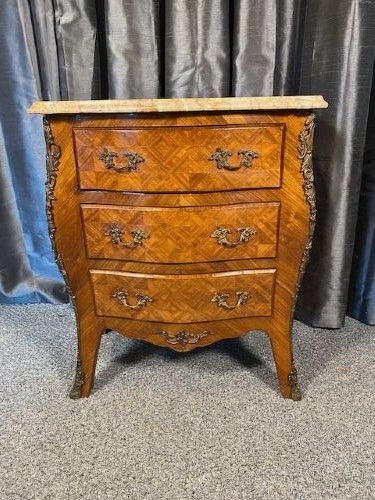
The defining characteristic remains the marriage of timber cabinetry with a fitted slab of marble, which often follows the serpentine or bombe contours of the carcass below.
Materials and Construction
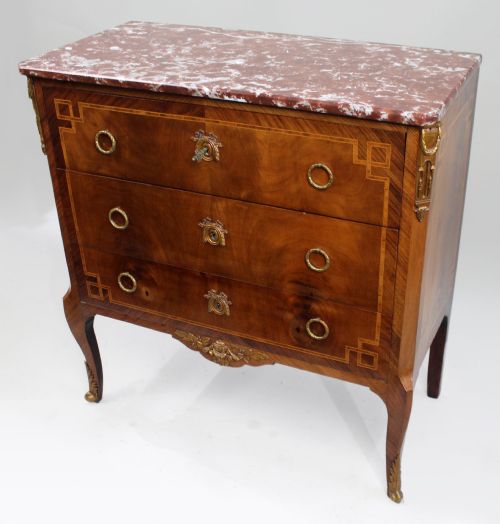
Cabinetmakers constructed the carcases from foundational timbers like oak or pine, then applied decorative veneers such as kingwood, walnut, mahogany, and cherrywood. Marquetry and parquetry patterns involved meticulous hand-cutting of diverse wood species to create geometric or floral motifs.
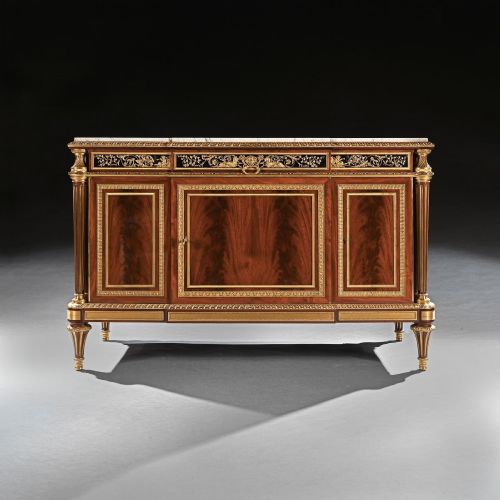
Mounts cast in brass, bronze, or ormolu were chased and applied to corners, handles, and apron centres to accent the lines of the piece. The heavy marble slabs on top were individually selected and shaped to fit the exact profile of each chest.
One notable nineteenth-century bombe commode recorded in the archive carries a proven history of previous ownership by Lilly Langtry.
Assessing Quality
The distinction between tiers rests upon the crispness of the bronze or ormolu chasing and the precision of the wood veneers. Superior pieces display seamless matching in parquetry and tight joinery in the drawer construction.
The quality of the marble top itself dictates much of the value, with thicker slabs possessing rich veining and precise edge-moulding marking the upper echelon of production.
Jacques Bircklé·Henry Dasson·E. Kahn·Bruneau
The French Marble Commode Glossary
- Ormolu
- Gilt bronze mounted onto the cabinetry for decorative effect. This technique involves applying a gold amalgam to bronze.
- Marquetry
- Inlaid wood designs forming pictures or patterns across the surface. Artisans use contrasting veneers to achieve pictorial depth.
- Bombe
- A swelling, outward-curved commode profile. This bulging shape requires advanced skill in veneer application.
- Parquetry
- Geometric wood patterns created by arranging small veneer blocks. It differs from marquetry by sticking to strict repeating angles.
- Vernis Martin
- European lacquer work imitating Asian finishes. This glossy coating was widely utilised on eighteenth and nineteenth-century furniture.
French Marble Commode: Frequently Asked Questions
How do I clean the marble top?
Wipe the surface gently with a soft cloth dampened in warm water and mild soap. Avoid acidic cleaners or vinegar that can etch the polished stone.
Dry the marble thoroughly afterwards to prevent water spots and maintain the natural lustre of the mineral.
Are these chests suitable for daily use?
The drawers offer practical storage for clothing or linens, making them functional additions to modern bedrooms and hallways. The heavy marble top provides a sturdy surface for lamps and decorative objects.
Care should be taken with placement to avoid direct sunlight and extreme humidity fluctuations that affect old timbers.
How do I spot a later revival piece?
Nineteenth and twentieth-century revival pieces often display machine-cut dovetails and standardised hardware beneath the decorative mounts. Examining the secondary timbers inside the drawer linings reveals the true age of the construction.
Stylistic proportions also shift subtly between original eighteenth-century work and later nineteenth-century interpretations.
What causes the variation in marble colours?
Quarry locations dictate the natural mineral impurities present in each stone slab. Grey, white, and rouge variations reflect the specific regional quarries utilised during manufacture.
Each slab was cut and polished to complement the specific wood tones of the commode carcass.