


French Parquetry Nightstand
A french parquetry nightstand brings continental elegance to a bedroom, offering small-scale storage with intricate geometric wood veneers.
French Parquetry Nightstand
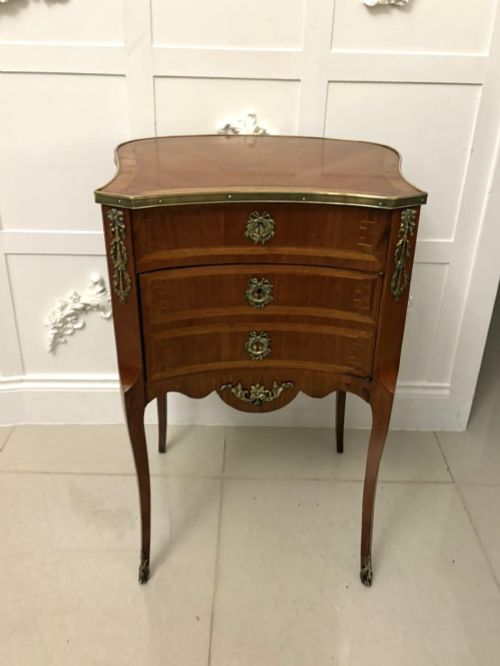
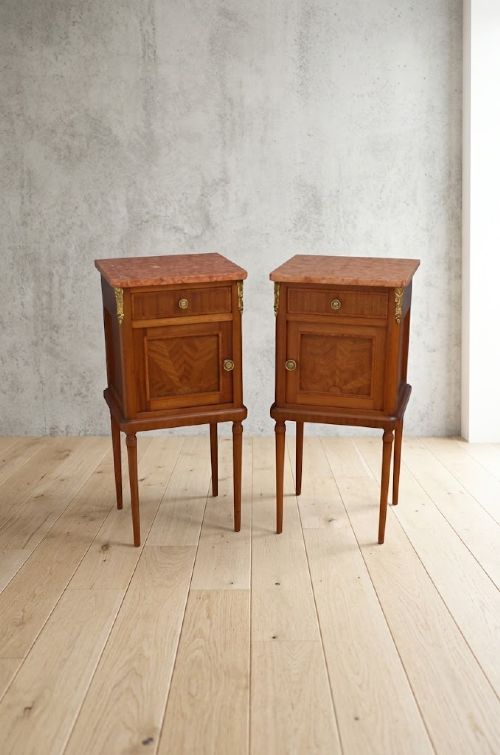
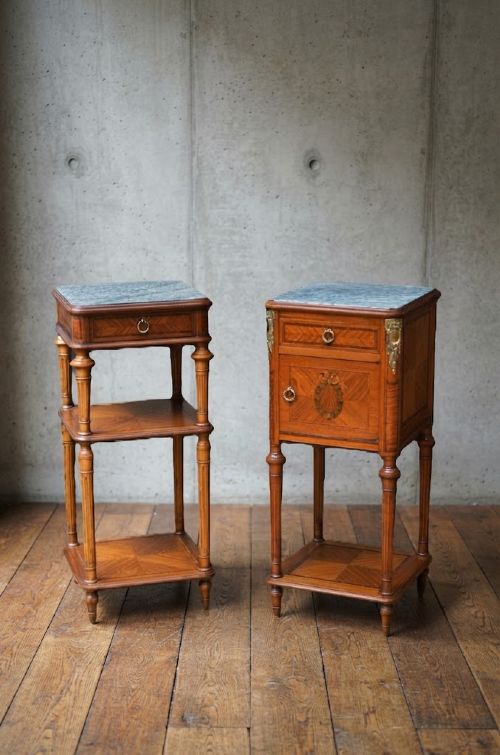
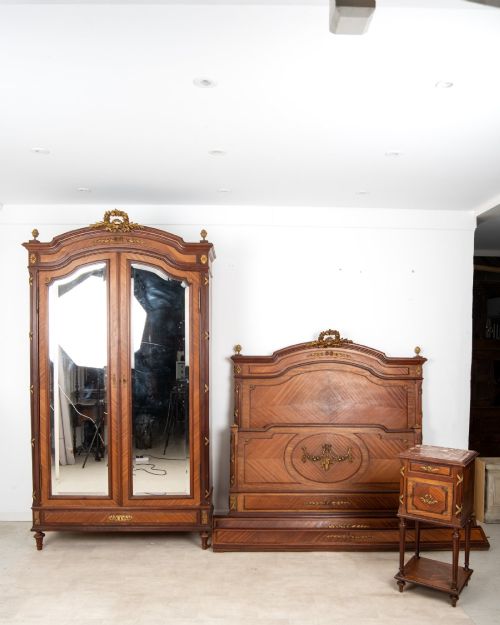
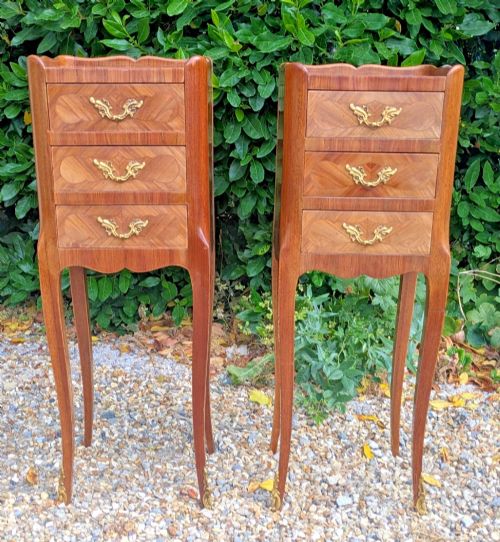
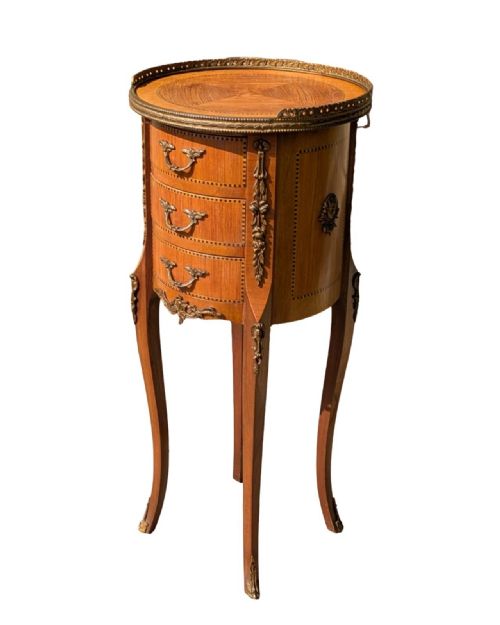
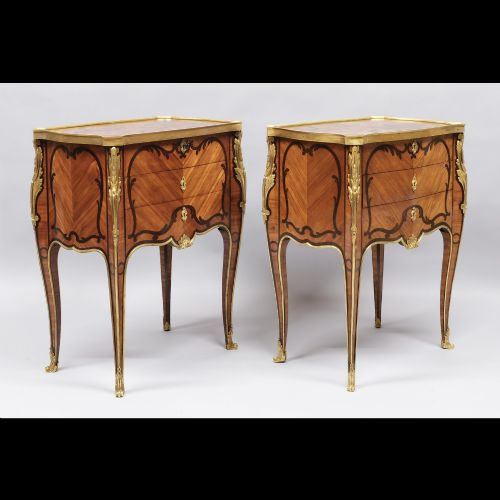
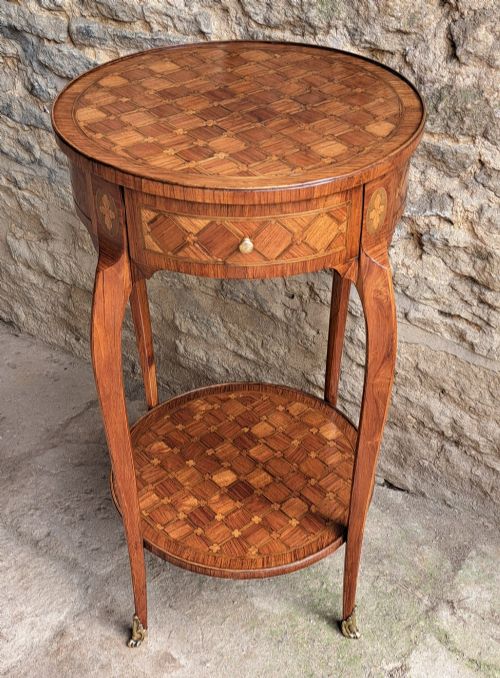
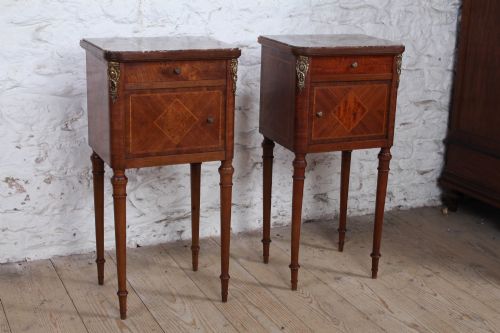
A french parquetry nightstand is typically encountered as a compact bedside cabinet, commode, or small side table originating from the nineteenth and early twentieth centuries. These pieces appear frequently in Louis XV and Louis XVI revival styles, often constructed as matching pairs with practical enclosed cupboards or open tiers.
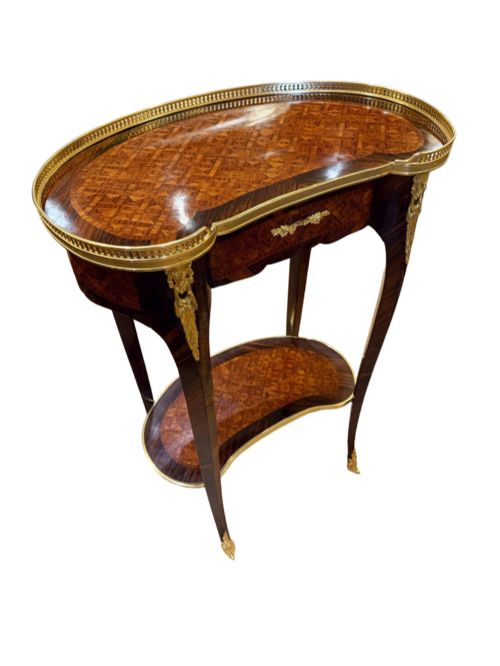
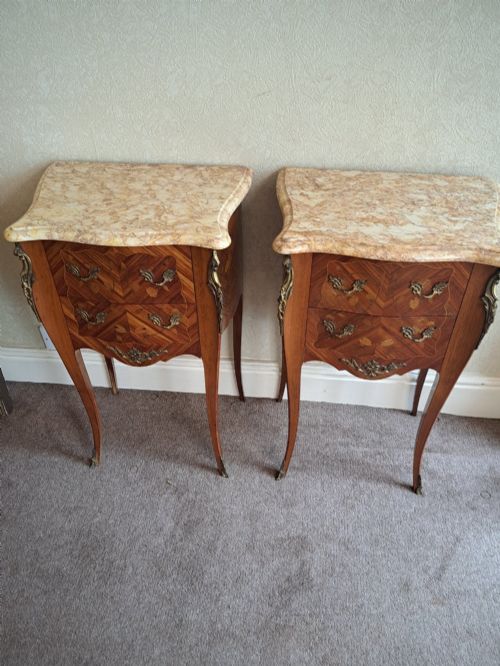
The form developed to serve bedside needs while displaying decorative wood surfaces, frequently topped with fitted marble slabs in white or coloured varieties. Makers balanced utility with ornamentation, producing shapes ranging from straight-sided cupboards to kidney-shaped tables and bombe profiles.
How They Were Made
Craftsmen applied thin veneers of kingwood, satinwood, walnut, and rosewood over solid secondary timbers in precise geometric parquetry and floral marquetry patterns. Brass and ormolu mounts, handles, and sabots were cast and chased to accent the curves of the framework.
Inlaid surfaces required careful hand-fitting of contrasting timber grains, secured with traditional adhesives and finished to highlight the natural colour and figure of the exotic woods. Marble tops were cut, shaped, and polished to fit precisely onto the wooden carcasses of the cabinets.
French Parquetry Nightstand Retail Price Guide 2026
Typical asking prices for french parquetry nightstand among the pieces listed under this phrase on Sellingantiques today, from the lower quarter to the upper quarter. They describe what is for sale here now, not the wider market.
Some nineteenth-century bedside cabinets were manufactured in handed pairs, specifically mirrored so the doors opened away from the bed.
What Varies in Quality
The distinction between standard utility pieces and finer examples rests upon the precision of the veneer work and the crispness of the bronze mounts. Elaborate parquetry arrangements executed in dense timbers like kingwood indicate higher workshop standards than simpler plain-veneered surfaces.
Structural refinement shows in the handling of curved bombe sides, the weight and detail of cast ormolu hardware, and the quality of the fitted marble tops. Original matched pairs with harmonious grain patterns command greater attention than assembled counterparts.
Sormani
The French Parquetry Nightstand Glossary
- Parquetry
- A geometric mosaic of wood veneers arranged in repeating patterns such as cubes, lozenges, or chevrons. This technique decorates flat and curved surfaces on tables and cabinets.
- Ormolu
- Gilded bronze used for decorative mounts, handles, and feet on furniture. The material adds metallic contrast to polished timber veneers.
- Bombe
- A swelling, outward-curved contour found on the sides and fronts of commodes and bedside cabinets. The shape requires specialised joinery and veneer fitting.
- Kingwood
- A dense, richly figured Brazilian timber prized for its dark violet-brown colour and contrasting golden streaks. Cabinetmakers utilised it extensively for high-status French case furniture.
- Sabot
- A metal mount fitted to the foot of a furniture leg to protect the timber and complete the decorative scheme. These terminals often feature cast foliate or scroll details.
French Parquetry Nightstand: Frequently Asked Questions
How do I clean the marble top?
Use a soft cloth dampened with warm water and mild, pH-neutral soap to wipe the surface gently. Avoid acidic cleaners or vinegar, which etch marble and dull the polish.
Dry the stone thoroughly with a clean towel to prevent water spots. For stubborn marks, consult a professional stone restorer rather than using abrasive scouring pads.
Are these tables sturdy enough for daily use?
These pieces were built as functional bedside furniture and handle normal placement of lamps, books, and small personal items easily. The delicate legs and veneered surfaces require sensible handling rather than heavy loading.
Keep them away from direct heat sources and strong sunlight to prevent the timber veneers from drying or splitting over time.
What is the difference between parquetry and marquetry?
Parquetry relies on geometric shapes like squares, triangles, and diamonds to create repeating patterns across a surface. It depends on the precise alignment of angled wood grains.
Marquetry employs pictorial or floral motifs cut from various tinted woods to form decorative pictures. Both techniques often appear together on finer French cabinets.