
French Marquetry Occasional Table
A French marquetry occasional table brings floral inlay and ormolu mounts together to add warmth and continental character to any room.
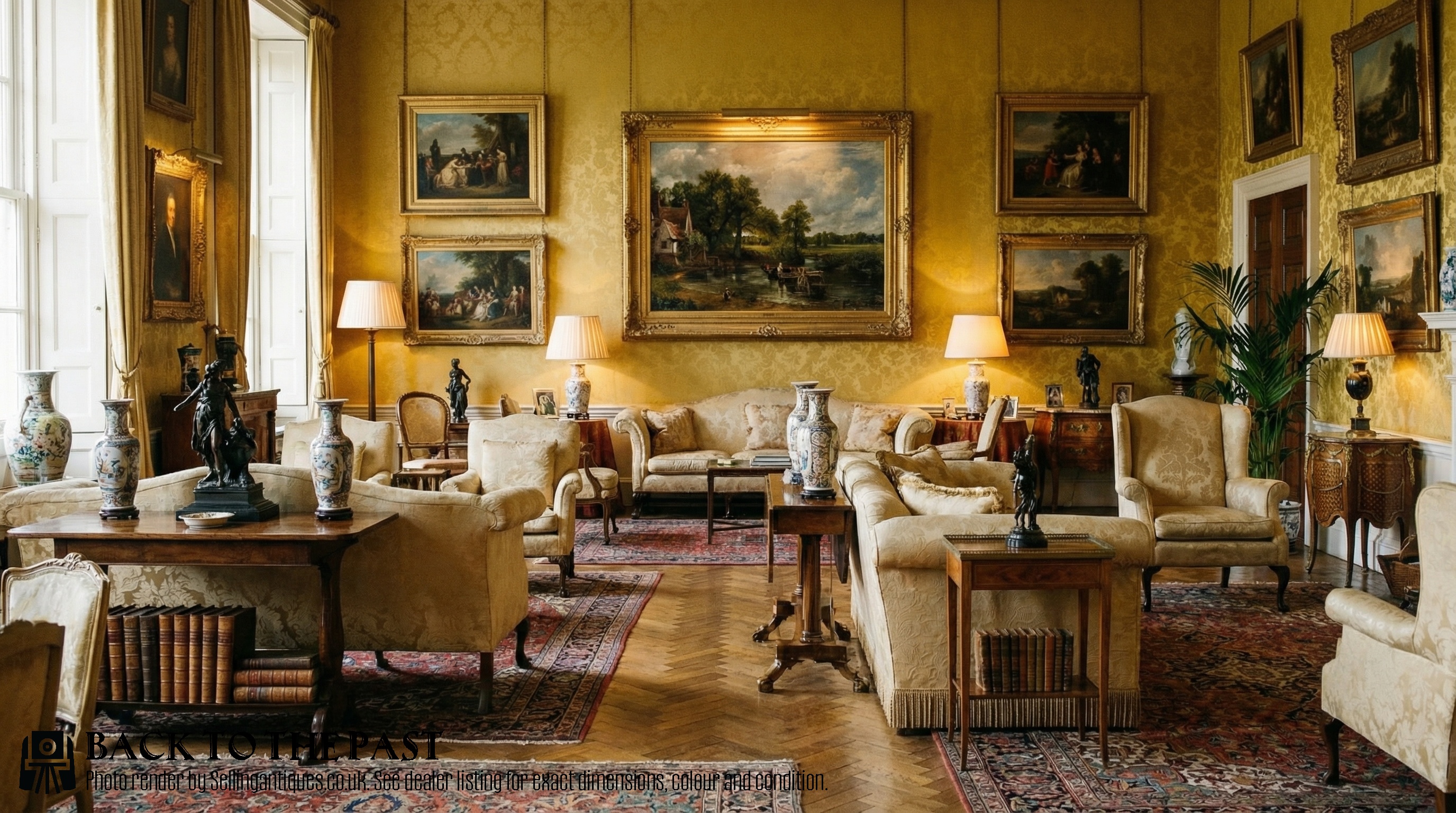
Identifying the French marquetry occasional table
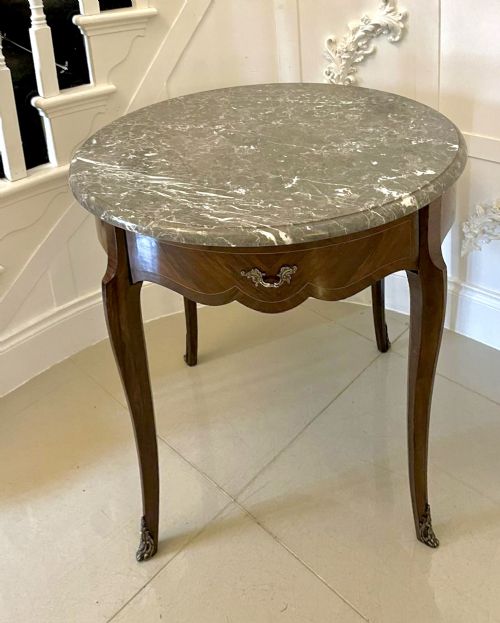
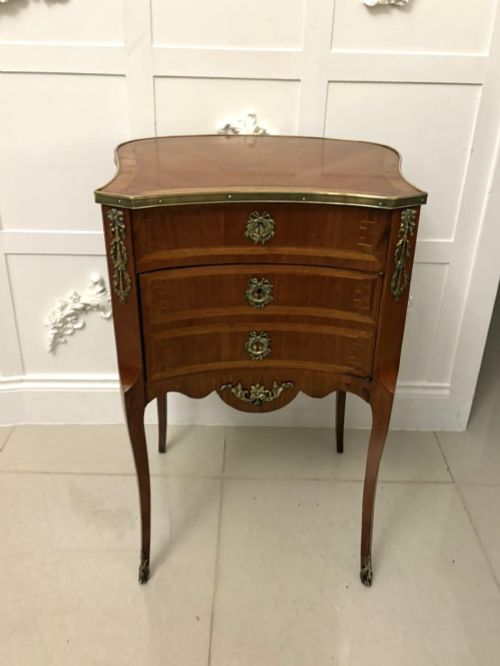
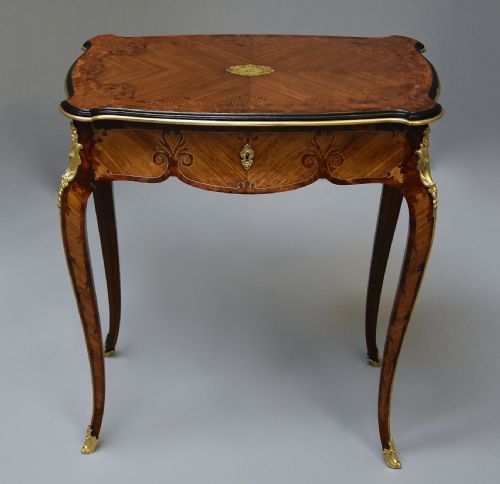
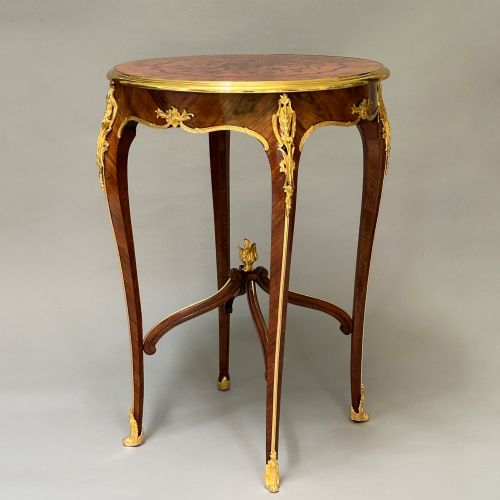
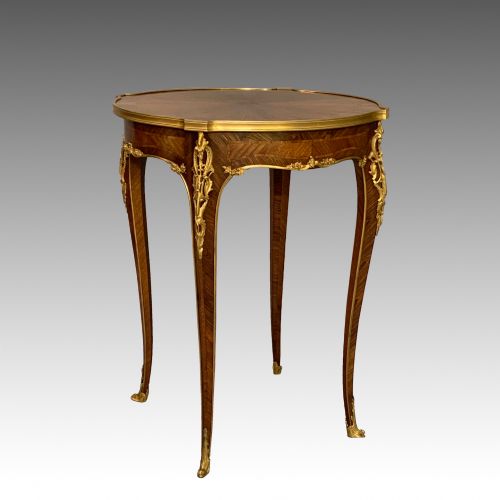
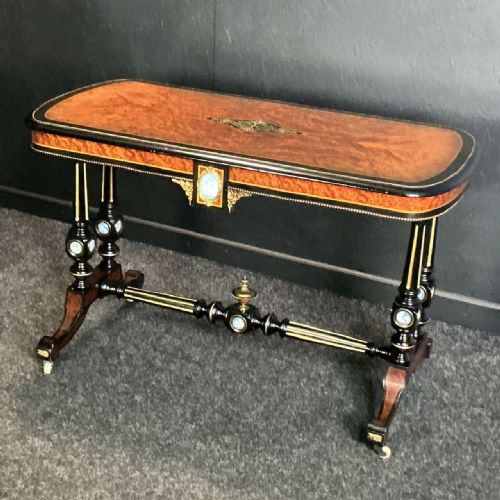
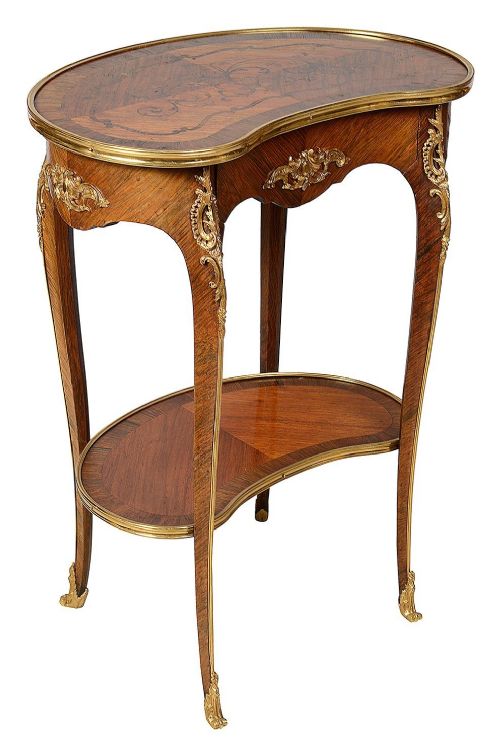
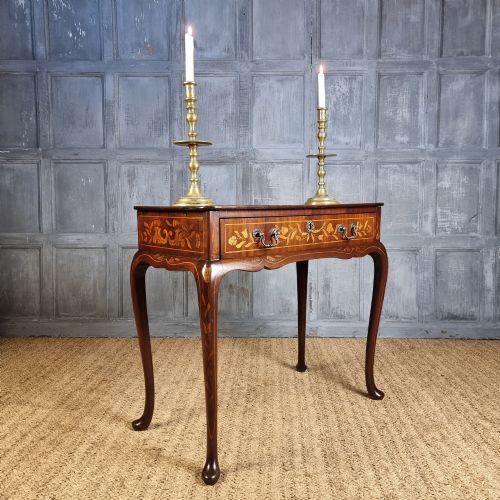
A French marquetry occasional table is a versatile small surface designed for display and light daily use. These pieces appear in forms ranging from side tables and centre tables to bedside tables and gueridon tables.
The aesthetic leans heavily on Louis XV and Louis XVI revivals, often incorporating French Chateau styling. Dating primarily from the nineteenth century through to nineteen hundred and the Edwardian era, these tables showcase classic continental forms.
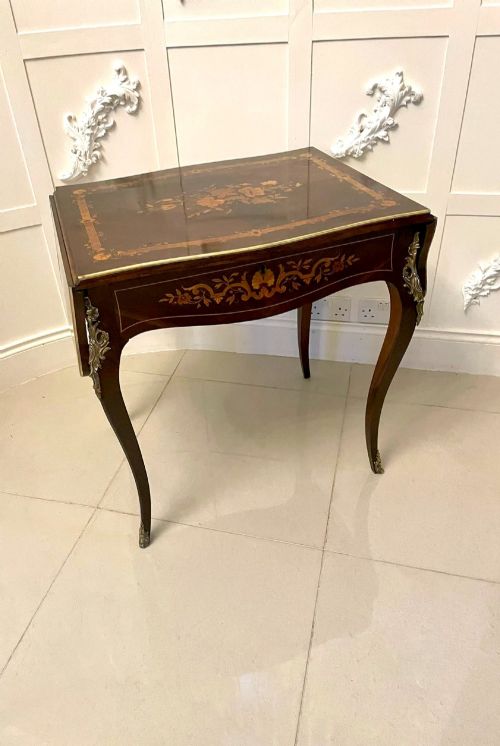
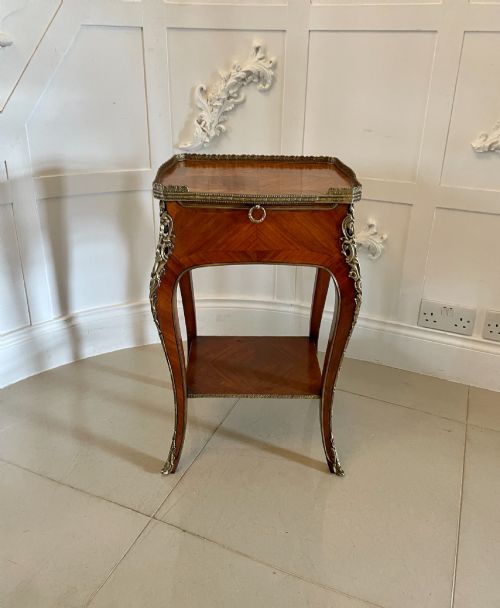
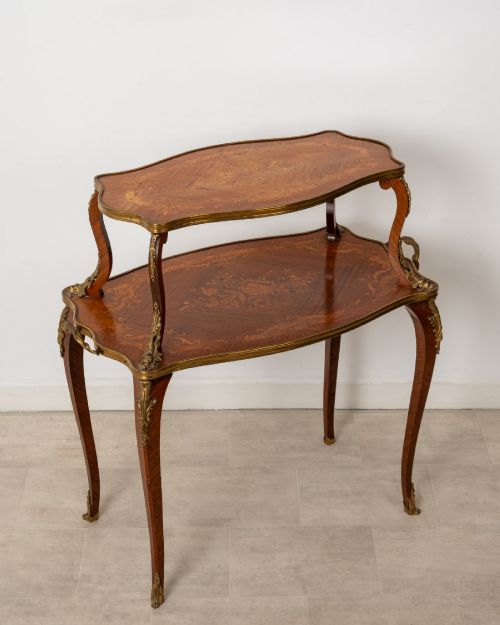
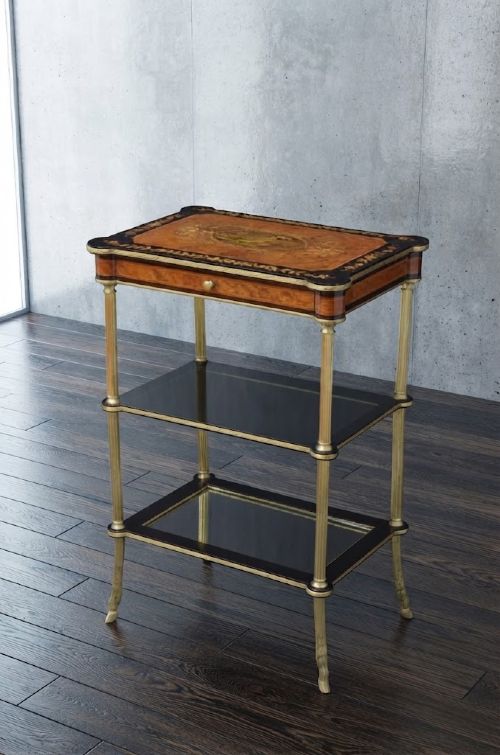
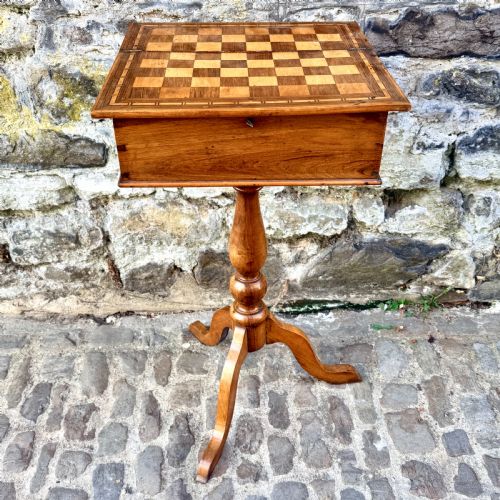
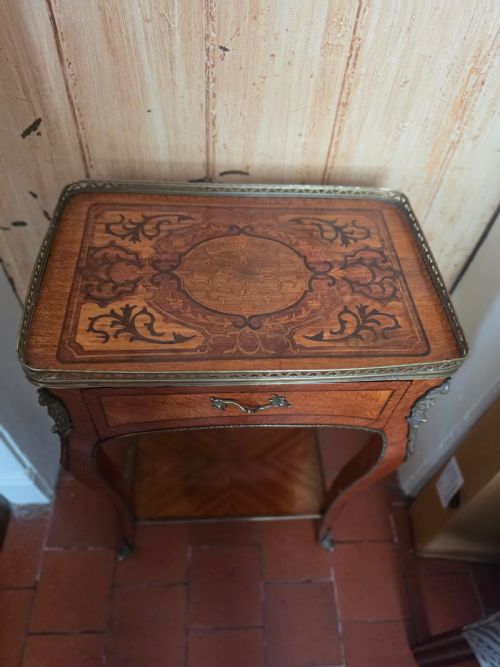
Makers frequently employed floral marquetry and geometric parquetry across the top surfaces. The resulting pieces serve as functional furniture while displaying intricate wood veneers.
Materials and construction methods
Cabinet makers constructed the foundational carcases using timbers such as mahogany, walnut, kingwood, rosewood, and burr walnut. Veneers were hand-cut and arranged to form complex floral and geometric marquetry patterns.
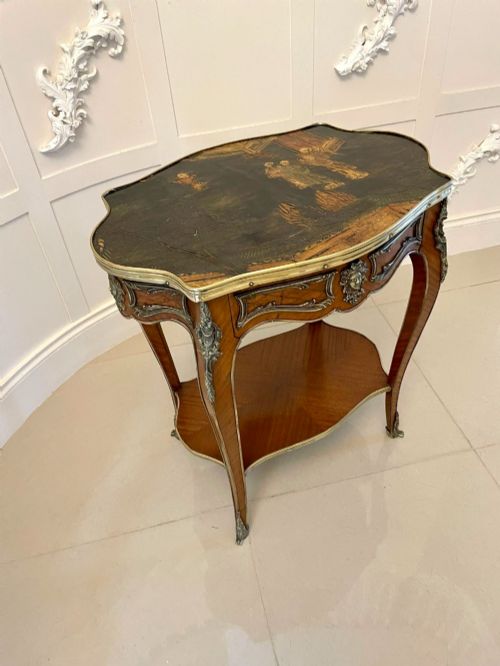
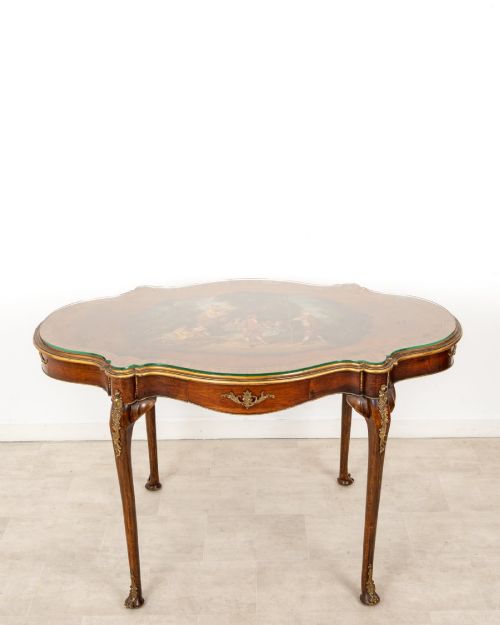
Mounts in ormolu, gilt bronze, and brass were cast and chased to accentuate the edges, aprons, and legs. Glass panels occasionally protected delicate surfaces or formed part of specialised display compartments.
Retail Price Guide 2026
Typical UK retail prices for french marquetry occasional table, calculated from the Sellingantiques database of over a million retail prices indexed since 2003. This retail price guide relies exclusively on Sellingantiques data; no external sources or auction records are used, so the figures do not describe the wider market.
Listings feature nineteenth-century and Edwardian pieces constructed from kingwood, rosewood, mahogany, and walnut with ormolu mounts.
Distinguishing quality in marquetry furniture
Quality rests in the precision of the veneer work and the crispness of the cast metal mounts. Better examples demonstrate seamless matching of timber grains and meticulous hand-chasing on the ormolu.
The choice of underlying woods also dictates grade, with kingwood and rosewood framing more elaborate floral compositions than standard mahogany carcases. Attribution to known workshops elevates the standing of individual pieces.
François Linke·A Hugnet Paris
The French Marquetry Occasional Table Glossary
- Marquetry
- Decorative veneer work arranged in pictorial or floral patterns across a wooden surface. Craftsmen cut different coloured woods to fit together like a jigsaw puzzle.
- Parquetry
- Geometric wood inlay forming repetitive patterns such as cubes or chevrons. This technique frequently frames the more organic floral marquetry designs.
- Ormolu
- Gilded bronze mounts applied to the edges and legs of furniture. The technique involves coating metal in a gold amalgam and firing.
- Gueridon
- A small circular table supported by a central pillar or multiple legs. Originating in the seventeenth century, these tables adapted well to nineteenth-century revival styles.
- Vernis Martin
- A type of simulated Japanese lacquer developed in France. It provides a glossy, translucent finish over painted or decorated surfaces.
Frequently Asked Questions
What is a French marquetry occasional table used for?
These pieces function as small display surfaces, bedside tables, or lamp stands in reception rooms. Their compact size allows them to fit easily into various corners of a home.
Historically, they held writing equipment, small books, or decorative objects. Today, they serve a similar decorative and practical purpose in modern interiors.
How do I identify Louis XV style furniture?
Louis XV pieces typically feature curved cabriole legs and asymmetrical floral ornamentation. The overall silhouette avoids straight lines in favor of fluid, organic shapes.
Ormolu mounts on these tables often trace the apron and flow down the knees of the legs. This style emphasises grace and movement over strict symmetry.
What is the difference between marquetry and parquetry?
Marquetry utilises varied wood veneers to create pictorial compositions such as floral sprays and landscapes. The cuts follow irregular, curved lines to depict natural forms.
Parquetry relies on geometric shapes like squares, triangles, and diamonds to form repeating patterns. Both techniques often appear together on the top surface of a single table.
How should I care for a kingwood table?
Keep the wood away from direct sunlight and strong heat sources to prevent the veneers from drying out. Consistent indoor humidity protects both the timber carcase and the delicate glue joints.
Dust the surface regularly with a soft, dry cloth. Avoid commercial silicone polishes that can build up and dull the original finish over time.