


French Parquetry Cabinet
These French parquetry cabinets bring precise geometric veneers and patinated mounts to reception rooms and bedrooms alike.
Forms and Origins
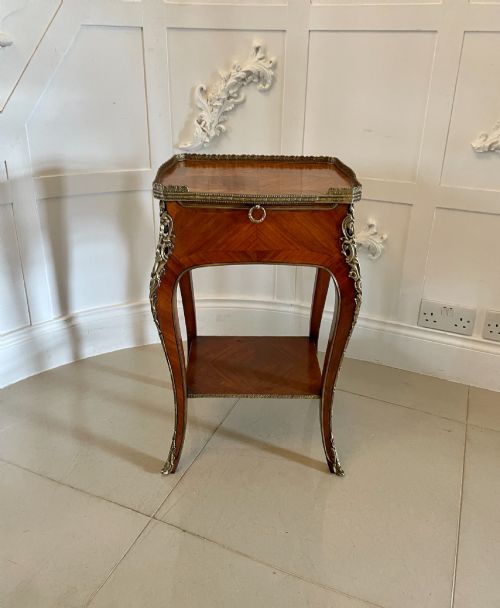
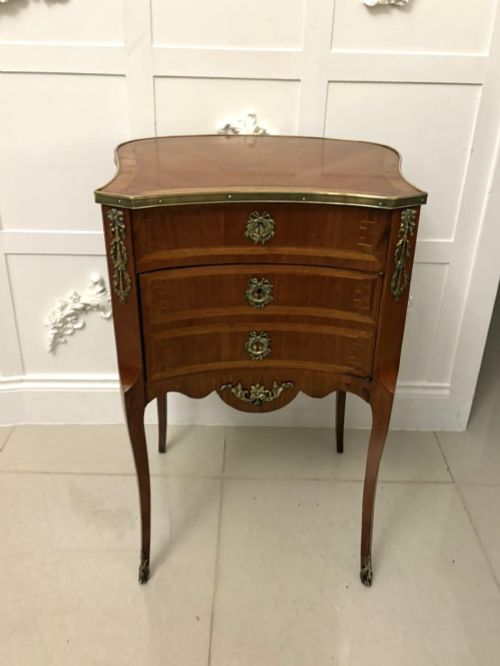
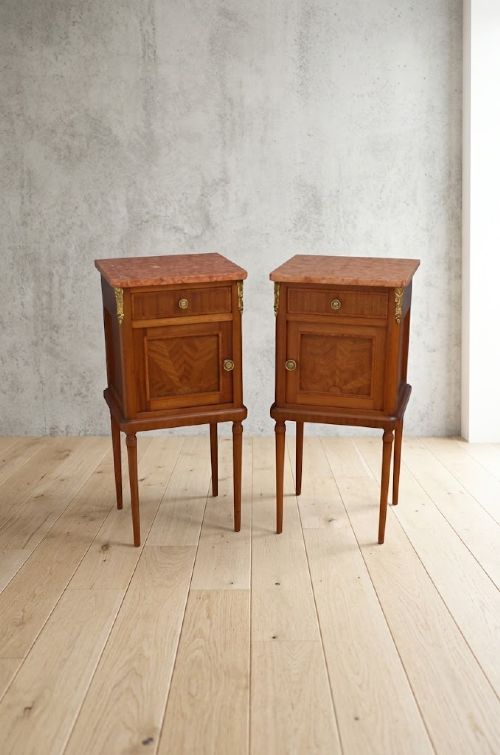
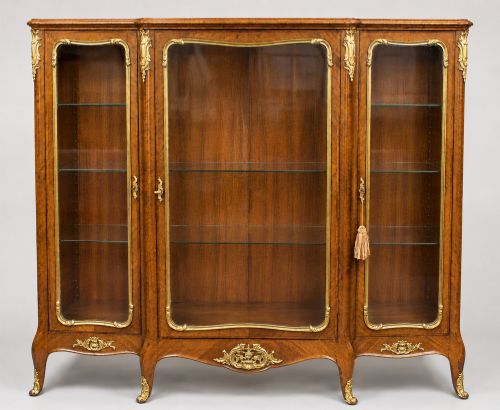
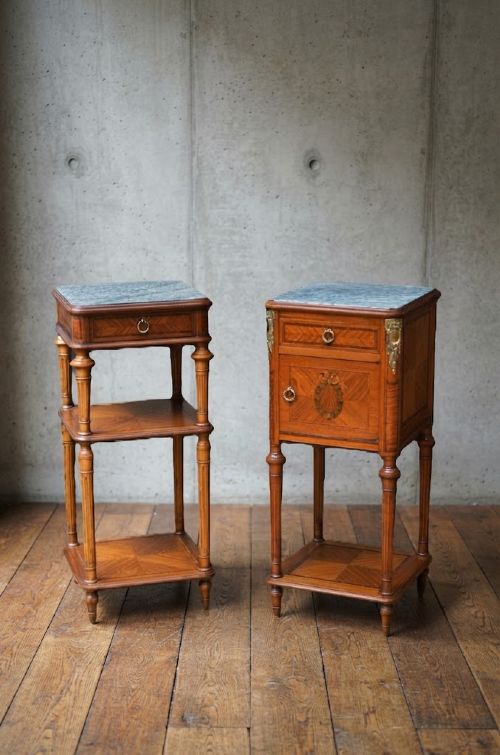
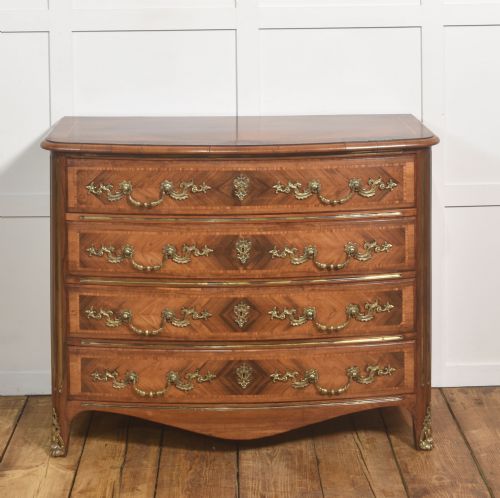
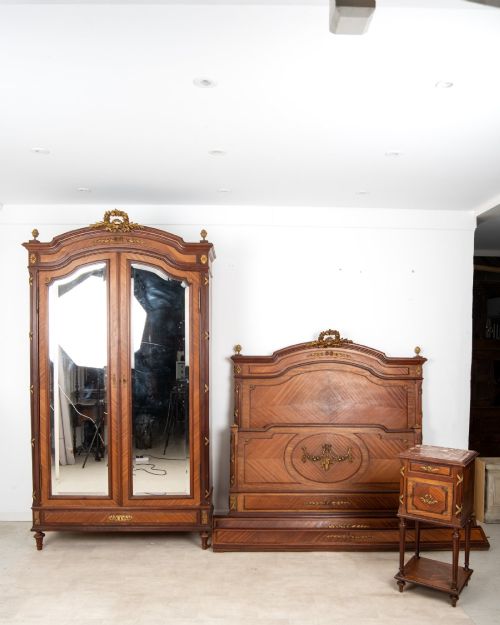
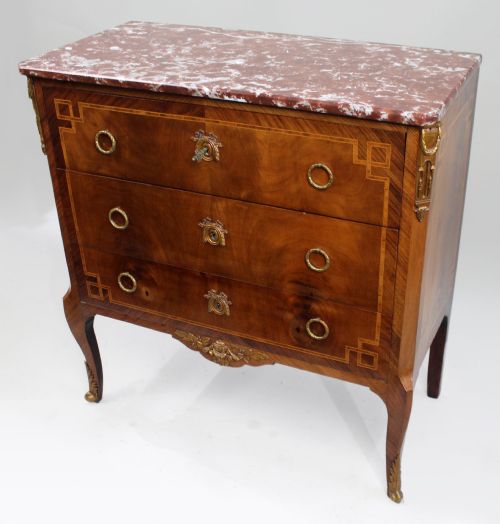
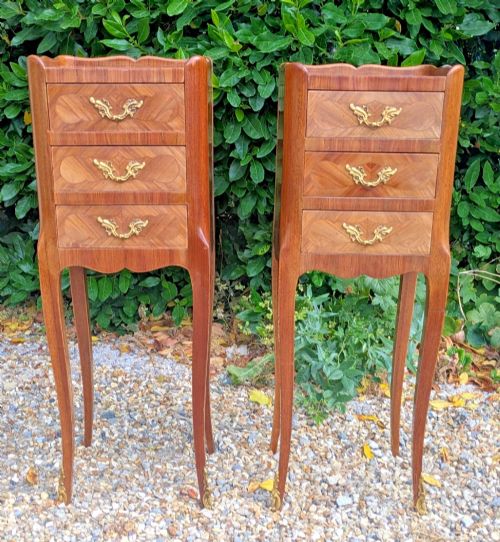
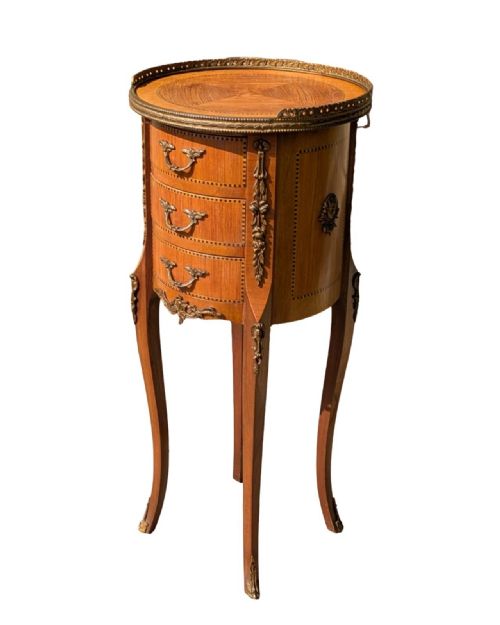
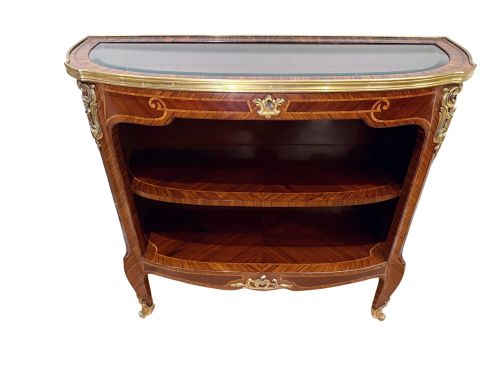
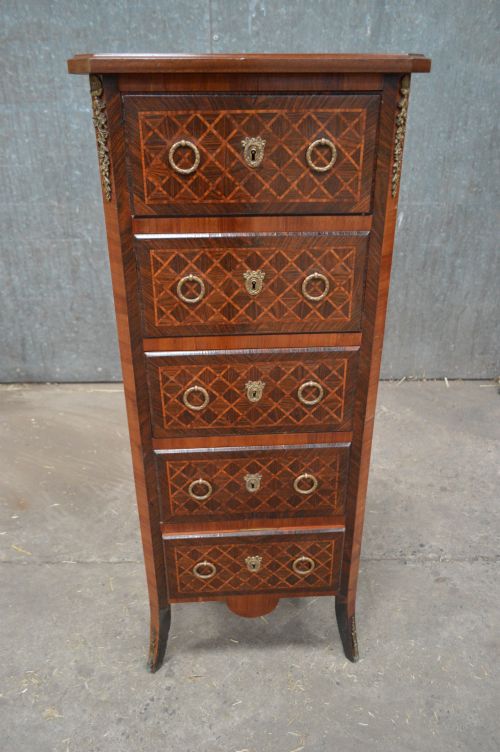
A french parquetry cabinet unites functional storage with intricate wood mosaic surfaces, spanning bedside chests to grand vitrines and display cabinets. Pieces on this page trace their origins primarily to the nineteenth century, alongside eighteenth-century examples and twentieth-century interpretations.
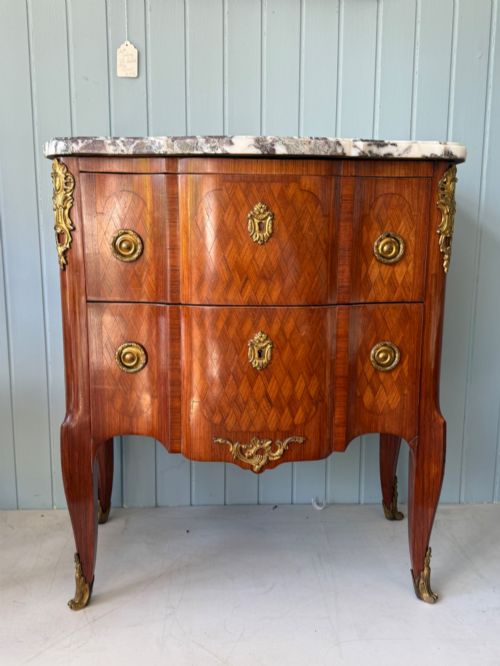
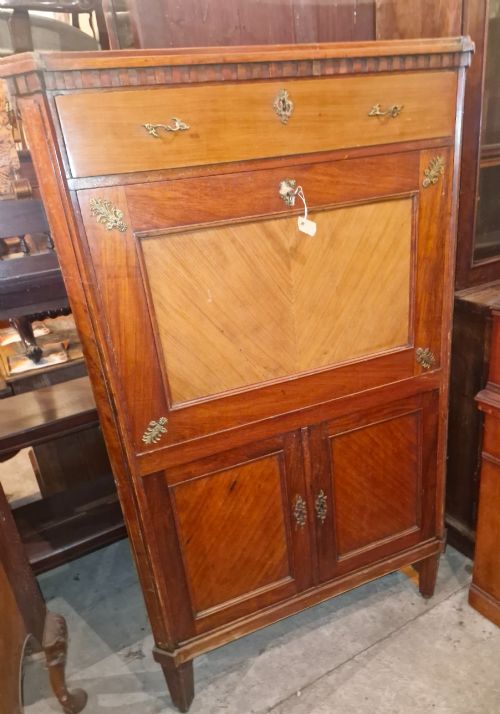
Buyers encounter distinct forms ranging from marble-topped commodes and side cabinets to tall bookcases and writing desks. The Louis XV and Louis XVI revival styles dominate, bringing serpentine fronts, neoclassical proportions, and gilt mounts to domestic interiors.
Materials and Construction
Craftsmen built carcases in foundational woods such as oak and mahogany, applying fine veneers of kingwood, rosewood, walnut, and tulipwood. Geometric parquetry patterns were meticulously arranged by hand to create optical depth across panels and tabletops.
Mounts in ormolu, gilt bronze, and gilt metal accent corners, legs, and friezes, while selected pieces incorporate white or rose marble tops and glazed glass doors.
Retail Price Guide 2026
Typical UK retail prices for french parquetry cabinet, calculated from the Sellingantiques database of over a million retail prices indexed since 2003. This retail price guide relies exclusively on Sellingantiques data; no external sources or auction records are used, so the figures do not describe the wider market.
Listings feature 18th, 19th, and 20th-century pieces utilising kingwood, rosewood, walnut, and marble.
The Hierarchy of Craft
Superior examples demonstrate absolute precision in the wood mosaic, where individual veneer cuts fit seamlessly without visible filler. The richness of the selected timbers, from figured kingwood to violet wood, dictates visual depth.
The weight, crispness of chisel work, and fire-gilding on the ormolu mounts separate exceptional workshop output from simpler production. Maker stamps and attribution to notable cabinetmakers elevate the historical significance of individual pieces.
Leonard Boudin·Linke
The French Parquetry Cabinet Glossary
- Parquetry
- Geometric wood mosaic arranged in repeating patterns such as cubes, chevrons, or squares. It provides the signature surface decoration across these cabinets.
- Ormolu
- Cast bronze that has been mercury gilded to create a bright golden finish. It protects the metal and decorates prominent corners and mounts.
- Kingwood
- A dense, richly figured tropical timber prized by eighteenth- and nineteenth-century cabinetmakers. Its contrasting dark and golden grains suit intricate veneers.
- Vitrine
- A glass-fronted display cabinet designed for porcelain and curiosities. These pieces often feature glazed side panels to maximise light.
- Secrétaire abattant
- A tall cabinet featuring a fall-front writing flap that conceals fitted interior drawers and pigeonholes. It combines desk functionality with compact storage.
Frequently Asked Questions
How do I clean the marble top?
Wipe the marble surface regularly with a soft, damp cloth using neutral soap.
Avoid acidic cleaning agents or abrasive pads that can etch or dull the polished stone finish.
Where should I place a vitrine?
Position glass-fronted cabinets away from direct sunlight to protect interior displays and delicate veneers.
Interior lighting can be added carefully to highlight collections without generating excessive heat near old timber.
Can I use a bedside cabinet daily?
These small chests function well for modern bedside storage while retaining their historical character.
Use coasters under glasses and protect surfaces from moisture to preserve the polished veneer.