





Brown Wood Oval Chest
These brown wood oval chest pieces are timber storage forms shaped to rounded profiles, bringing warmth and clean curves to traditional rooms.
Brown Wood Oval Chest
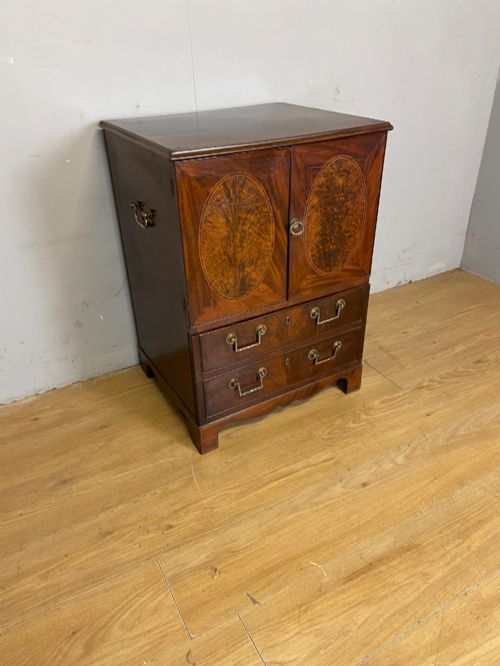
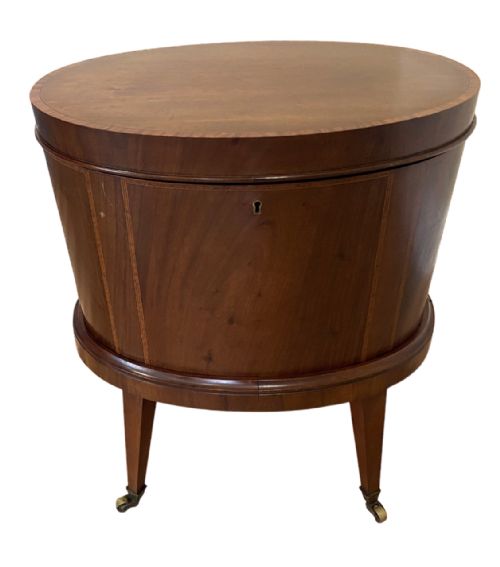
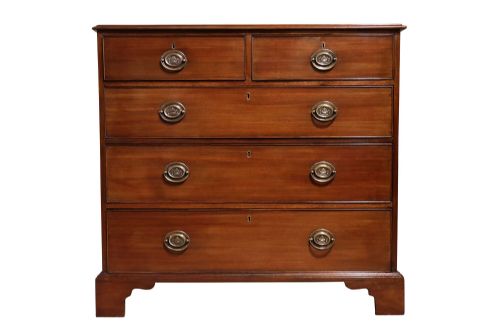
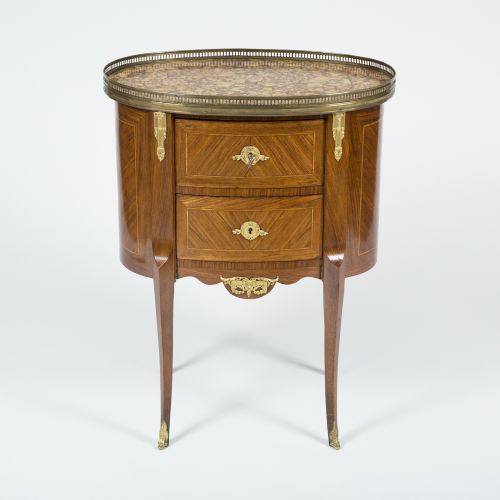
A brown wood oval chest search leads you to a refined selection of curved timber storage pieces, ranging from compact cellarettes to larger commodes. The pieces appearing here span Georgian, Regency and seventeenth-century origins, showcasing centuries of cabinet-making skill.
You are most likely to encounter mahogany and olive wood variants, often featuring satinwood inlay or brass handles. These items serve practical storage needs while functioning as strong focal points in period interiors.
Materials and construction
Makers utilised dense hardwoods such as mahogany, oak and walnut, often applying decorative oyster veneers to create distinctive surface patterns. Boxwood and satinwood inlay added contrasting borders and geometric detail to drawer fronts and lids.
Traditional joinery relies on solid timber frames with oak linings, complemented by cast brass handles, drop rings and occasionally marble tops. The curved profiles require precise shaping of the wood staves or panels to maintain structural integrity.
Listings span seventeenth-century olive wood veneer through to Georgian mahogany and nineteenth-century satinwood pieces.
Judging the standard
Quality rests in the precision of the curved timber work and the crispness of any inlay or veneer patterns. Superior examples display careful matching of wood grain across the rounded facade.
The choice of secondary timbers, such as solid oak drawer linings rather than softer alternatives, marks the distinction between standard utilitarian items and finer cabinet-maker commissions.
The Brown Wood Oval Chest Glossary
- Oyster veneer
- Small circular or oval slices cut across the branches of a tree to create a repeating ripple pattern on the surface. This technique was favoured during the seventeenth century.
- Cellarette
- A dedicated storage box or chest designed for holding bottles of wine or spirits. They frequently feature lead linings and internal dividers.
- Serpentine front
- A furniture facade that curves outward in the centre and inward at the sides. It demands high skill from the maker to execute correctly.
- Commode
- A low decorative chest of drawers or cabinet originating from French furniture design. They often incorporate marble tops and elaborate mounts.
- Inlay
- A decorative technique where contrasting pieces of wood or other materials are fitted flush into the primary surface. It defines pieces in the Sheraton and Georgian styles.
Brown Wood Oval Chest: Frequently Asked Questions
What is a brown wood oval chest?
These are curved timber containers and storage units shaped with rounded or oval profiles, typically constructed from hardwoods like mahogany and olive wood.
They encompass items such as cellarettes, tea caddies and commodes designed for domestic storage.
How were these chests used originally?
Owners utilised them to store valuable table linen, dry goods, tea leaves or bottled wine within dining rooms and bedrooms.
Their secure lids and robust timber construction kept contents safe from dampness and light.
How do I care for antique mahogany?
Keep the timber away from direct heat sources and strong sunlight to prevent the wood from drying out and splitting.
Apply traditional beeswax polish occasionally and buff gently with a soft cloth to maintain the finish.
How can I tell the period?
Examine the construction methods, secondary woods used in linings, and decorative motifs such as inlay or veneer types.
Georgian and Regency pieces display specific hardware styles and timber choices that distinguish them from later nineteenth-century revivals.