


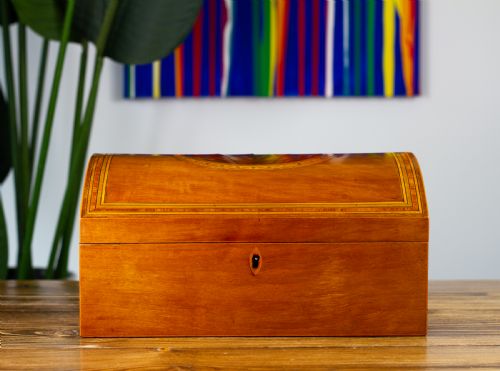


Sheraton Tea Caddy
A sheraton tea caddy is a refined Georgian storage box designed to keep precious loose leaves secure under lock and key.
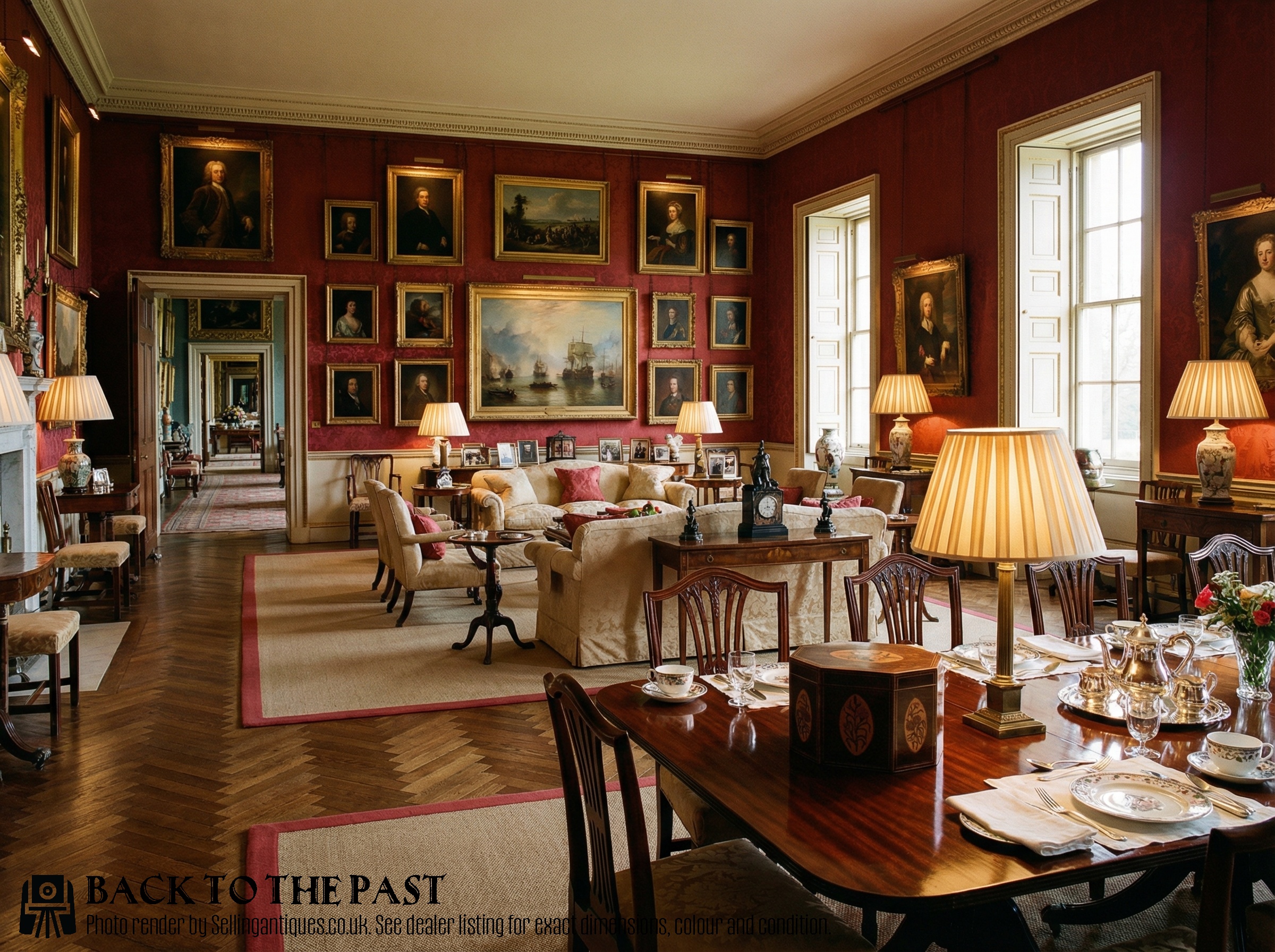
Sheraton Tea Caddy Forms
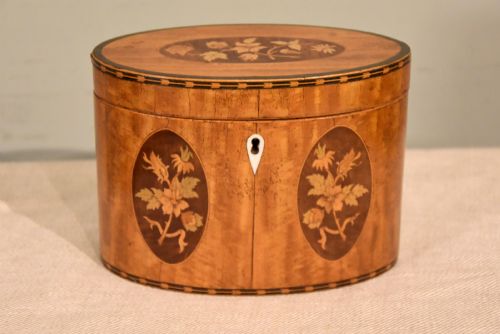
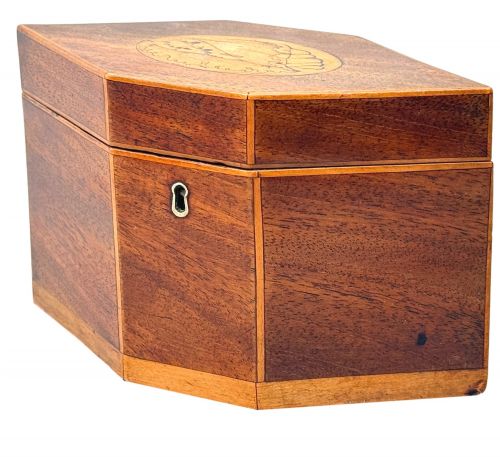
A sheraton tea caddy takes various geometric forms including oval, cube, hexagonal, and navette shapes. These containers date primarily from the eighteenth century and the year 1800, aligning with the Georgian period.
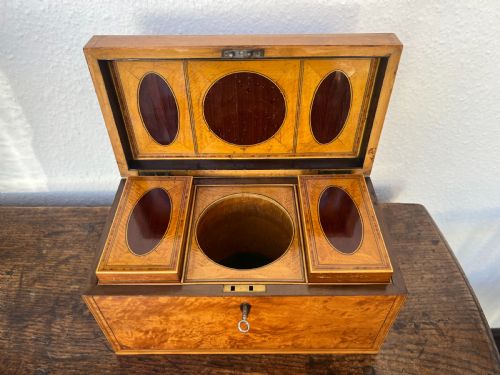
Many examples function as twin tea caddies with internal compartments for different leaf varieties, while larger pieces sometimes incorporate a central sugar bowl. The satinwood teapoy represents a grander development of this form.
Makers shaped these boxes to sit on the parlour or dining table during tea service. The surviving pieces demonstrate the high status of tea in Georgian domestic life.
Materials and Technique
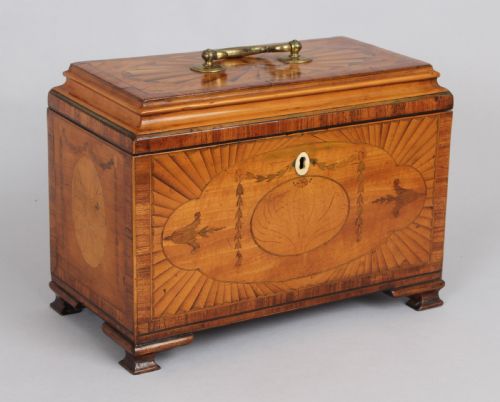
Cabinet makers utilised mahogany, satinwood, and harewood as primary timbers, enhanced by contrasting boxwood and brass fittings. Fine marquetry and banding define the surface decoration of these boxes.
The construction relies on precise veneering and inlay techniques to create geometric patterns and pictorial motifs. Bone details and specialised locks complete the fabrication.
Retail Price Guide 2026
Typical UK retail prices for sheraton tea caddy, calculated from the Sellingantiques database of over a million retail prices indexed since 2003. This retail price guide relies exclusively on Sellingantiques data; no external sources or auction records are used, so the figures do not describe the wider market.
The documented object forms span standard tea caddies, twin compartments, cubes, hexagons, and larger teapoys.
Judging Quality
The distinction between standard and exceptional pieces rests upon the sophistication of the timber selection and the precision of the marquetry. Elaborate multi-sided geometries, such as eight-sided or hexagonal configurations, require advanced carpentry.
The Sheraton Tea Caddy Glossary
- Teapoy
- A pedestal table or large container designed for holding tea canisters. These pieces often stand on a single pillar or multiple legs.
- Navette
- A boat-shaped decorative form characterised by tapering pointed ends. This silhouette appears frequently in Georgian caddy design.
- Marquetry
- The art of applying pieces of veneer to a structure to form decorative patterns. Craftsmen utilised various coloured woods to achieve pictorial effects.
- Banding
- A narrow strip of contrasting timber inlaid around the edges of a panel. This technique frames the primary wood grain.
- Satinwood
- A durable exotic timber with a lustrous golden yellow appearance. It served as a favoured surface veneer for high-end cabinet work.
Frequently Asked Questions
What is a sheraton tea caddy?
A sheraton tea caddy is a wooden storage box made during the Georgian period to store loose tea leaves securely.
These boxes feature distinctive geometric forms and delicate wood inlays that reflect the neoclassical style of the era.
How were tea caddies used?
Servants or hosts used these containers to store expensive black and green teas safely away from moisture and theft.
Tea was a valuable commodity in the eighteenth century, so the caddy remained locked until the mistress of the house prepared the brew.
How do I date a tea caddy?
Dating relies on identifying the primary timbers, construction methods, and characteristic shapes associated with the eighteenth century and 1800.
Mahogany and satinwood veneer styles, alongside specific hardware types, help narrow down the period of manufacture.
How do I live with a tea caddy?
These boxes function well as decorative objects on sideboards or coffee tables, and they remain useful for small keepsakes.
Owners should keep them out of direct sunlight and away from heat sources to protect the delicate antique veneer and inlay.