

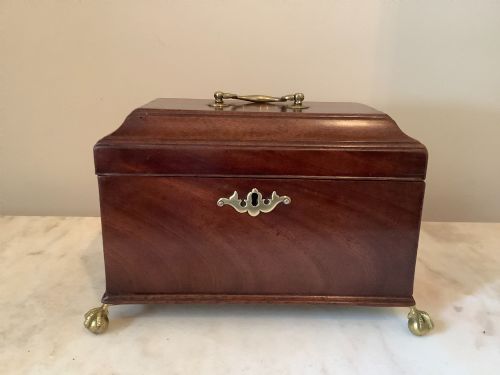
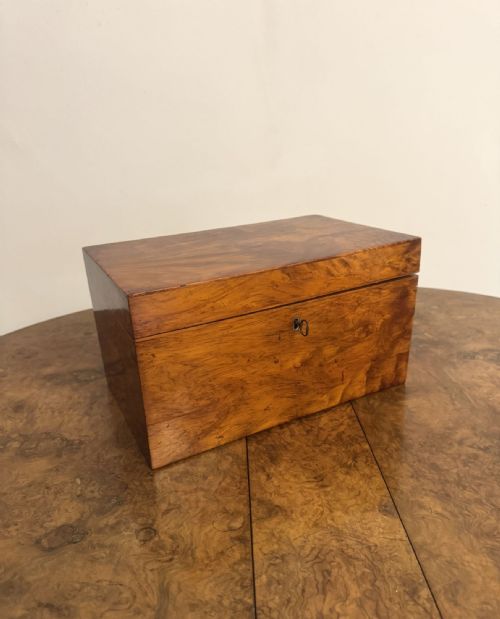

Brown Wooden Tea Caddy
A brown wooden tea caddy is a small storage chest built to hold dry leaves securely, offering warmth and period character to any room.
Brown Wooden Tea Caddy
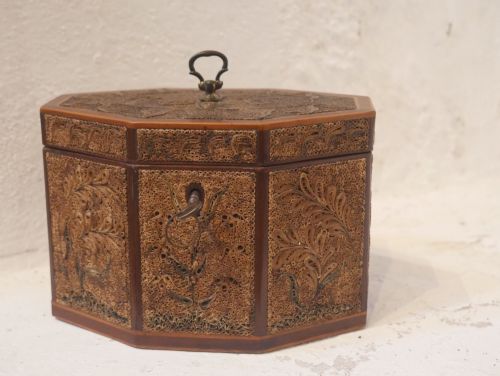
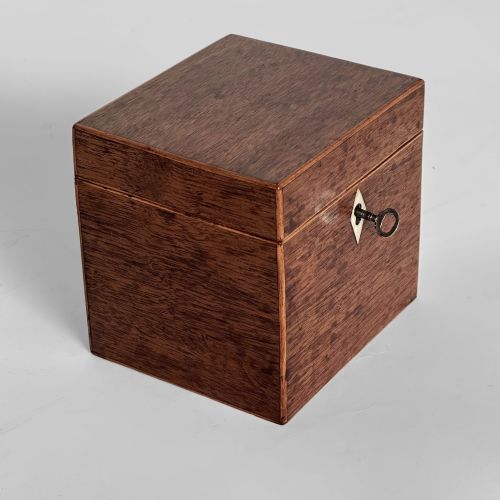
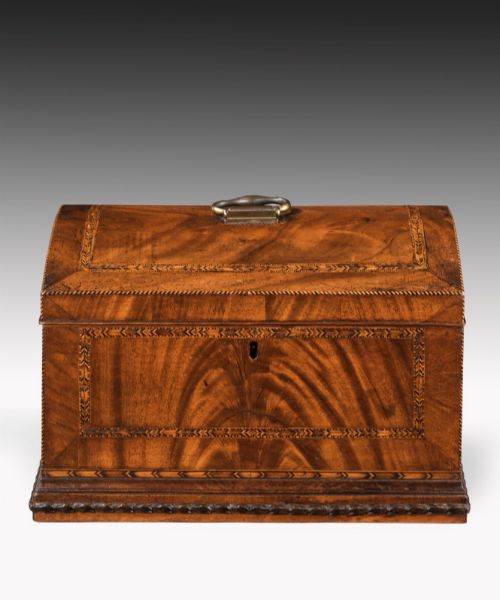
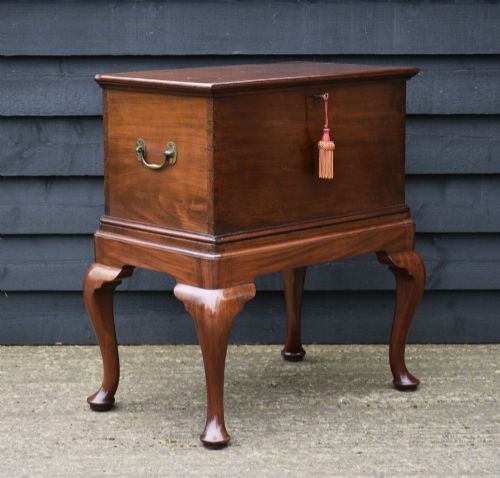
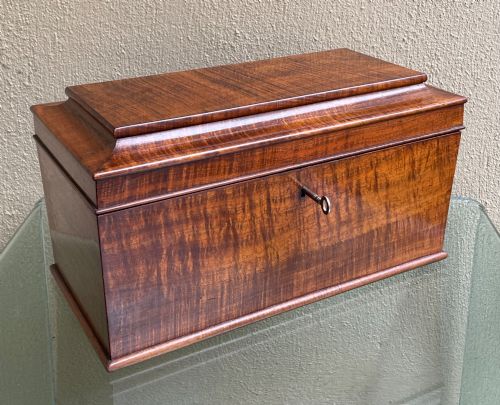
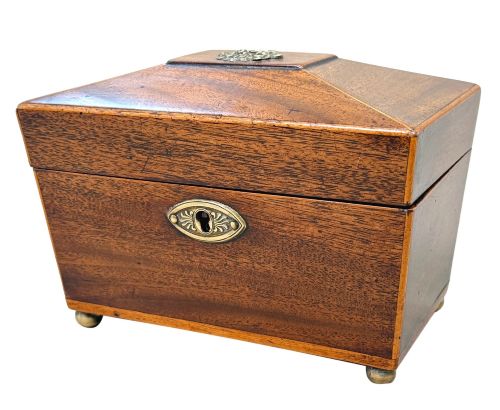
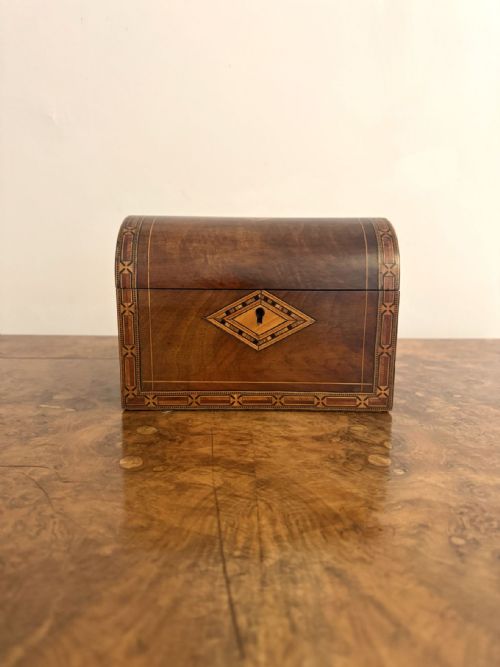
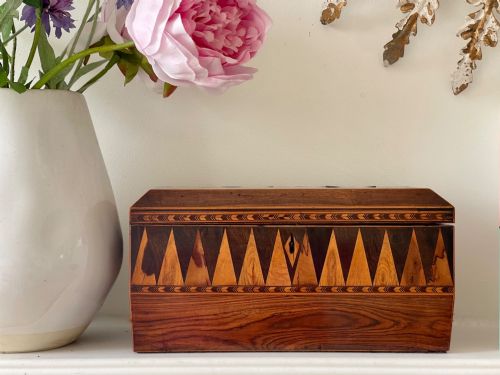
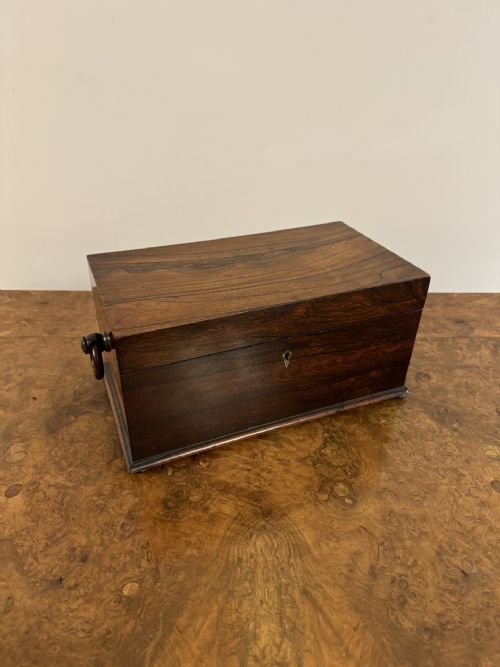
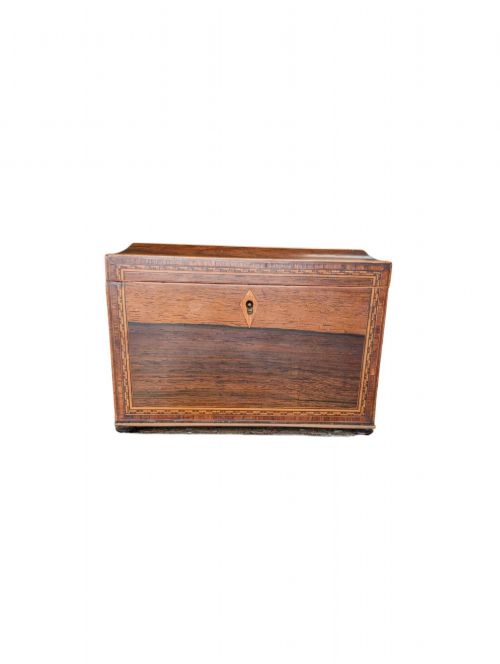
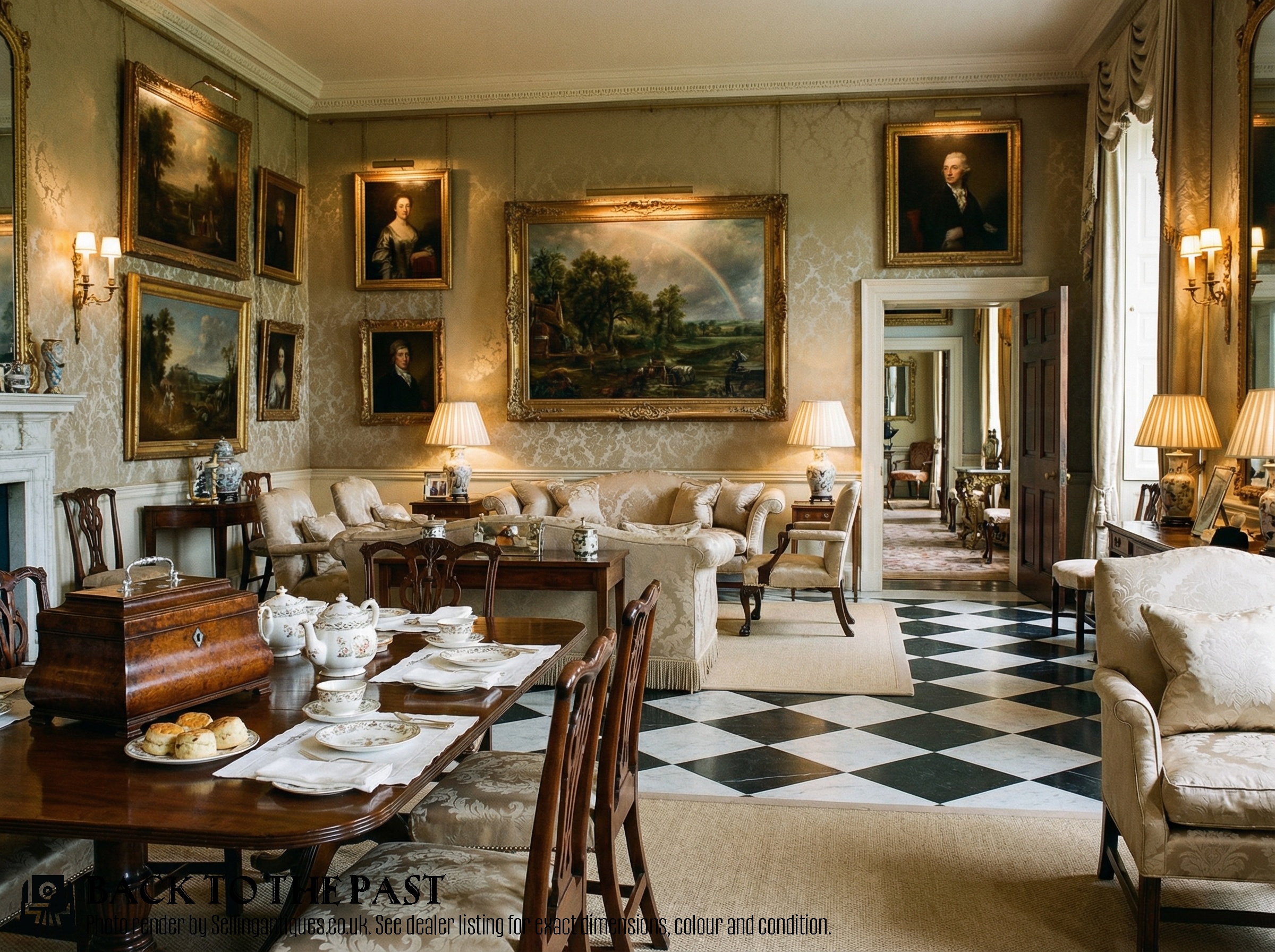
A brown wooden tea caddy is a practical container designed to store dried tea leaves safely during periods when the commodity held immense value in domestic life. The examples found here span the Georgian, Regency and Victorian eras, taking forms that range from simple rectangular boxes to sarcophagus shapes and domed chests. Many incorporate internal compartments or fitted interiors to separate different varieties of tea.
Mahogany and walnut form the backbone of the selection, accompanied by timbers such as yew, rosewood, satinwood and harewood. These pieces frequently display decorative elements like boxwood stringing, butterfly or star inlay, and intricate Tunbridge work. Originating mostly from British workshop traditions alongside occasional East Asian examples, they reflect the shifting tastes of nineteenth-century households.
Construction and materials
Cabinet makers constructed these tea caddies using solid timbers and decorative veneers applied over a stable secondary wood base. Species like mahogany, walnut and yew provided durable structural bodies capable of taking a fine polished finish, while contrasting woods such as boxwood and ebony furnished detailed stringing and border patterns.
Surface ornamentation relied heavily on precision woodworking techniques, including wood inlay, paper scrollwork, and specialised Tunbridge mosaic patterns. Artisans also integrated metal components like brass hinges, escutcheons and locks, occasionally pairing the wooden enclosures with cut glass mixing bowls inside.
Brown Wooden Tea Caddy Retail Price Guide 2026
Typical asking prices for brown wooden tea caddy among the pieces listed under this phrase on Sellingantiques today, from the lower quarter to the upper quarter. They describe what is for sale here now, not the wider market.
The selection includes pieces spanning the Georgian, Regency, and Victorian periods, utilising mahogany, walnut, yew, and rosewood.
Distinguishing quality in period tea caddies
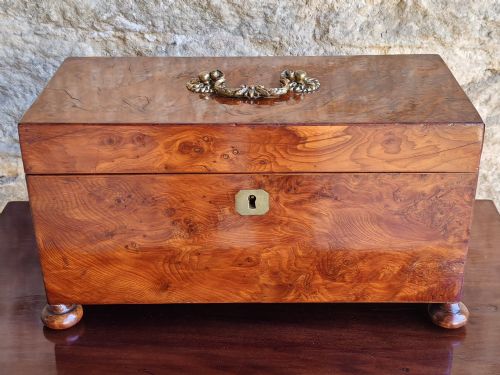
The distinction between standard domestic boxes and superior examples rests on the selection of timber and the precision of the joinery. Finer pieces employ richly figured veneers like flame mahogany or burr yew, matched symmetrically across the lid and panels with careful grain alignment.
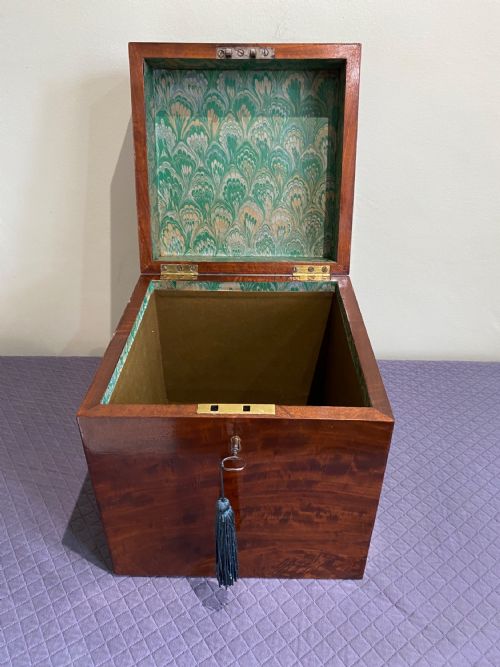
Superior construction reveals itself in internal details such as fitted wooden canisters with functioning lids, intact secret drawers, and original brass hardware. The complexity of the exterior decoration, whether precise string inlay or elaborate Tunbridge mosaic work, further separates ordinary storage boxes from exceptional pieces.
Henry Hollamby
The Brown Wooden Tea Caddy Glossary
- Sarcophagus form
- A box design featuring a sloping, stepped lid and a flared body resembling a miniature stone coffin, popular during the Regency period.
- Tunbridge inlay
- A mosaic technique utilising tiny geometric wooden tesserae arranged to create pictorial or patterned surface decoration, associated with Kent workshops.
- Stringing
- A narrow strip of contrasting wood inlaid into the surface of furniture to create decorative borders and frame panel edges.
- Escutcheon
- A protective metal plate surrounding a keyhole, usually fashioned from brass on period boxes.
- Navette shape
- A pointed oval outline with curved sides, frequently seen in late eighteenth-century tea caddy designs.
Brown Wooden Tea Caddy: Frequently Asked Questions
What was a brown wooden tea caddy used for?
These boxes served to protect expensive imported tea leaves from moisture, light, and theft in the Georgian and Victorian household. Because tea was a heavily taxed commodity, the container stayed locked under the supervision of the head of the house.
Inside, divided compartments kept different grades of black and green tea separate before they were blended together in a matching glass bowl.
How do I tell a Georgian tea caddy from a Victorian one?
Georgian examples generally favour understated elegance, displaying clean rectangular or oval silhouettes with subtle stringing and light satinwood or mahogany veneers. They often date from the late eighteenth century and rely on restrained proportions.
Victorian pieces tend toward heavier, more ornate forms like the sarcophagus shape, frequently incorporating elaborate burr walnut, darker finishes, and complex Tunbridge mosaic decoration.
Where should I place a tea caddy in my home?
A tea caddy looks well on a sideboard, desk, or occasional table where its polished timber and brass fittings can be appreciated up close. Placing it out of direct sunlight prevents the antique wood veneers and internal linings from drying out or fading over time.
Because many retain their original locks and working keys, they also remain practical for storing small keepsakes and trinkets today.
Did all tea caddies come with interior mixing bowls?
Not every caddy includes a bowl, though many Regency and Victorian models feature a central recess designed to hold a cut glass mixing vessel. This bowl was used to dilute or blend the loose leaves before pouring the final brew.
Simpler or earlier boxes focused entirely on lidded storage compartments or canisters rather than incorporating glassware.