
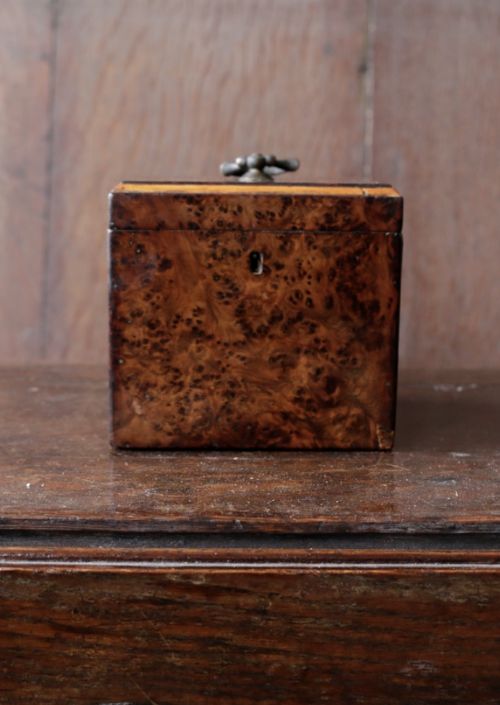


Georgian Marquetry Caddy
A georgian marquetry caddy is a wooden storage vessel for dried leaves, offering intricate surface patterns that appeal to collectors of period items.
Georgian Marquetry Caddy
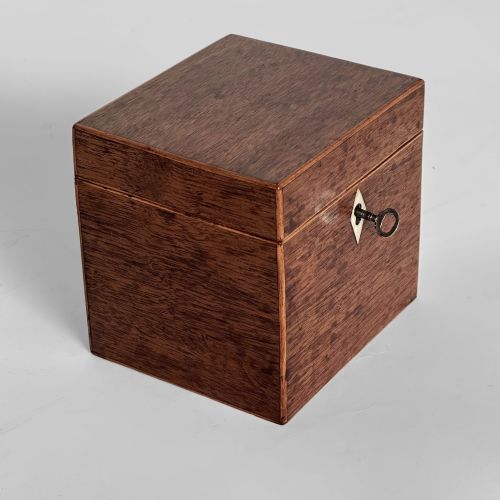
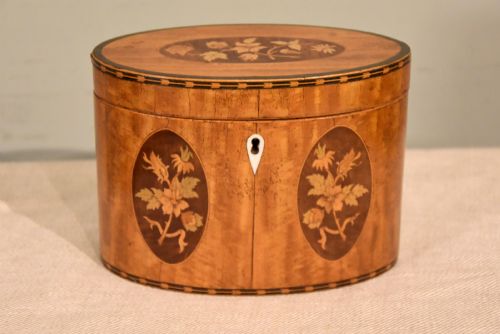
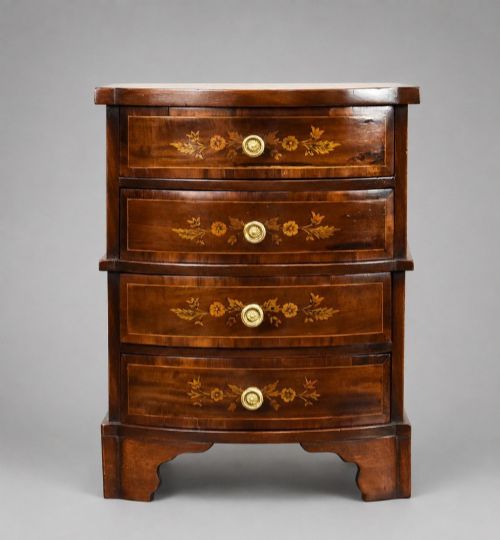
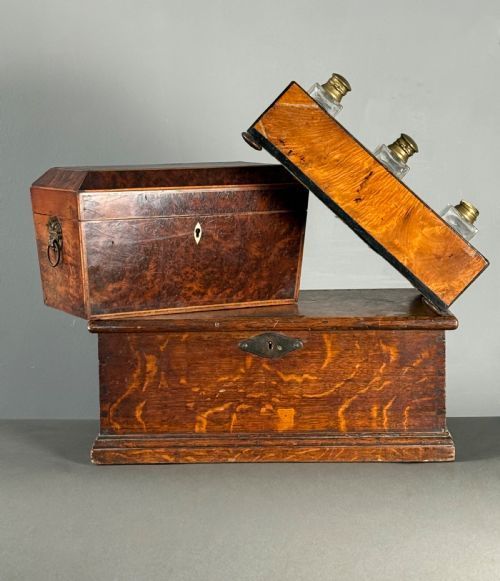
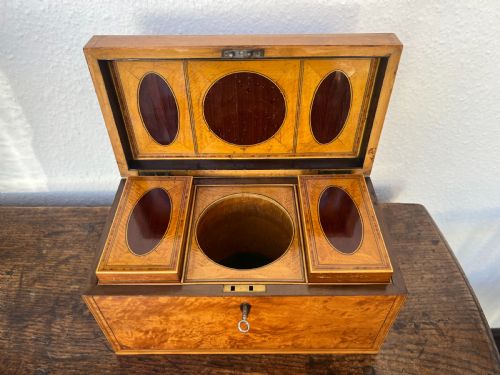
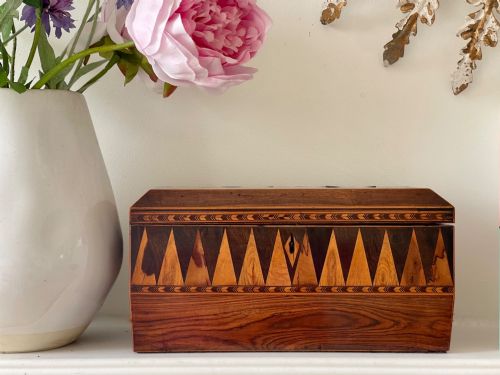
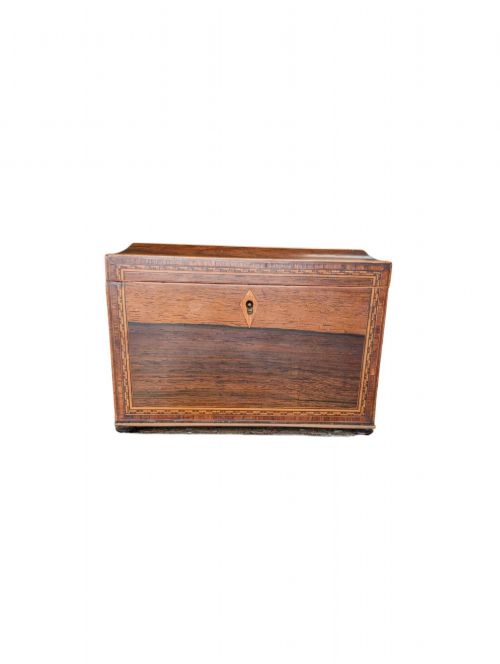
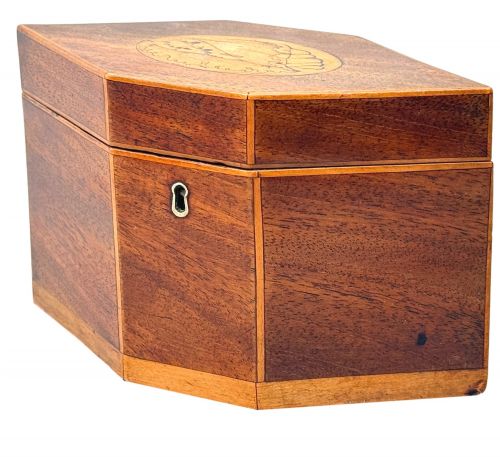
When someone searches for a georgian marquetry caddy, they encounter small wooden containers designed for storing tea during the eighteenth and early nineteenth centuries. The listings show tea caddies taking shapes such as oval, hexagonal, and sarcophagus forms, alongside occasional teapoys and decorative boxes.
The versions most commonly met on this page date from the Georgian period, often utilising satinwood, harewood, and mahogany as primary timbers. These boxes frequently incorporate detailed pictorial or geometric wood inlay on the lid and sides.
Originating in an era when tea was a costly commodity requiring secure storage, these pieces combine practical lidded compartments with decorative craftsmanship. Surviving examples reflect the design preferences of the eighteenth and nineteenth centuries.
How they were made
Cabinetmakers constructed these boxes using solid timbers and decorative veneers such as satinwood, harewood, and rosewood over a core structure. Artisans cut contrasting woods to form intricate patterns, incorporating boxwood, bone, and mother of pearl details.
Surface ornamentation relies on wood inlay techniques, including marquetry depicting flower baskets or butterflies alongside geometric Tunbridge Ware motifs. Selected pieces also feature brass stringing and inlay to accent the contours of the box.
A tiny butterfly inlaid in satinwood has outlasted multiple generations of tea drinkers.
What varies in quality
The standard of a georgian marquetry caddy depends on the precision of the veneer work and the complexity of the wood selection. Superior pieces display finely fitted internal compartments and crisp, deliberate inlay work that remains flush with the surrounding timber.
The choice of timbers also dictates distinction, with burr yew, partridge wood, and amboyna marking out more ambitious examples from standard mahogany or plain satinwood construction. Preservation of the original fitted interior and interior lids influences the integrity of the piece.
The Georgian Marquetry Caddy Glossary
- Marquetry
- Decorative veneer work forming pictorial or geometric patterns using various coloured woods. Artisans assemble small wood pieces to create surface designs on the lid and sides of the box.
- Satinwood
- A durable tropical hardwood with a characteristic golden lustre and smooth grain. Cabinetmakers utilised this timber extensively for eighteenth-century veneered furniture and decorative boxes.
- Teapoy
- A small stand or table fitted with a container for holding tea. These pieces often incorporate internal compartments and elaborate wood inlay.
- Tunbridge Ware
- A form of mosaic woodwork produced in Kent using thousands of tiny coloured wood blocks. This technique creates geometric patterns on box surfaces.
- Harewood
- Sycamore wood stained grey using chemical processes. This material appears frequently in eighteenth-century marquetry panels and stringing.
Georgian Marquetry Caddy: Frequently Asked Questions
What was a tea caddy used for?
These boxes stored dry tea leaves securely under lock and key when tea was an expensive household commodity.
Inside, the vessels typically featured lidded compartments to keep different varieties separated and fresh.
How do I tell an 18th century caddy from a 19th century one?
Eighteenth-century examples often feature lighter satinwood or harewood veneers with delicate shell or butterfly marquetry. Later nineteenth-century pieces tend towards heavier rosewood, brass inlay, and sarcophagus forms.
Examining the construction methods and timber choices helps establish the likely period of manufacture.
Are the interiors usually intact?
Many surviving boxes retain their original fitted interior compartments, sometimes including mixing bowls or small lidded canisters.
Some examples show alterations or missing internal elements due to centuries of use.
Where should I place a caddy in my home?
These compact boxes suit display on side tables, desks, or within cabinet settings where their inlaid veneers remain visible.
Keeping them away from direct sunlight and excessive heat protects the delicate wood veneers and historic finishes.