
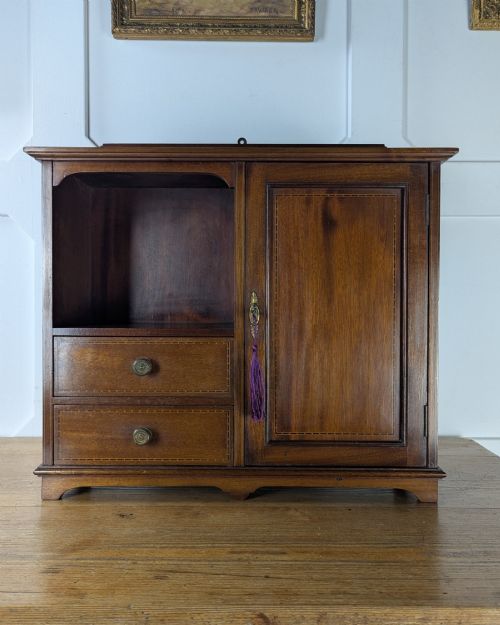
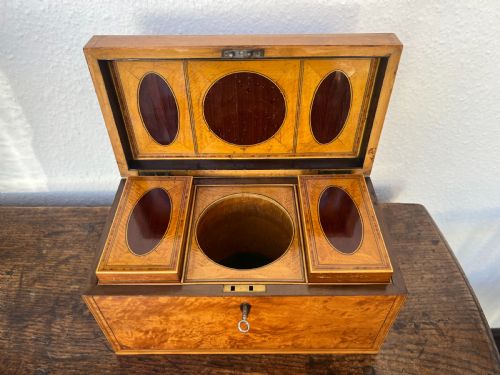


Satinwood Storage Box
These satinwood storage box examples offer fine timbers and classical proportions, built to hold everything from tea to playing cards with elegance.
Satinwood Storage Box
A satinwood storage box combines utilitarian purpose with cabinet-making skill, serving domestic spaces across the eighteenth and nineteenth centuries. The selection on this page centres primarily on tea caddies, trunks, and desktop collectors' cases.
Buyers encounter forms spanning Georgian, Regency, and Victorian periods, alongside 19th-century French and Colonial pieces. Many examples utilise distinctive shapes like the sarcophagus form or simple oval silhouettes.
Internal arrangements frequently include compartments for tea leaves, glass mixing bowls, or drawers for collectors. These vessels reflect the precise organizational needs of historical households.
How they were made
Makers utilised dense satinwood as the primary timber, valued for its blonde sheen and chatoyant grain. Cabinet-makers often contrasted this bright wood with darker elements like ebony, rosewood, and mahogany.
Inlay work and parquetry define the decorative surfaces, incorporating shell motifs and geometric patterns. Brass fittings, bone accents, and occasional glass components complete the construction of these storage pieces.
Listings feature 18th-century, Regency, and Victorian periods alongside materials like brass, bone, and coromandel wood.
What varies in quality
Superior examples demonstrate exceptional grain selection in the satinwood timber, showing depth and movement across the surface. The precision of the inlay work and the retention of original interior fittings elevate an individual piece.
Construction integrity determines the standing of a box, seen in the tight fit of joints and the survival of original hardware. Period correct additions, such as matching glass bowls or mixing sticks in tea caddies, separate standard boxes from distinguished ones.
The Satinwood Storage Box Glossary
- Satinwood
- A dense, lustrous timber native to Ceylon and other tropical regions, known for its pale yellow colour and chatoyant grain. It forms the principal surface for these storage boxes.
- Tea Caddy
- A small box or chest designed to store loose tea leaves securely. They often feature internal lidded compartments and sometimes retain original glass mixing bowls.
- Sarcophagus form
- A distinct styling for boxes featuring a stepped, domed lid reminiscent of an ancient stone coffin. This architectural shape gained popularity during the Regency period.
- Parquetry
- A geometric mosaic of wood pieces used for decorative veneer on box surfaces. Makers arranged contrasting timbers like ebony and satinwood to create patterns.
- Teapoy
- A small stand or large caddy historically used to hold tea and support tea-making equipment. They frequently incorporate interior storage compartments.
Satinwood Storage Box: Frequently Asked Questions
What is a satinwood storage box used for?
These boxes served specific domestic storage needs, primarily holding valuable commodities like tea leaves, documents, cigars, or playing cards. Their compartmentalised interiors kept delicate items secure and organised.
Over time, owners repurposed them for modern storage of small trinkets, jewellery, or stationery while displaying them on tables or desks.
How do I identify a Georgian satinwood box?
Georgian examples typically exhibit restrained classical proportions, delicate shell inlays, and oval or rectangular outlines. The craftsmanship focuses on subtle veneering and harmonious timber combinations.
Interior layouts from this era generally feature simple lidded canisters or open wells designed for dry leaf storage.
Are these boxes made of solid satinwood?
Many pieces utilise satinwood as a fine veneer applied over secondary structural timbers to stabilise the wood against warping. However, some larger trunks and specific boxes employ solid satinwood construction.
Inspect the grain continuity and edges to determine whether you are looking at solid timber or skilled veneering.
How do I care for antique satinwood?
Keep antique satinwood away from direct sunlight and steady heat sources to prevent the blonde timber from darkening or splitting. Maintain a stable room temperature to protect the delicate veneers and historical glues.
Apply a light microcrystalline wax occasionally to nourish the surface, avoiding harsh modern polishes entirely.