
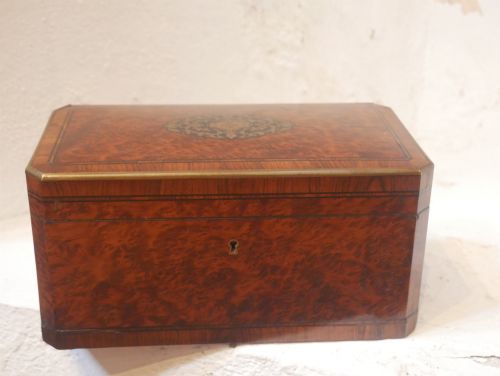


French Wooden Casket
A French wooden casket brings centuries of continental craftsmanship into the home, offering a handsome vessel for letters, trinkets and keepsakes.
French Wooden Casket
When you search for a french wooden casket, you encounter a variety of decorative boxes and caskets originating from France across multiple centuries. The selection ranges from nineteenth century tea caddies and desk accessories to earlier deed boxes and intricately inlaid display containers.
The forms vary from simple chestnut deed boxes with carved details to elaborate kingwood oyster veneer coffre forts and amboyna boxes by known makers. Each piece reflects the specific storage needs of its period, whether designed for the dressing table or the writing desk.
How they were made
Cabinet makers utilised a rich palette of timbers, pairing structural woods like oak, chestnut and walnut with decorative surface veneers such as satinwood, kingwood, amboyna and thuya wood. These exotic woods were selected for their striking grain patterns and warm tones.
Decoration relied on precision techniques including intricate wood inlay, hand painting and the application of brass mounts and cut steel ornamentation. Carpenters also employed oyster veneering, arranging circular cross-sections of branches to create repeating geometric patterns across the lid and sides.
The listed pieces span the Victorian, Regency, and eighteenth-century periods, showcasing materials from brass and steel to satinwood, amboyna, and kingwood.
What varies in quality
The standard of a french wooden casket is largely determined by the choice of timber and the precision of its decorative execution. Superior examples display seamless veneer work and meticulous inlay, whereas simpler pieces rely on plain carved fruitwood or chestnut.
Hardware and secondary materials also set examples apart, with finer boxes incorporating detailed cut steel decorations, brass accents or signed cabinet maker plaques. The complexity of the internal fittings, from velvet linings to specialised compartments for cards or tea, further distinguishes the work.
Tahan Paris·Tahan of Paris
The French Wooden Casket Glossary
- Kingwood
- A dense, heavy timber with rich brown and violet colouring, frequently used for high-end French veneer work during the nineteenth century. It provides a dark and durable contrasting surface for decorative boxes.
- Satinwood
- A luminous, yellowish wood prized for its reflective grain and smooth finish. Cabinet makers utilised it extensively for nineteenth-century table boxes and letter boxes.
- Oyster veneer
- A method of cutting branches transversely to produce oval pieces resembling oyster shells, arranged in decorative clusters. This technique creates a distinctive repeating pattern on period caskets.
- Tea caddy
- A container originally built to store loose tea leaves securely, often featuring internal compartments and a locking lid. Surviving examples frequently form part of broader antique box collections.
French Wooden Casket: Frequently Asked Questions
What were french wooden caskets used for?
These boxes served various domestic purposes depending on their internal layout and size. They held personal valuables, correspondence, playing cards and tea leaves.
Desk accessories and deed boxes accommodated paperwork, while smaller trinket and perfume boxes secured personal items on dressing tables.
How do I date a french wooden casket?
Dating relies on identifying the prevailing style, timber choices and construction methods used by the cabinet maker. Pieces from the eighteenth century often feature robust joinery and simpler regional carvings, while nineteenth-century examples embrace exotic veneers and revival styles.
Maker signatures or specific historic motifs, such as those from the Napoleon III period, offer further chronological clues.
How should I care for wooden caskets?
Keep wooden boxes away from direct sunlight and fluctuating heat sources to prevent the delicate veneers and timbers from warping or drying out. Dust them gently with a dry, soft cloth.
Avoid using modern liquid polishes or harsh chemical cleaners, which can damage historic French polishes and delicate metal mounts.
What is the difference between a box and a caddy?
A box generally serves a broad storage function for items like letters, trinkets or desk accessories without specialised internal divisions. A caddy was specifically built to store precious commodities such as tea, often featuring internal lidded compartments to keep the contents fresh.
Tea caddies also frequently included small locks to protect expensive provisions in period households.