



Brown Inlaid Casket
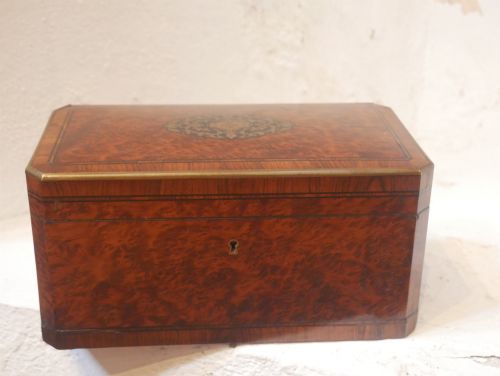
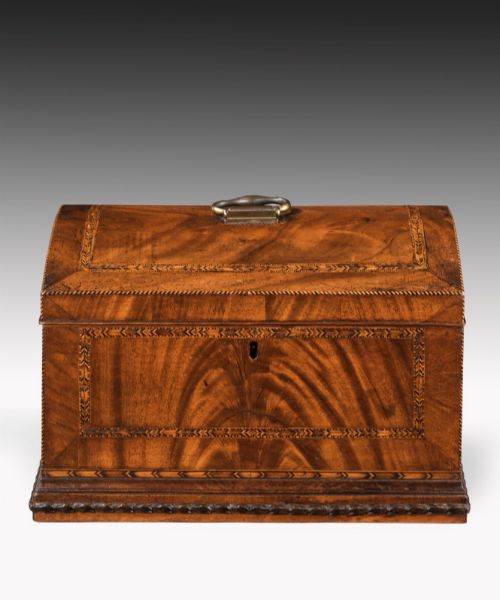
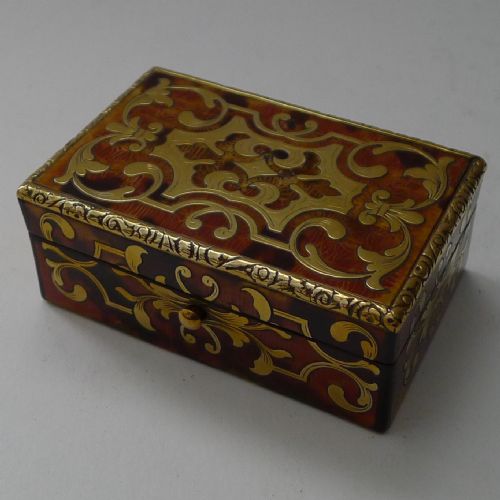
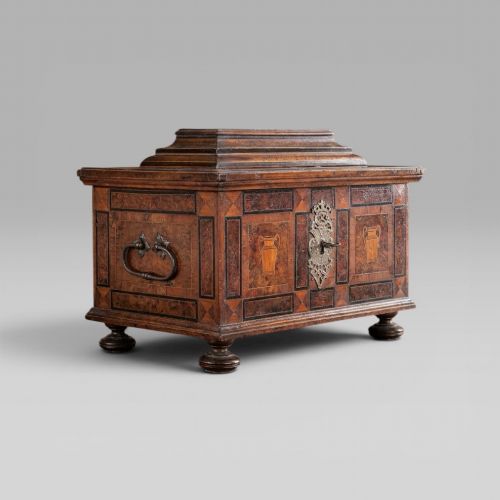
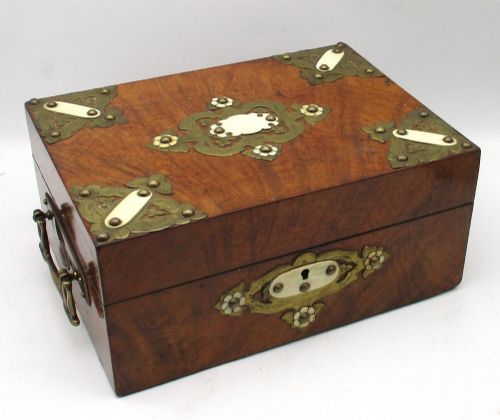
These brown inlaid caskets are timber boxes adorned with marquetry, parquetry, and contrasting woods, chosen for keeping valuables and correspondence secure.
Brown Inlaid Casket
A brown inlaid casket is a decorative vessel for storing trinkets, stationery, or sewing equipment, appearing in forms such as work boxes, tea caddies, and writing chests. When you search for a brown inlaid casket, you encounter pieces designed to sit upon desks, tables, or dressing drawers.
The selections span the Georgian, Regency, and Victorian eras, alongside seventeenth-century Continental examples. Walnut and mahogany provide the primary carcases, complemented by contrasting timber details.
You meet specialised regional types frequently, including Tunbridge ware, Anglo-Indian Sadeli mosaic, Sorrento olive wood, and French boulle or marquetry caskets. These pieces rely on contrasting natural tones of brown wood rather than applied pigment.
How they were made
Cabinet makers constructed the foundational carcase from timbers such as walnut, mahogany, rosewood, oak, or fruitwood. Surfaces received intricate surface embellishment through marquetry, parquetry, and boxwood or bone stringing.
Specialist techniques defined regional workshops, seen in the microscopic timber tesserae of Tunbridge ware and the micro-mosaic ivory or bone patterns of Anglo-Indian Sadeli boxes. Metal components like brass hinges, locks, and escutcheons secured the lids and added structural detail.
A nineteenth-century French ballot box sits among the refined sewing caskets and tea caddies.
What varies in quality
The precision of the inlay work separates standard receptacles from exceptional examples, particularly in the tightness of the parquetry joints and the complexity of floral or geometric marquetry. Grain selection in the foundational walnut, mahogany, or rosewood also dictates the visual depth of the exterior.
The complexity of the interior fittings marks the grade of the piece, with compartmented trays, velvet linings, and original locking mechanisms demonstrating higher workshop ambition. Regional specialisation, such as finely preserved Tunbridge ware or Sadeli mosaic, elevates the standard of craftsmanship.
Tahan Paris
The Brown Inlaid Casket Glossary
- Marquetry
- The art of forming decorative patterns by fitting together small pieces of wood veneer. This technique creates pictorial or abstract designs across the lid and sides of a box.
- Parquetry
- Geometric mosaic woodwork formed of small wooden tiles arranged in patterns. It frequently decorates the borders and panels of nineteenth-century caskets.
- Tunbridge ware
- Woodware decorated with tiny wooden tesserae forming detailed mosaic motifs, produced in Kent. It often depicts butterflies, flowers, or geometric architectural cubes.
- Cellarette
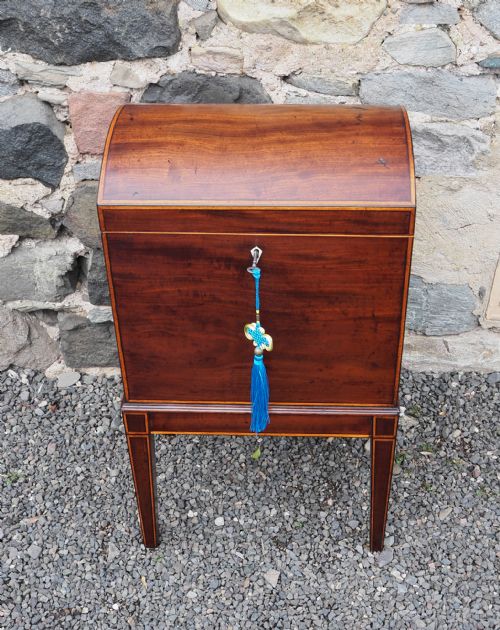
- A cabinet or box designed to hold bottles of wine or spirits. Georgian examples often feature fitted interiors and secure locks.
- Escutcheon
- A flat plate surrounding a keyhole, usually fashioned from brass. It protects the surrounding timber from wear and adds a decorative metal accent.
Brown Inlaid Casket: Frequently Asked Questions
What were brown inlaid caskets used for?
These caskets served to store precious personal items, ranging from letters and stationery to sewing accessories and jewellery. Owners kept them in drawing rooms, bedrooms, or studies.
Many featured specialised internal trays and compartments designed specifically for needles, threads, or writing implements. Their lockable lids ensured private correspondence and valuables remained secure.
How do I identify a Victorian casket?
Victorian examples frequently utilise walnut, rosewood, or coromandel, often incorporating Tunbridge ware mosaics or mother-of-pearl inlay. They date from the mid to late nineteenth century.
Look for interior fittings lined with velvet or silk, alongside machine-cut brass hardware. The stylistic variety spans from plain geometric parquetry to ornate floral marquetry.
What is Anglo-Indian Sadeli work?
Sadeli work is a specialised form of micro-mosaic originating in nineteenth-century India. It utilises intricate geometric patterns constructed from bone, horn, and various woods.
These tiny elements form repeating bands and panels across the exterior of the box. The resulting surface offers a distinct textural contrast to standard European veneering.
How do I care for an antique wooden box?
Keep wooden caskets away from direct sunlight and sources of heat to prevent the veneer from drying and lifting. Maintain a stable room temperature to protect the delicate glues and inlay.
Apply a minimal amount of appropriate wax polish occasionally to nourish the timber grain. Avoid excess moisture on both the wood surfaces and any internal fabric linings.