


Anglo Indian Jewellery Box
An anglo indian jewellery box brings together intricate craftsmanship and exotic materials from the colonial era, offering a practical home for small valuables.
Anglo Indian Jewellery Box
An anglo indian jewellery box encompasses a rich variety of lidded containers, trunks, and caskets originating from the nineteenth and early twentieth centuries. These pieces reflect the intricate cross-cultural design exchanges of the period, ranging from small trinket holders to substantial collector chests.
Originating across South Asia and Ceylon during British rule, these items served administrative, domestic, and travel purposes for colonial families. Today, they function primarily as decorative receptacles for personal items on dressing tables and desks.
What varies in quality
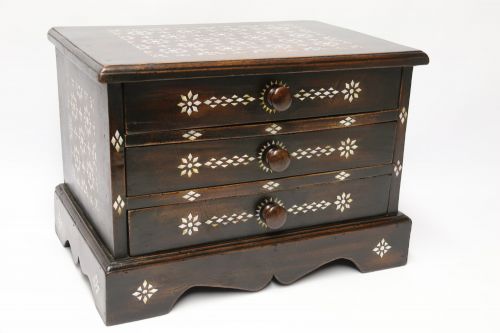
The precision of the surface decoration and inlay work distinguishes standard boxes from exceptional examples. Sadeli mosaic panels featuring tighter, more complex geometric alignment demonstrate superior craftsmanship compared to simpler linear arrangements.
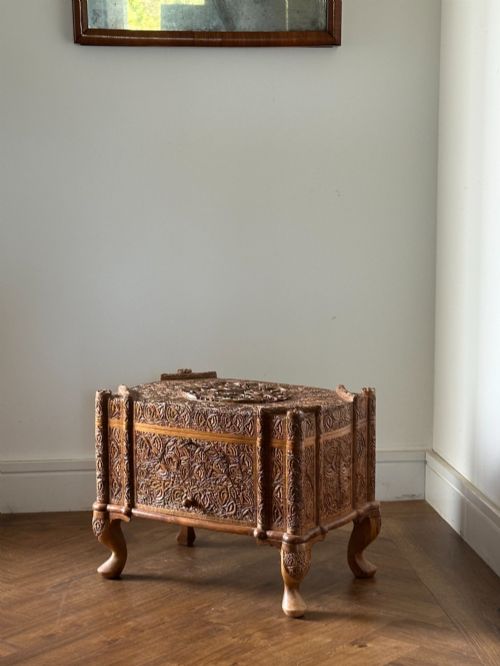
Material selection and depth of carving alter the character and desirability of a piece. Deeply undercut floral reliefs in fragrant sandalwood and solid ebony bodies represent higher-tier production than applied surface veneers.
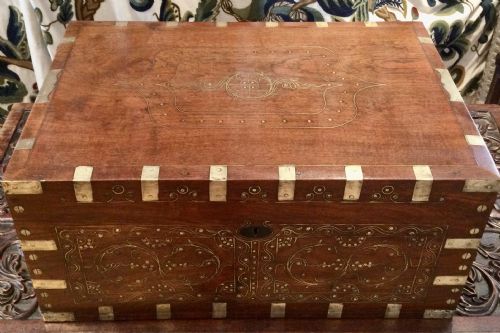
The integration of functional hardware, such as flush brass campaign handles and secure internal compartments, reflects the original intended tier of manufacture. Well-preserved internal trays and intact quill or mosaic elements indicate careful historical handling.
Common forms on this page include Victorian campaign trunks, writing boxes, and intricately carved sandalwood trinket caskets.
The Anglo Indian Jewellery Box Glossary
- Sadeli mosaic
- A complex micro-mosaic technique using geometric slivers of bone, horn, and metal arranged in intricate patterns. It creates striking banded borders on nineteenth-century boxes.
- Campaign box
- Portable furniture and storage fitted with recessed brass handles and corner brackets. These trunks and boxes were built for travel by military officers during the British colonial period.
- Porcupine quill work
- Surface decoration utilising natural quills, often contrasted against dark ebony or bone. This technique appears on specialised boxes from Ceylon.
- Sarcophagus-shaped
- A box form featuring a sloping lid and pedestal base mimicking classical monumental design. This silhouette provides generous internal volume for jewellery storage.
- Coromandel
- A dense, heavily figured tropical hardwood prized for its dark grain and rich colour. It provides a luxurious dark body for nineteenth-century workboxes.
Anglo Indian Jewellery Box: Frequently Asked Questions
What materials were used to make these boxes?
Artisans built these pieces using regional hardwoods such as teak, sandalwood, ebony, and coromandel. Surfaces were frequently embellished with bone, horn, silver, and porcupine quills.
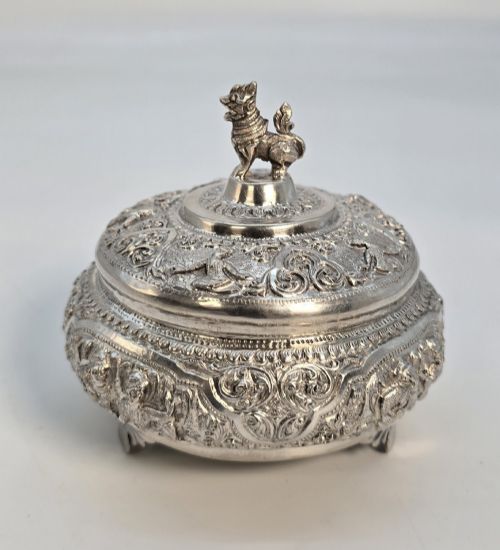
Metal components typically include brass for campaign mounts and hinges, alongside silver overlay for decorative panels and lidded jars.
How do I care for a sandalwood box?
Keep the wood away from direct sunlight and extreme humidity changes to prevent the timber from splitting or warping. Dust gently with a dry, soft cloth.
Avoid using liquid polishes or modern cleaning chemicals, as these can damage delicate inlay work and natural wood finishes.
Were these boxes made for British officers?
Many campaign-style pieces with brass corners and recessed handles were commissioned by British military personnel and administrators stationed abroad. They needed robust storage for personal documents, writing materials, and valuables during transit.
Other domestic forms, such as sewing boxes and trinket caskets, were produced for export and local civilian use.
What is sadeli work?
Sadeli work is a specialised micro-mosaic craft involving tiny geometric tiles made from bone, horn, and metal. Artisans bundled these elements together and sliced them transversely to create decorative border strips.
These strips were then applied to wooden box surfaces to form intricate, repeating patterns.