
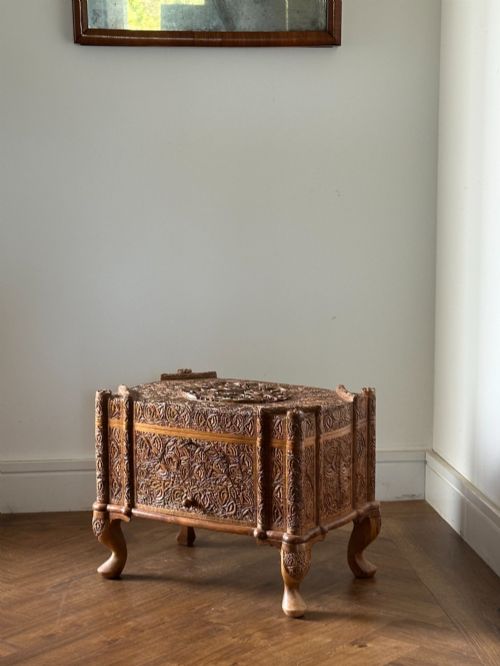
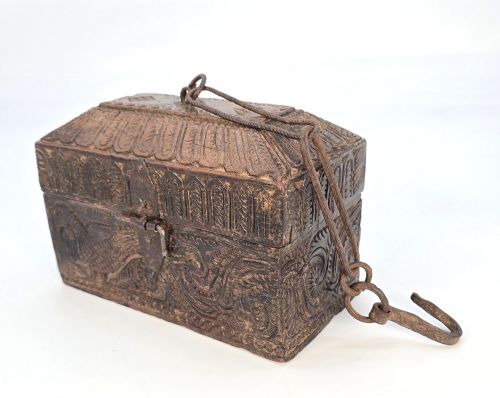


Indian Wooden Casket
These indian wooden casket examples are crafted boxes designed for storage, bringing intricate carving and rich timbers into your interior scheme.
Indian Wooden Casket
An indian wooden casket encompasses various forms such as jewellery boxes, trinket boxes, stationery boxes, and spice boxes originating from different periods. Buyers will most frequently encounter nineteenth-century pieces alongside examples from the early twentieth century.
Forms range from compact sarcophagus-shaped sandalwood jewellery boxes to larger dowry chests and campaign boxes adorned with brass details. The variety reflects historical trade and social exchanges between Britain and the subcontinent.
How They Were Made
Construction relies heavily on dense timbers such as teak, sandalwood, ebony, walnut, and various hardwoods selected for durability and carving suitability. Artisans shaped these materials using hand tools to create structural panels and fitted compartments.
Surface ornamentation incorporates intricate carving alongside applied elements like brass mounts, wrought iron, and bone inlay. Porcupine quill work and coromandel highlights also appear, showcasing specialised regional craftsmanship.
What Varies in Quality
The refinement of the carving dictates the visual distinction between standard examples and superior pieces. Deeply undercut, crisp foliage and figures demonstrate higher artisan skill than shallow or mechanical incision.
Material selection and internal fitting integrity separate the tiers of craftsmanship. Solid exotic timbers and intact, well-fitted compartments elevate a piece above simpler constructions.
The Indian Wooden Casket Glossary
- Anglo-Indian
- A descriptive term for decorative arts produced in India under British influence during the colonial period. These items often combine local craftsmanship with European forms.
- Sarcophagus
- A box shape featuring a domed or stepped lid resembling a stone coffin, popular for nineteenth-century jewellery caskets. This silhouette provides internal depth for tiered trays.
- Cellarette
- A lockable container originally designed for holding bottles of wine or spirits. In this context, it refers to robust storage boxes with secure fittings.
- Coromandel
- A dense, heavily variegated timber prized for its dark brown colour and contrasting black streaks. It takes a high polish and was used for luxury workboxes.
Indian Wooden Casket: Frequently Asked Questions
What were indian wooden caskets used for?
These boxes served multiple domestic functions, primarily holding personal valuables, letters, spices, and trinkets.
Larger variants acted as dowry chests or campaign containers for military officers on the move.
How do I date an indian wooden casket?
Dating relies on timber choice, regional style descriptors, and hardware details like brass mounts.
Nineteenth-century pieces often display intricate sandalwood carving, while early twentieth-century examples show stylistic shifts.
Where were these boxes made?
They originated across the Indian subcontinent, with specific production centres linked to British colonial trade.
Anglo-Indian pieces reflect a fusion of local artisan traditions with European domestic furniture requirements.
How do I care for a wooden casket?
Keep the timber away from direct heat sources and sudden humidity fluctuations to prevent warping or splitting.
Dust gently with a dry, soft cloth and avoid chemical polishes that might damage historic finishes.