
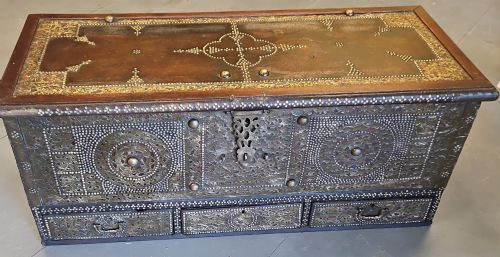
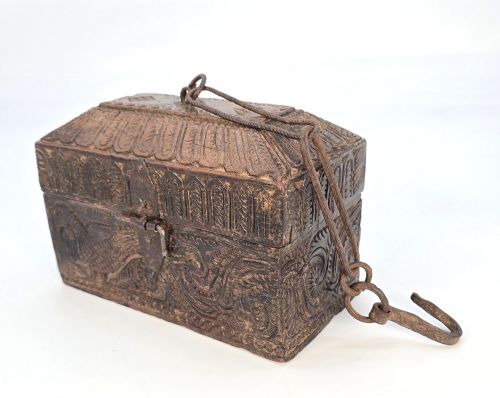


Carved Teak Box
These carved teak box items span dowry chests, spice containers and travel trunks originating from the 18th century through to the Edwardian period.
Carved Teak Box
A carved teak box encompasses everything from small spice containers and caskets to massive dowry chests and storage cabinets. These items originate primarily from Indian, Anglo-Indian, and Zanzibar traditions, often tied to regional vernacular and colonial history.
The most common forms on this page range from modest hardwood spice boxes to iron-bound blanket boxes and substantial ceremonial trunks. Buyers seek these pieces for their dense timber construction and deeply carved surface detail.
Dating spans from the 18th century through the Victorian and Edwardian eras, reflecting diverse regional carving styles and utilitarian purposes.
How they were made
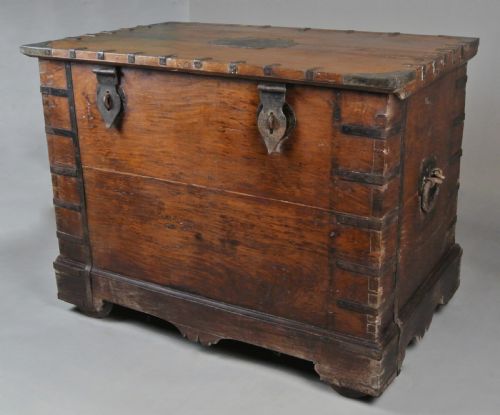
Construction relies heavily on durable teak and assorted hardwoods, frequently reinforced with functional brass mounts, iron binding, and wrought iron straps. These metal elements secure the heavy timber joints while adding structural contrast.
Surface ornamentation utilises manual carving techniques, creating intricate low-relief patterns typical of Anglo-Indian, traditional Indian, and Zanzibar workshops.
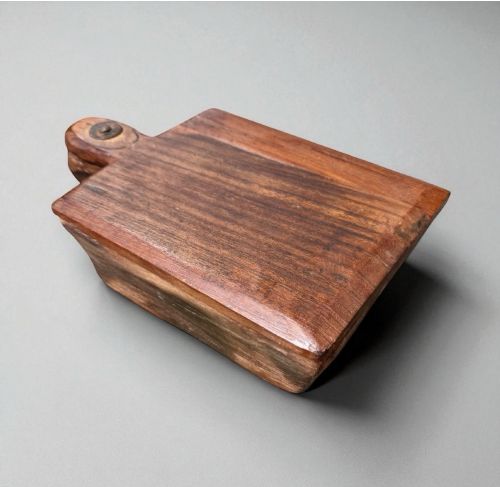
Some spice boxes feature hidden compartments designed to keep precious aromatics secure from domestic pilfering.
What varies in quality
Depth and precision of the hand carving separate simpler utilitarian containers from masterwork dowry chests and ceremonial coffers. Sharply defined motifs demonstrate superior hand execution.
The integration of original brass studs, corner brackets, and iron work preserves the integrity of the piece. Intact metalwork elevates the historical weight of the container.
The Carved Teak Box Glossary
- Damchiya
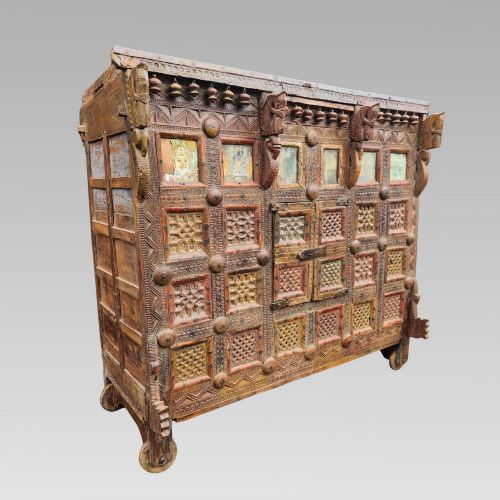
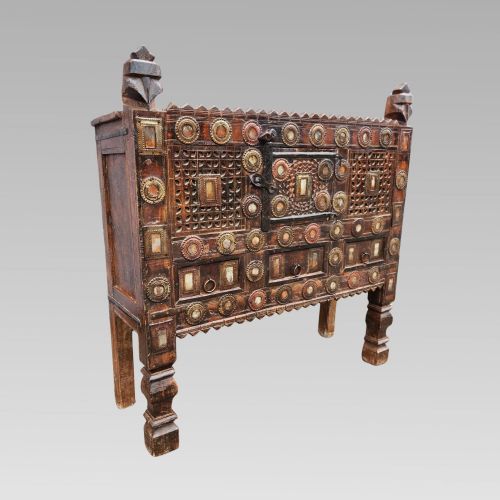
- A traditional Indian dowry chest or storage cabinet featuring heavy relief carving and compartmented interiors. These substantial pieces served a central role in household storage.
- Zanzibar chest
- A distinct type of heavy teak trunk adorned with brass studding, strapwork, and often complex corner mounts. They reflect maritime trade routes between India and East Africa.
- Cellarette
- A fitted box or cabinet designed originally for holding bottles of wine or spirits securely. In teak, these are robust containers often associated with colonial households.
- Sadeli work
- A micro-mosaic technique using horn, bone, ivory, and various woods arranged in geometric patterns on small boxes. It requires immense patience and specialist skill to produce.
Carved Teak Box: Frequently Asked Questions
What is a damchiya chest?
A damchiya is a large carved teak dowry chest traditionally used in Indian households for storing textiles and valuables.
These cabinets often feature deep relief carvings and substantial proportions designed to anchor a room's decor.
How do I identify a Zanzibar chest?
Zanzibar chests are typically constructed from teak and distinguished by heavy brass studding, decorative strapwork, and secured corners.
They reflect maritime trade and feature robust iron or brass hardware built for travel.
Where were these boxes made?
The pieces originate across India, Burma, and East Africa, often falling under Anglo-Indian, colonial, or traditional regional craft styles.
Local timber and indigenous carving traditions dictate the specific aesthetic of each region.
How do I care for antique teak?
Antique teak benefits from stable indoor humidity and minimal moisture to protect the dense natural oils within the wood.
Dusting gently with a dry cloth preserves both the raw timber grain and the intricate hand-carved surfaces.