




Colonial Wooden Casket
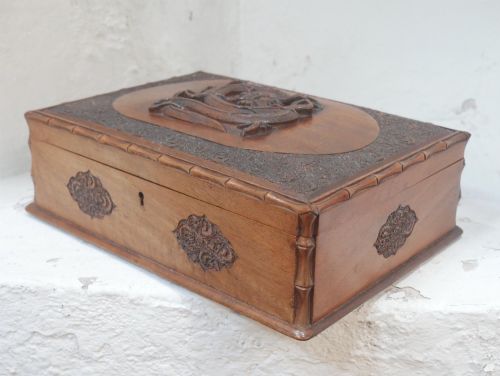
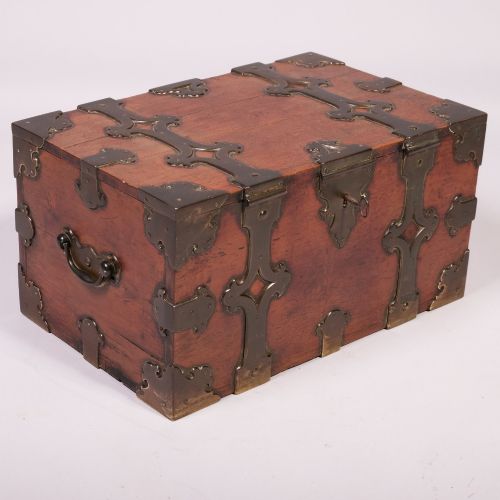
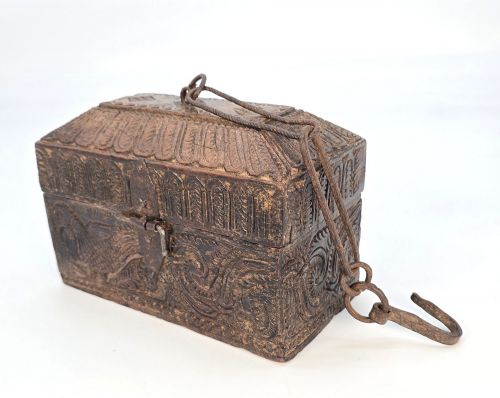
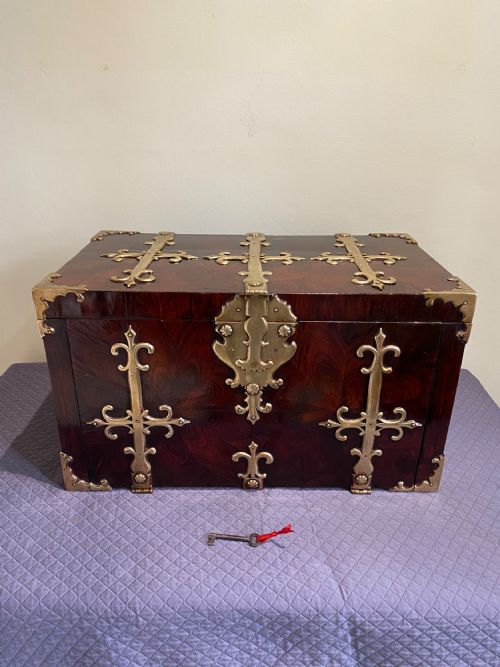
These colonial wooden caskets are sturdy, travelled boxes crafted overseas, offering practical storage with intricate carved or brass-mounted designs.
Colonial Wooden Casket
A colonial wooden casket is a portable container designed for storage or travel, encompassing forms such as jewellery boxes, spice boxes, stationery boxes, and strongboxes. When searching for a colonial wooden casket, buyers encounter pieces originating from various global territories influenced by European trade and settlement.
The pieces on this page span several centuries, with the nineteenth century heavily represented alongside examples from the eighteenth and twentieth centuries. Forms range from large sarcophagus-shaped jewellery caskets and workboxes to dome-top tin caskets and campaign boxes bearing regimental arms.
Origins are diverse, reflecting Anglo-Indian, Spanish colonial, Dutch colonial, and Iberian contexts. Materials vary from dense tropical hardwoods to European walnut, often complemented by intricate surface decoration.
Materials and Construction
Construction relies heavily on dense timbers selected to withstand warm climates and transport, including teak, sandalwood, ebony, coromandel, camphor, and walnut. These woods are frequently worked into solid forms or applied as veneers over a secondary hardwood base.
Surface embellishment defines many examples, utilising bone inlay, porcupine quill work, and deep relief carving depicting foliage or figures. Metalwork plays a structural and decorative role, incorporating brass mounts, corner brackets, and wrought iron straps or carrying handles.
Colonial Wooden Casket Retail Price Guide 2026
Typical asking prices for colonial wooden casket among the pieces listed under this phrase on Sellingantiques today, from the lower quarter to the upper quarter. They describe what is for sale here now, not the wider market.
Listings feature woods such as teak, sandalwood, ebony, coromandel, and camphor across periods ranging from the seventeenth century to the mid-twentieth century.
Assessing Quality and Execution
Quality rests in the precision of the joinery and the depth of the carving, where sharper, more articulate chisel work distinguishes superior pieces. The choice of timber also dictates standard, with solid ebony, coromandel, or fragrant camphor carrying greater distinction than simpler utilitarian woods.
Internal fitting contributes to value, separating basic containers from elaborate workboxes and stationery chests complete with fitted compartments, secret drawers, and intact key locks. The retention of original brass or iron hardware without later replacement preserves the integrity of the piece.
The Colonial Wooden Casket Glossary
- Camphor
- A fragrant wood valued for its insect-repellent properties, commonly utilised in campaign and storage chests made for tropical use.
- Casket
- A decorative box or chest, often hinged and lined, traditionally used for storing valuables, letters, or jewellery.
- Cellarette
- A lockable container originally designed to hold bottles of wine or spirits during travel or dining.
- Porcupine Quill Box
- A decorative container surfaced with banded porcupine quills, typically produced in nineteenth-century Ceylon.
- Sarcophagus
- A box shape featuring a domed or sloping lid tapering towards the base, frequently adopted for nineteenth-century jewellery caskets.
Colonial Wooden Casket: Frequently Asked Questions
What were colonial wooden caskets used for?
These boxes served multiple domestic and administrative purposes across distant outposts and trading stations. Owners stored correspondence, jewellery, spices, and personal valuables within them during long sea voyages.
Larger variants functioned as portable desks, workboxes, or cellarettes for beverages. Their robust construction ensured that precious items remained secure and protected from humidity or transit damage.
How do I date a colonial wooden casket?
Dating relies on examining the timber species, construction methods, and hardware styles. Eighteenth-century examples often display simpler, robust dovetailing and hand-forged iron or brass mounts, whereas nineteenth-century pieces frequently feature elaborate relief carving and fitted interiors.
Stylistic influences such as Spanish Baroque or Anglo-Indian motifs offer further clues to the period and region of manufacture.
Are these boxes suitable for daily use?
Many of these containers remain entirely functional for storing modern jewellery, documents, or small keepsakes on a desk or dressing table. Their durable hardwood construction handles everyday handling well.
Care should be taken to protect delicate surfaces like bone inlay or porcupine quill work from excessive moisture and direct sunlight.
What styles are found in colonial woodwork?
The styles reflect a fusion of European furniture forms with local craftsmanship and indigenous materials. Anglo-Indian and Dutch colonial pieces combine European cabinet designs with intricate native carving traditions.
Spanish colonial and Iberian Baroque influences appear in walnut boxes featuring distinct panel proportions and heavy metal mounts.