
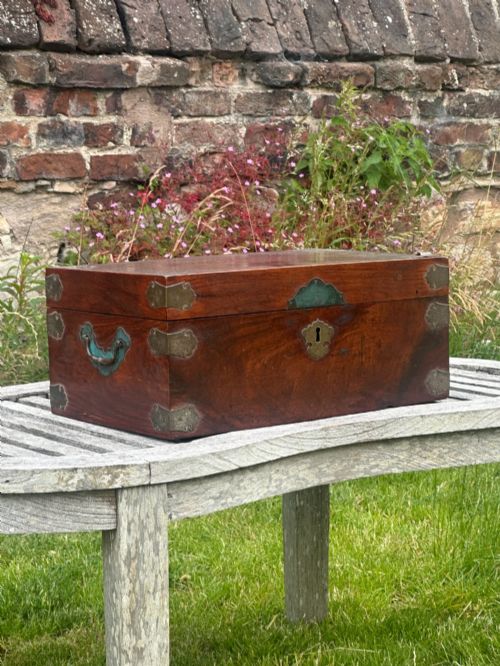


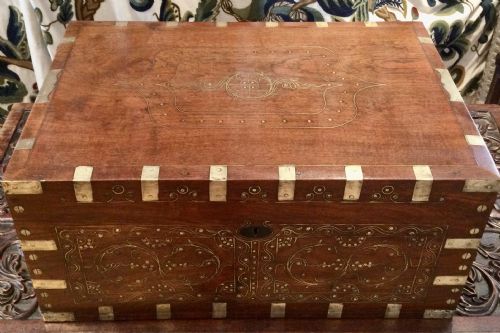


Colonial Indian Document Box
A colonial indian document box combines distant timber, brass mounts and intricate local craftsmanship into a sturdy portable receptacle.
Colonial Indian Document Box
A colonial indian document box is typically a portable desk, deed container or correspondence chest made for British officials and travellers abroad. These pieces surface mostly from the nineteenth century, reflecting the tastes of the Victorian period and campaign life.
The dominant forms on this page include writing boxes, stationery boxes and miniature trunks rather than simple flat storage. They span Anglo-Indian, Ceylonese and Burmese workshops, often adopting campaign styling with inset brass handles and reinforced corners.
Buyers encounter solid tropical hardwoods like ebony, teak and padouk, alongside decorative items featuring porcupine quill or bone inlay. Many examples double as writing slopes with fitted internal compartments for ink and paper.
Materials and Construction
Cabinetmakers utilised dense timbers such as ebony, teak and padouk, which resisted splitting in humid climates and took a high polish. These hardwoods formed the structural carcass of each box, frequently paired with secondary woods for internal dividers.
Metalwork played a structural and decorative role, with heavy brass strapping, corner brackets and campaign-style flush handles securing the edges. Intricate surface detail relied on bone inlay, carved wood reliefs and alternating porcupine quill arrangements.
Assessing Quality
Quality rests upon the precision of the joinery and the selection of the timber grain, particularly in solid ebony versus veneered alternatives. Superior boxes display crisp carving, tight mitres and heavy gauge brass fittings that sit flush with the wood.
Internal complexity elevates a piece, distinguishing simple chests from fully fitted writing slopes with secret compartments and intact velvet writing surfaces. The finesse of specialised techniques like Sadeli mosaic work or delicate bone inlay marks the boundary between standard trade goods and exceptional craftsmanship.
The Colonial Indian Document Box Glossary
- Anglo-Indian
- A style describing furniture and decorative objects made in the Indian subcontinent during the British colonial period, blending British forms with local woodworking traditions.
- Campaign trunk
- A portable chest or box constructed in sections with recessed brass handles and reinforced corners for military officers on the march.
- Padouk
- A heavy, durable reddish-brown tropical hardwood native to Asia and Africa, frequently utilised for nineteenth-century export boxes.
- Sadeli work
- A form of micro-mosaic craft from western India utilising geometric patterns made from horn, bone, wire and ivory set into a dark wood matrix.
- Writing slope
- A portable desk featuring a sloping lid that opens to reveal compartments for pens, ink and stationery, often lined with leather or velvet.
Colonial Indian Document Box: Frequently Asked Questions
What is a colonial indian document box?
A colonial indian document box is a portable nineteenth-century wooden chest or writing slope made in the Indian subcontinent for British officials. These pieces were designed to transport papers and letters securely during travel.
They combine robust tropical hardwoods with decorative elements like brass mounts, bone inlay and carved relief work. Many open to reveal fitted interiors for stationery and inkwells.
How were these boxes used?
Owners used these boxes to store important deeds, correspondence and writing materials while stationed abroad or travelling home. The sloping lids of writing box variants provided a stable surface for penning letters.
Their sturdy construction and lockable lids ensured confidential documents remained protected from moisture and unauthorised viewing. They served as personal desks for administrators far from permanent offices.
What woods are commonly found?
Makers relied heavily on dense tropical timbers such as ebony, teak and padouk. These woods provided the necessary durability and weight for objects subjected to long journeys.
Some examples incorporate contrasting materials like bone inlay, porcupine quill or lighter secondary timbers to create decorative surface patterns.