
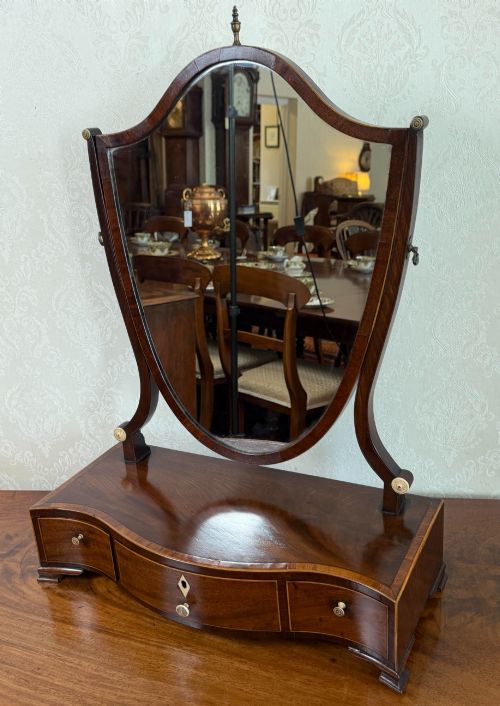
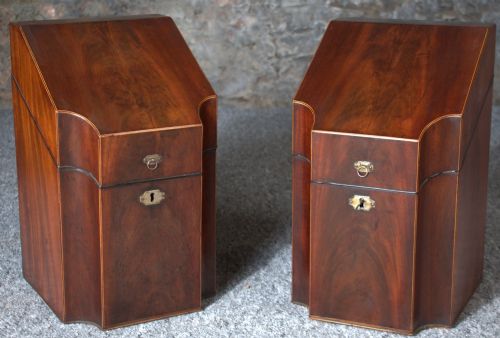
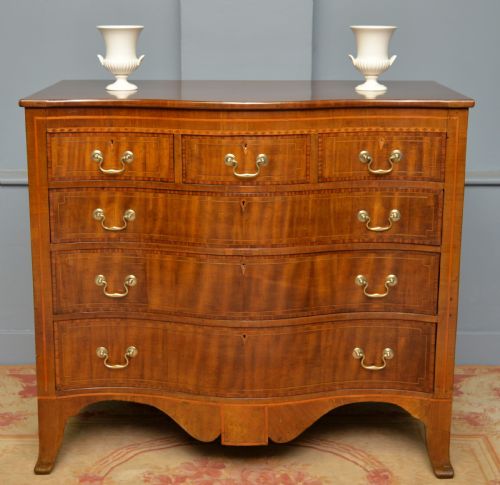


Serpentine Inlaid Box
These serpentine inlaid box examples bring together rich mahogany and delicate stringing, offering practical storage with distinct period character.
Serpentine Inlaid Box
A serpentine inlaid box combines a curving front contour with contrasting wood inlays, turning utilitarian containers into decorative focal points. These pieces originate across the eighteenth and nineteenth centuries, spanning Georgian, Victorian, and Edwardian periods.
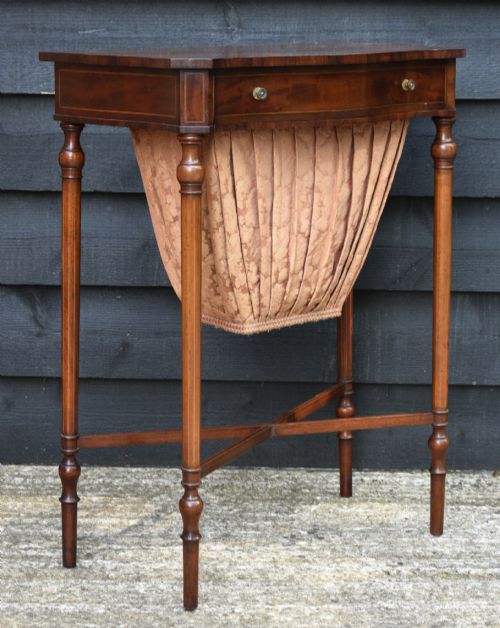
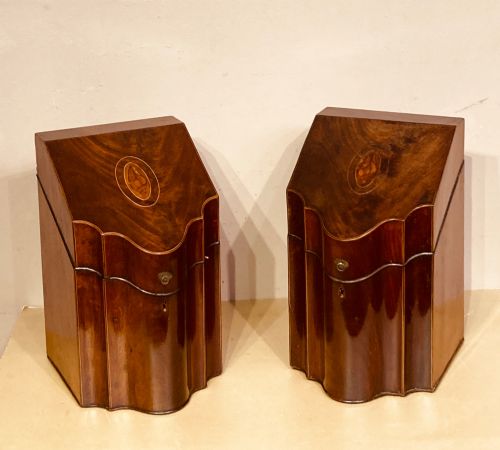
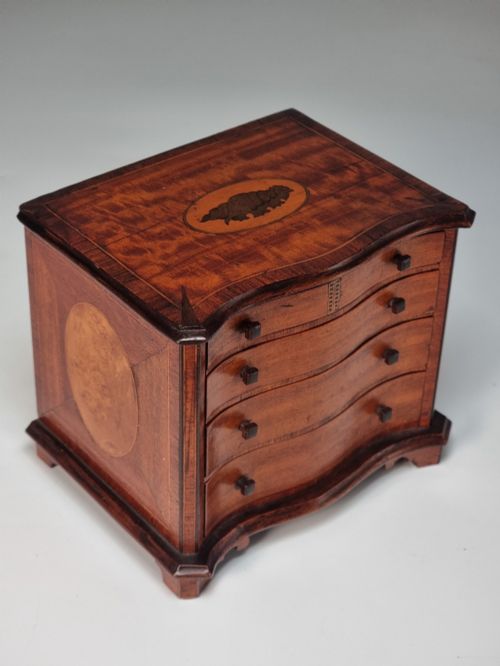
Knife boxes and cutlery boxes form a large portion of the available items, alongside stationery cabinets, sewing tables, and miniature chests of drawers. Most examples utilise mahogany as a primary timber, paired with lighter contrasting details.
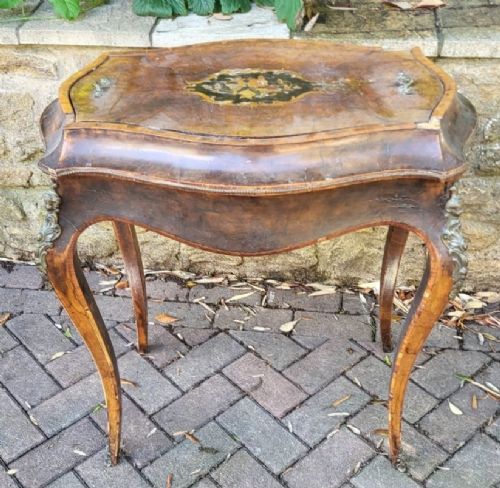
Buyers also encounter collectors boxes, tea caddies, and dressing table mirrors featuring the characteristic undulating outline. Originating from English and French workshops, these items demonstrate varied scales from small desk accessories to freestanding tables.
Materials and Construction
Cabinet makers constructed these pieces primarily from solid and veneered mahogany, often selecting fiddleback or burr walnut for decorative grain patterns. Satinwood and boxwood provided the pale contrast needed for intricate stringing and geometric inlays.
Makers shaped the distinctive undulating front by carefully sawing and steaming timber to fit the serpentine profile. Brass mounts, hinges, and handles added functional security and structural definition to the wooden bodies.
Some nineteenth century examples hid their contents behind locked French doors, guarding private collections of miniature bottles or precious trinkets.
Evaluating Quality
The precision of the inlay work marks the difference between standard production and exceptional craftsmanship. Crisp, tight lines of boxwood and satinwood indicate a skilled hand, whereas careless gaps reveal hurried construction.
Timber selection heavily influences the overall visual impact of the piece. Well-figured mahogany combined with harmonious contrasting veneers distinguishes superior examples from plain or heavily repaired items.
A. F. Lloyd, Bideford
The Serpentine Inlaid Box Glossary
- Serpentine
- A curved furniture front shaped in a convex centre flanked by concave sides, resembling the undulating coils of a snake. This profile requires advanced woodworking skill to execute cleanly.
- Stringing
- Thin lines of contrasting wood inlaid into grooves on a furniture surface to create geometric borders and panels. Boxwood and ebony are frequent choices for this delicate decorative technique.
- Fiddleback
- A descriptive term for wood grain possessing fine, undulating ripples that catch the light like the back of a violin. It typically appears in high quality mahogany.
- Bijouterie
- A small cabinet or box designed specifically for displaying jewellery or small curiosities. These pieces often feature glass lids or delicate internal compartments.
- Cave a liqueur
- A fitted wooden box containing decanters and glasses for portable entertaining. They frequently utilise exotic veneers and brass inlay.
Serpentine Inlaid Box: Frequently Asked Questions
What were serpentine knife boxes used for?
Georgian households placed these tall, sloping containers on sideboards to store silver-handled cutlery upright when not in use. The curved interior tiers kept knives organised and protected from tarnishing.
Over time, many of these containers found new purpose as stationery boxes or letter holders once dining fashions changed.
How do I date a mahogany knife box?
Eighteenth century examples typically feature dovetail construction, original brasses, and specific internal partitions designed for cutlery. Examining the secondary timbers and the style of the inlay provides clear clues to the decade of manufacture.
Later Victorian and Edwardian revivals often employ machine-cut elements and different internal fittings compared to their Georgian predecessors.
Where were these inlaid boxes made?
English workshops produced the majority of the mahogany and satinwood knife boxes and chests seen in these listings. French makers frequently worked with exotic materials like thuya wood, incorporating brass inlay for decorative liqueur and collectors cabinets.
Regional cabinet makers across Britain also contributed signed or labeled examples, particularly during the Edwardian period.
How should I care for antique wood boxes?
Keep wooden boxes away from direct sunlight and radiators to prevent the delicate veneers and boxwood stringing from drying out and lifting. Regular dusting with a soft, dry cloth maintains the finish without building up heavy wax residues.
Maintaining a stable room humidity protects both the timber body and the original brass hardware from stress.