





Decorative Wooden Chest
A decorative wooden chest brings craftsmanship and texture into a room, holding small treasures or standing alone as a focal point.
Decorative Wooden Chest
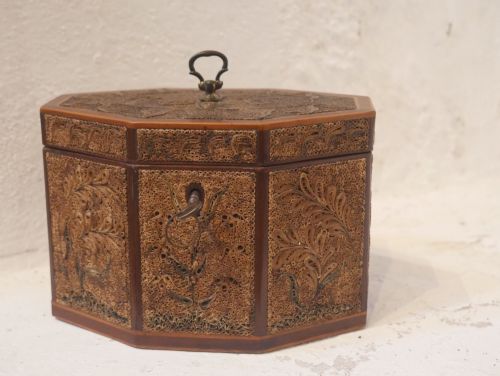
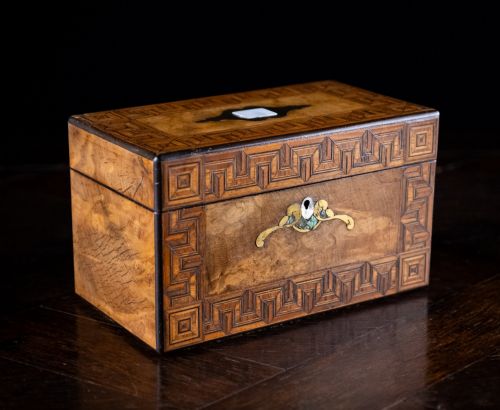
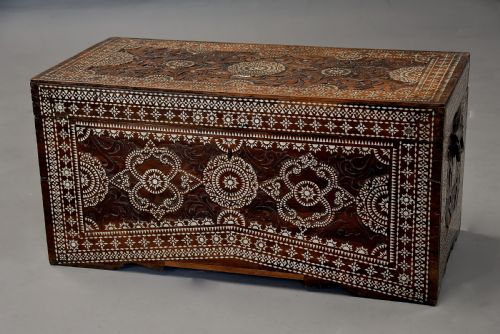
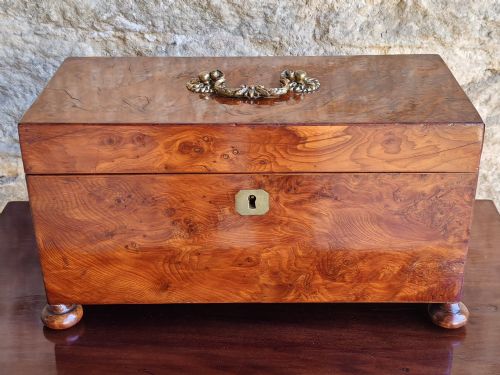
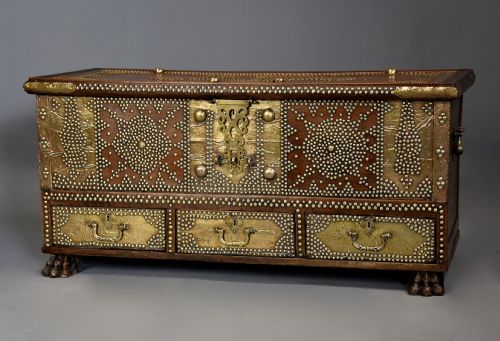
A decorative wooden chest encompasses a varied selection of antique boxes, caskets, trunks and tea caddies spanning several centuries. Buyers searching this phrase encounter everything from Georgian and Regency tea caddies to Victorian burr walnut caskets and Middle Eastern trunks.
The selection ranges across formal British cabinet-making, folk art and international export pieces, reflecting diverse uses from storing tea and documents to holding jewellery and trinkets.
Most examples originate from the eighteenth, nineteenth and early twentieth centuries, constructed in various timbers and embellished with contrasting inlays, metal mounts or painted finishes.
How they were made
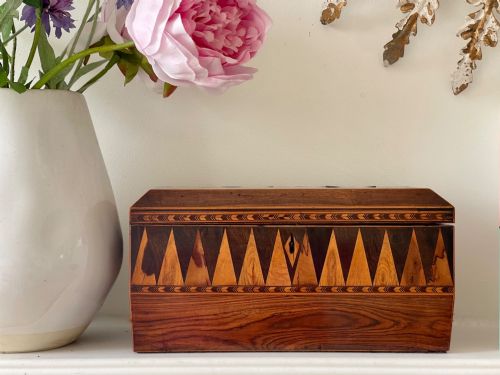
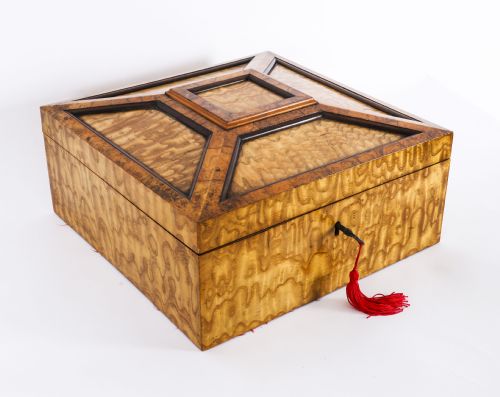
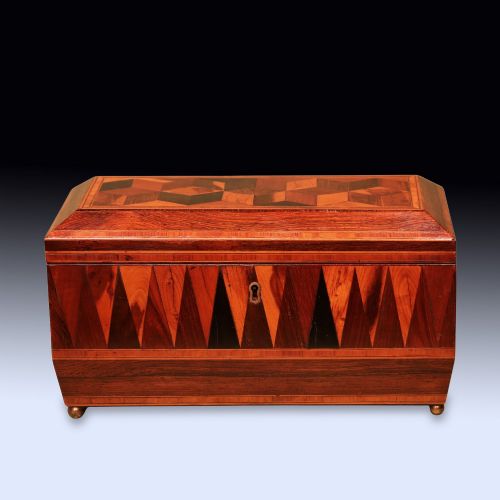
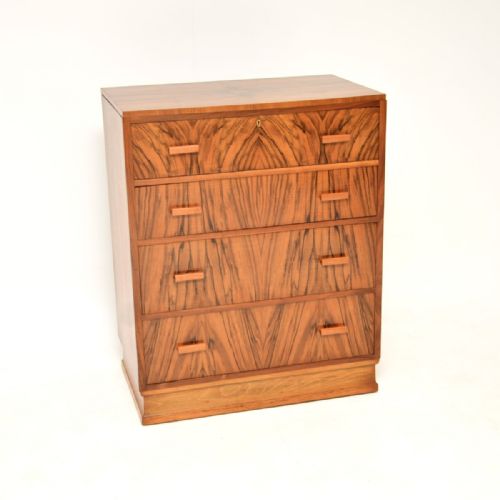
Cabinet-makers utilised dense timbers such as rosewood, walnut, mahogany and burr woods, often selecting them for striking natural grain patterns. Surfaces were frequently decorated with parquetry, marquetry or intricate woodwork techniques like Tunbridge ware.
Metals including brass and copper appear frequently as bound corners, studwork, locks and handles, while organic materials such as mother of pearl, bone and tortoiseshell were shaped into fine inlaid motifs and escutcheons.
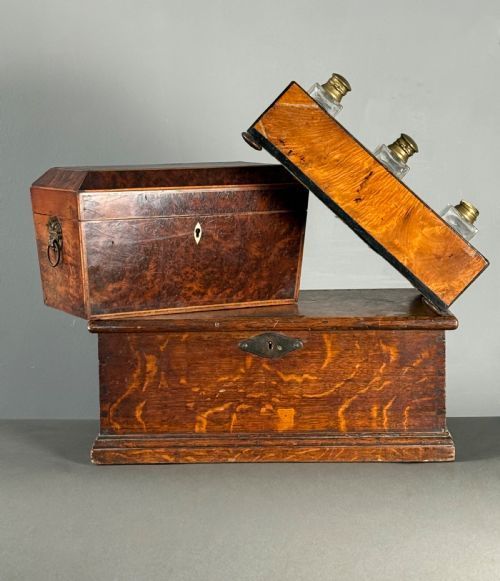
Some tea caddies include original glass mixing sticks alongside delicate crystal bowls for blending loose leaves.
What varies in quality
The calibre of a piece depends heavily on the precision of the joinery, the complexity of the parquetry or inlay, and the survival of original interior fittings such as mixing bowls, compartments and velvet linings.
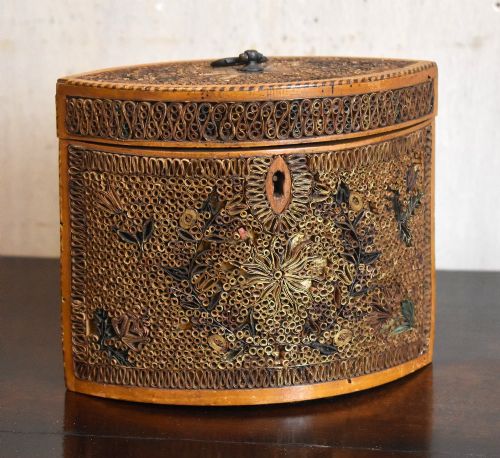
Superior examples display balanced proportions, high-grade timber selections with rich figuring, and meticulous attention to small decorative details like hand-engraved brass mounts or delicate paper filigree.
Tahan of Paris
The Decorative Wooden Chest Glossary
- Tea caddy
- A small box designed to store tea leaves securely, often featuring fitted interior compartments and a mixing bowl.
- Parquetry
- A geometric mosaic of wood pieces used for surface decoration on boxes and furniture.
- Tunbridge ware
- A form of mosaic woodwork produced in Kent using thousands of tiny coloured wood blocks to create pictorial or geometric designs.
- Boulle
- A style of marquetry using tortoiseshell and brass inlay, named after a famous French cabinet-maker.
- Sarcophagus
- A box shape featuring a sloping lid profile, popular for tea caddies and workboxes during the Regency period.
Decorative Wooden Chest: Frequently Asked Questions
How were tea caddies used?
Tea caddies served to store precious tea leaves safely under lock and key in period households, protecting the expensive commodity from moisture and theft. Servants or hosts prepared infusions using the internal canisters and mixing bowls housed inside.
Over time, changing social habits turned these functional containers into highly ornamental objects displayed prominently on side tables or tea tables in the parlour.
What is Tunbridge ware?
Tunbridge ware is a specialised form of decorative woodworking originating from Kent, characterised by intricate mosaic patterns built from tiny blocks of naturally coloured timbers. Artisans assembled these microscopic wooden tiles to depict floral motifs, geometric borders or architectural views.
Boxes and trinket cases decorated in this manner required immense patience and skill, making them highly collectible examples of nineteenth-century folk craft.
How do I date an antique wooden box?
Dating relies on observing construction methods, timber choices, lock mechanisms and prevailing stylistic periods such as Georgian, Regency or Victorian. Secondary woods inside the box, the style of hinges, and hand-cut dovetails offer reliable clues regarding age.
Certain decorative motifs, such as brass stringing or mother of pearl inlay, gained popularity during specific decades, helping narrow down the period of manufacture.
Can these boxes still be used for storage?
These decorative chests and caskets function very well today for holding modern items like jewellery, watches, letters or small keepsakes. Many retain their original velvet linings, compartments and working locks, offering practical utility alongside historic charm.
Placing them on desks, dressers or shelves allows their rich timbers and detailed inlays to be appreciated daily within a living space.