



Victorian Inlaid Jewellery Box
A victorian inlaid jewellery box is a tactile personal vault, combining dense native hardwoods with contrasting mother of pearl, brass or delicate wood mosaics to hold precious keepsakes.
Victorian Inlaid Jewellery Box
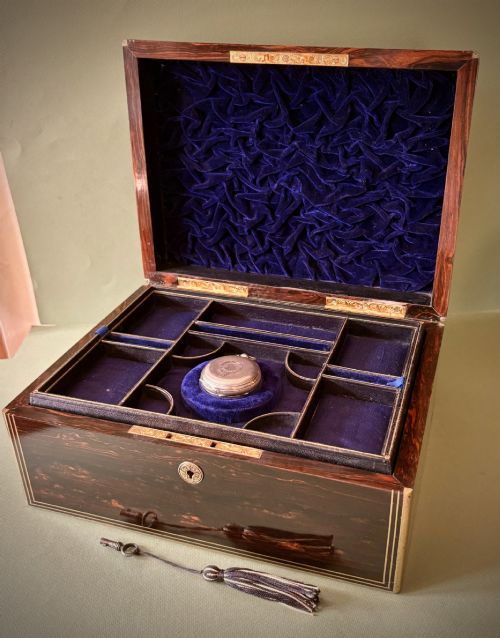
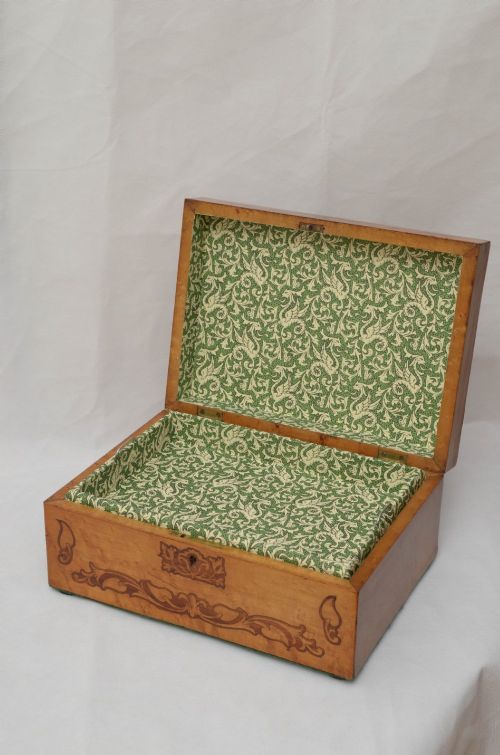
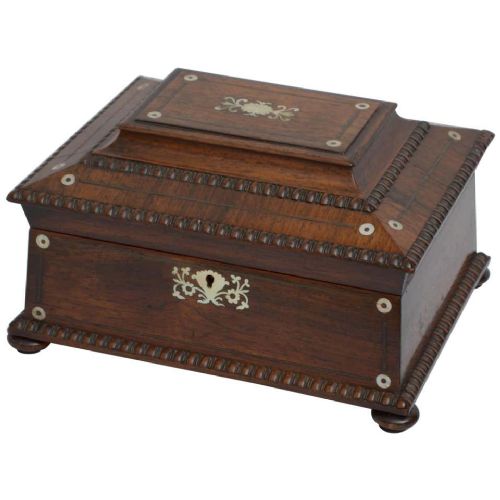
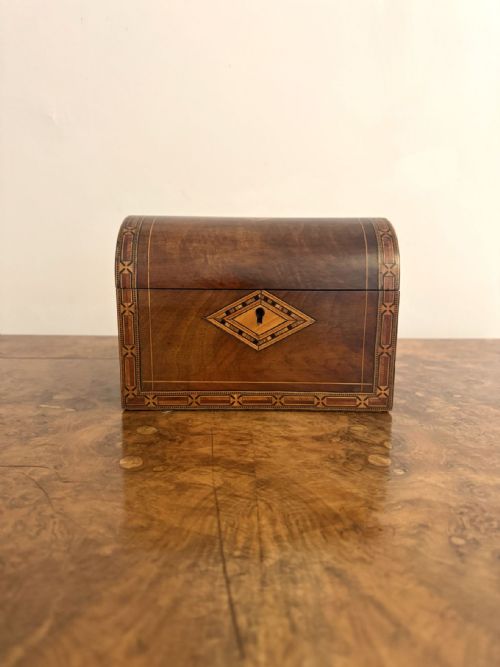
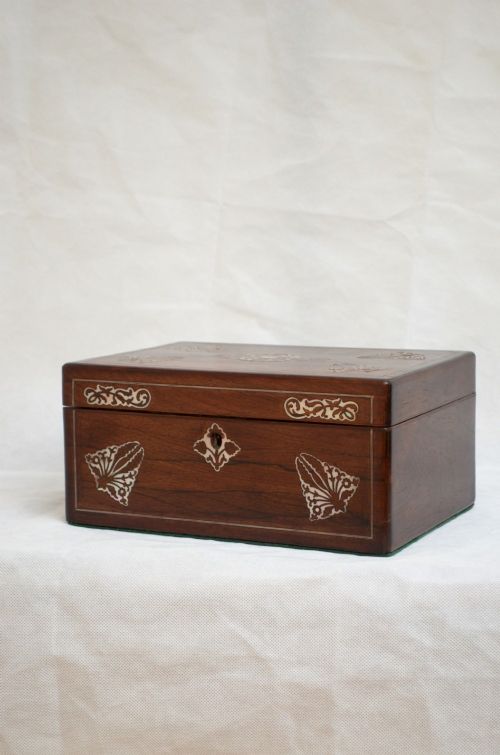
A victorian inlaid jewellery box encompasses portable caskets, desktop chests and fitted dressing cases designed to safeguard personal treasures. Walnut and rosewood dominate the selections, frequently enhanced by contrasting banding and intricate wood veneers.
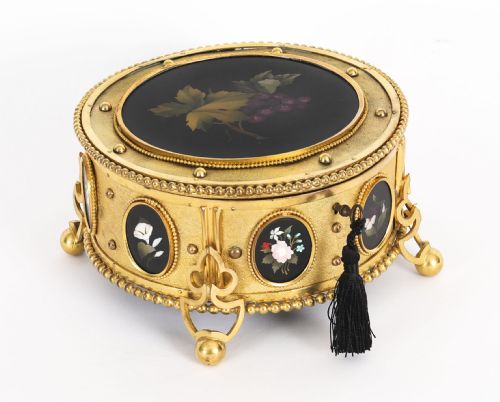
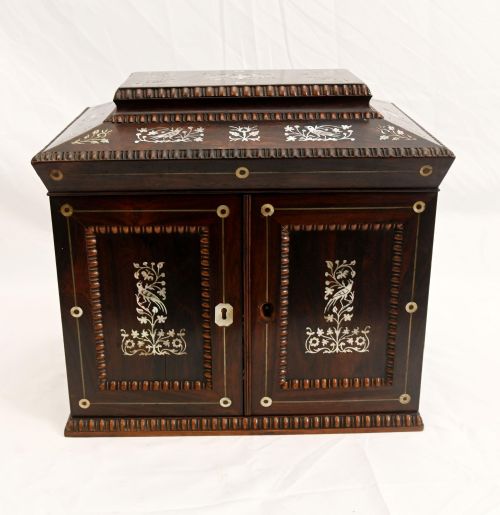
Most examples hail from the nineteenth century, ranging from simple rosewood keepsake boxes to elaborate burr walnut cabinets complete with internal trays and mirrors. Alongside British production, pieces reflect broader aesthetic influences, including Italian Sorrento marquetry and Anglo-Indian brass work.
How they were made
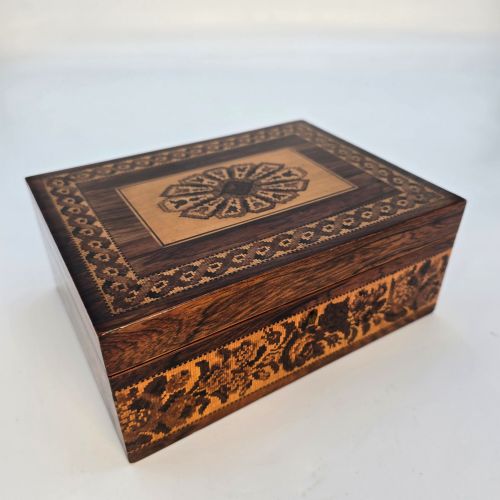
Cabinetmakers constructed the foundational carcase from sturdy timbers like mahogany or pine before applying fine decorative veneers such as burr walnut, rosewood or satinwood. Surfaces then received geometric parquetry, sweeping marquetry motifs or minute Tunbridge ware wood mosaics assembled from thousands of dyed blocks.
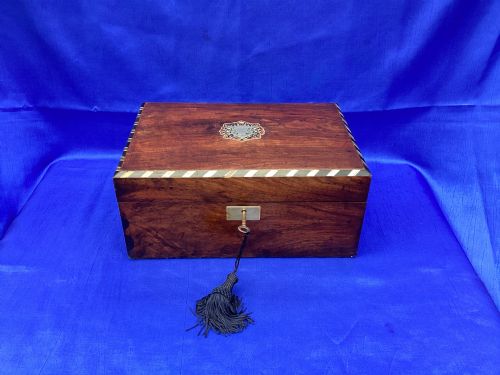
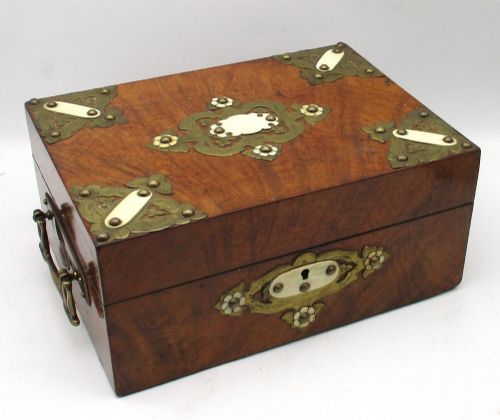
Inlaid details frequently incorporate shimmering mother of pearl, boxwood lines, and cast brass escutcheons or stringing. Interiors feature velvet, silk or roan leather linings tailored to hold rings, brooches and watches securely.
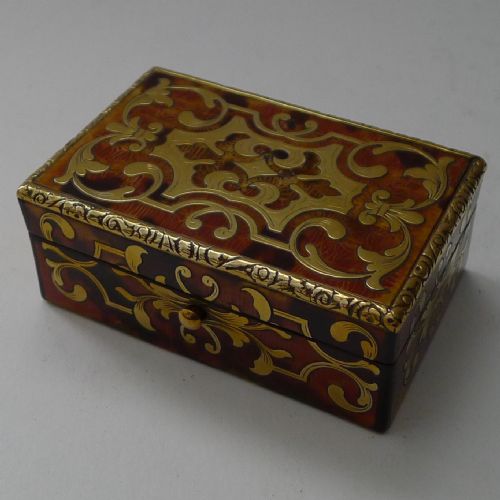
The inventory spans diverse origins, including English Tunbridge ware, French Boulle work, and Italian Sorrento marquetry.
What varies in quality
Distinction lies in the precision of the timber selection and the complexity of the surface ornamentation. Elaborate pictorial Tunbridge ware, intricate brass cartouches and multi-timber parquetry reflect higher artisanal skill than simple linear banding.
Internal architecture further separates standard boxes from elite pieces, particularly those featuring removable tiered trays, secret compartments, original silk linings, and fitted working locks with matching keys.
Edmund Nye·H Mitchell
The Victorian Inlaid Jewellery Box Glossary
- Marquetry
- A decorative technique applying fitted pieces of wood veneer to a structural carcase to form pictorial or geometric patterns. These designs often depict flowers, architectural scenes, or scrolling foliage.
- Tunbridge ware
- A specialised form of woodwork originating from Kent, utilising thousands of tiny cross-sectioned coloured wood blocks to create intricate mosaic pictures. Motifs frequently feature butterflies, geometric bands, or local landmarks.
- Parquetry
- A geometric mosaic of wood pieces used for surface decoration, similar to tiling in wood. It creates repeating patterns like cubes, chequers, or basket weaves across the lid and sides.
- Pietra dura
- An artistic technique using cut and fitted polished coloured stones to create pictorial designs. These hardstone plaques are often mounted centrally into the wooden lids of Italian caskets.
- Bijouterie
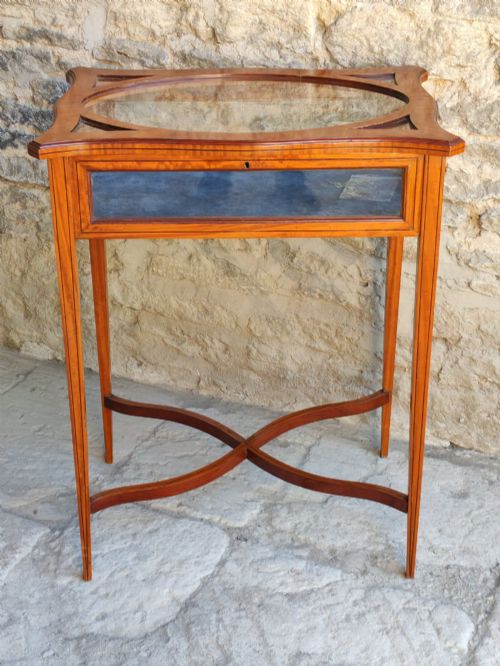
- A glass-topped display table or cabinet designed specifically to showcase small decorative objects and jewellery. They allow precious items to be viewed without opening the protective case.
- Escutcheon
- A protective metal plate surrounding a keyhole, usually cast in brass or bronze. It prevents the surrounding wood from wearing away through repeated use of the key.
Victorian Inlaid Jewellery Box: Frequently Asked Questions
What is a victorian inlaid jewellery box used for?
These boxes served domestic purposes to store rings, necklaces, and keepsakes on dressing tables or bureau desks. They kept delicate personal items organised and secure within lined compartments.
Today, they function practically to hold modern accessories while adding period character to a bedroom or living space. Their internal trays and velvet pads remain well-suited for everyday organisation.
How can I date a wooden jewellery box?
Dating relies on observing timber choices, construction methods, and stylistic cues present in the piece. Rosewood and burr walnut popularity peaked during the mid to late nineteenth century.
Hardware styles, such as brass escutcheons and lock mechanisms, provide further chronological clues. Examining internal paper linings and hinge types also helps narrow down the decade of manufacture.
What is Tunbridge inlay?
Tunbridge inlay involves assembling thousands of minute, naturally coloured wood blocks into intricate mosaic patterns. Craftsmen sliced these bundles to create repeating geometric borders or pictorial scenes.
This meticulous technique is characteristic of nineteenth-century English decorative boxes produced in Kent. The resulting surface has a smooth, tapestry-like appearance built entirely from different species of wood.
Are these boxes difficult to maintain?
Maintenance requires keeping the polished wood away from direct sunlight and extreme humidity changes. Gentle dusting with a dry, soft cloth preserves the delicate veneer and wax finish.
Leather and fabric interiors benefit from occasional airing rather than chemical cleaning. Treating the external hardwood with appropriate furniture wax maintains its natural sheen.