




Brass Feet Tea Caddy
A brass feet tea caddy brings elegant period containment to your sideboard, offering small proportions and handsome timber grain.
Brass Feet Tea Caddy
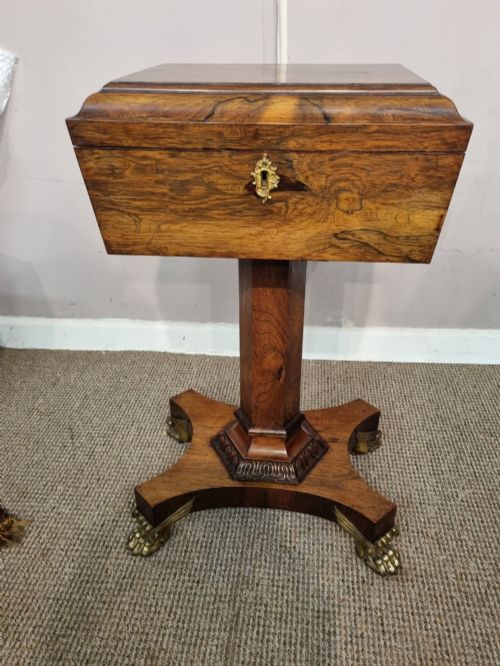
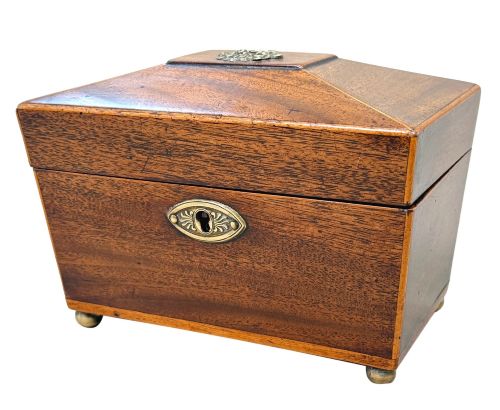
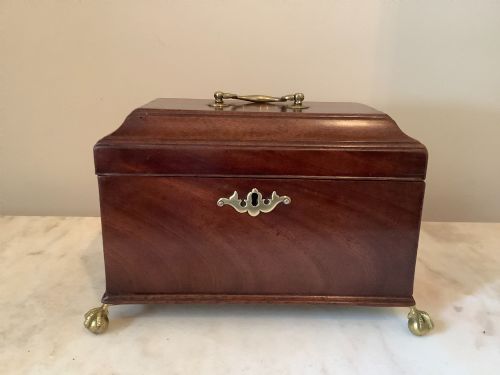
When you search for a brass feet tea caddy, you encounter domestic storage containers built to preserve precious loose leaf tea during the Georgian, Regency, and Victorian eras. These boxes frequently take the form of sarcophagus shapes, oblong tapered designs, or larger free standing teapoys.
The versions most commonly met on this page span the late eighteenth and early nineteenth centuries, executed in rich hardwoods like rosewood and mahogany. Many retain fitted internal compartments or secret drawers, reflecting their original purpose as secure repositories for valuable imports.
Materials and construction
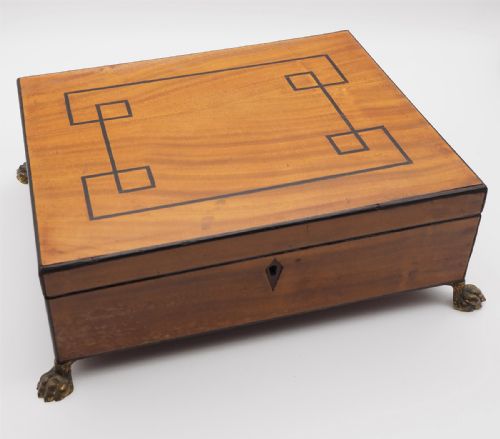
Cabinet makers constructed these pieces from dense tropical timbers such as mahogany and rosewood, often embellished with contrasting boxwood stringing or elaborate brass inlay. The distinct decorative feet are cast or stamped in brass, elevating the wooden body from the surface below.
Assessing quality and craftsmanship
Superior examples distinguish themselves through the precision of their timber selection and the crispness of any brass inlay work. The harmony between the main body and the cast brass feet indicates the care taken by the original maker.
The integrity of the interior fittings plays a major role in the overall standard of the piece. Boxes retaining their original internal lids, complete mixing bowls, and functioning locks sit at the upper end of the range.
The Brass Feet Tea Caddy Glossary
- Teapoy
- A freestanding container or small table designed to hold tea canisters, usually raised on a central pillar or four legs. These often provide larger proportions than standard tabletop caddies.
- Sarcophagus
- A box shape featuring a domed lid and sloping sides, echoing classical monumental architecture. This form became particularly popular during the Regency period.
- Stringing
- A narrow inlay of contrasting wood used to outline panels and edges on cabinet work. It adds subtle linear definition to the surface.
- Tortoiseshell
- The mottled shell of certain sea turtles applied as a thin veneer to wooden carcases. It creates a translucent amber and brown patterned surface.
Brass Feet Tea Caddy: Frequently Asked Questions
What were tea caddies used for?
These boxes stored expensive tea leaves safely under lock and key when tea was a costly luxury commodity. Servants or homeowners used internal compartments to keep green and black varieties separate.
They sat prominently in the parlour or dining room as a display of household wealth and status. Guests would watch the mistress of the house measure out the leaves before brewing.
How do I identify a Regency caddy?
Regency pieces often display bold rosewood veneers, brass inlay, and sarcophagus or oblong tapered profiles. They frequently date from the early nineteenth century and lean toward classical architectural influences.
Look for refined details such as ring handles, paw feet, and sophisticated internal layouts. The overall aesthetic favours dramatic wood grain over heavy carved ornament.
Are interiors usually complete?
Surviving interiors vary significantly, with many boxes losing their original glass mixing bowls or internal lidded canisters over the centuries. Finding a complete interior with matching components adds considerable interest for collectors.
Some examples retain small secret drawers operated by hidden wooden catches. These compartments held keys or extra portions of tea.
Where should I place a tea caddy?
These compact boxes sit well on sideboards, console tables, or bookshelves where their polished timber and brass mounts catch the light. Their modest scale allows them to fit easily into smaller domestic spaces.
Keep them away from direct sunlight and sudden temperature changes to protect the delicate wood veneers and shell inlays. Occasional dusting with a dry cloth keeps the surface maintained.