


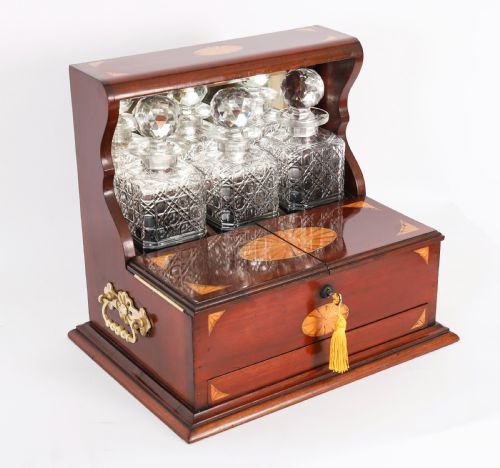


Inlaid Satinwood Box
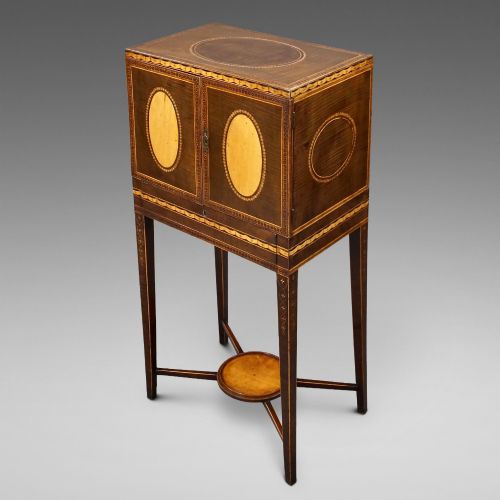
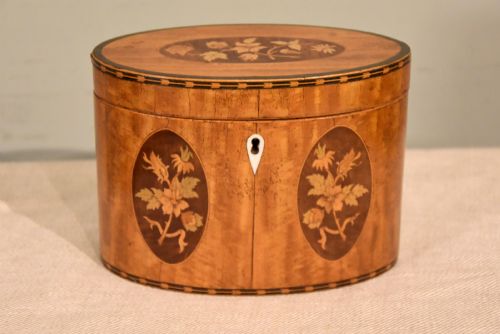
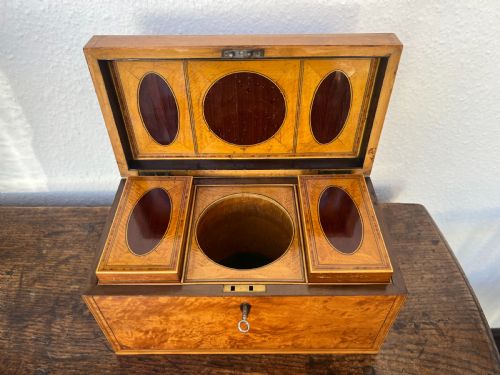
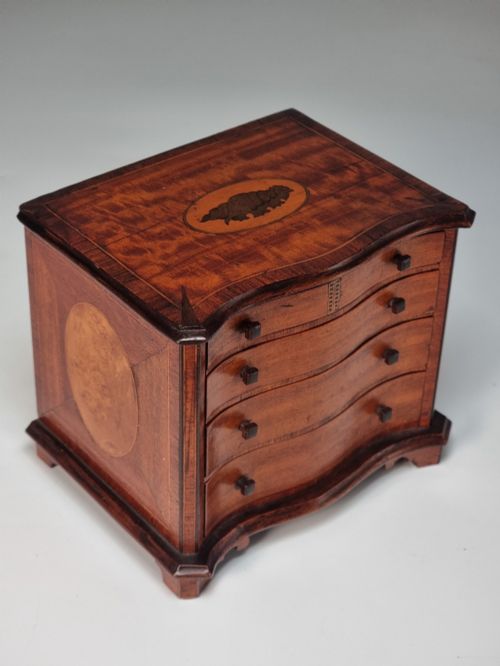
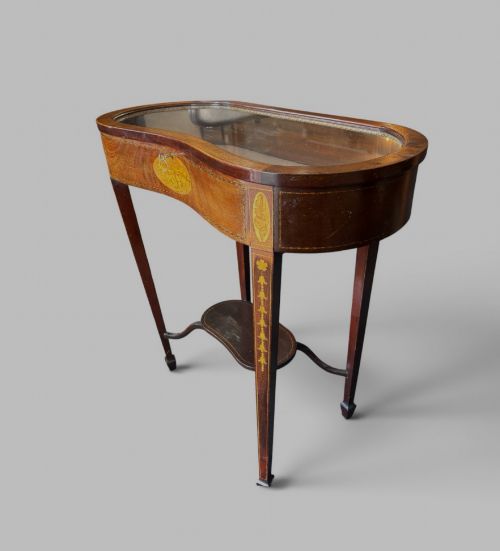
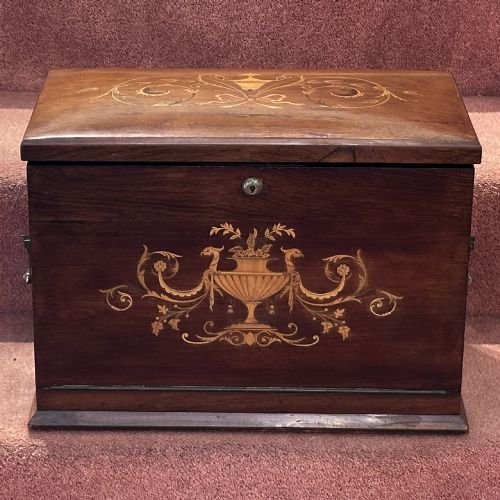
These inlaid satinwood box pieces are striking timber containers defined by pale figured wood and contrasting dark stringing.
What these pieces are
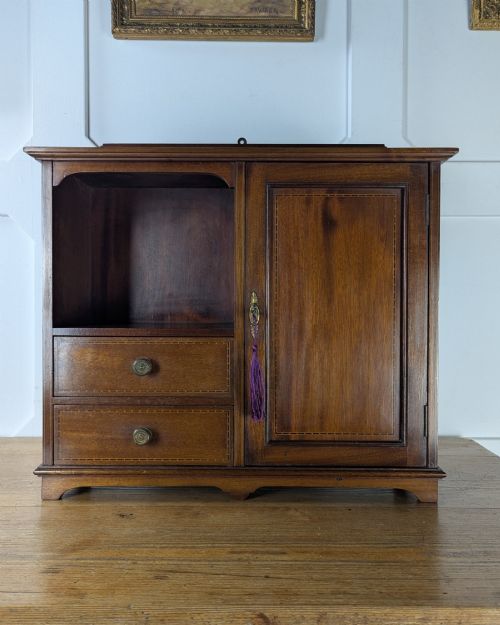
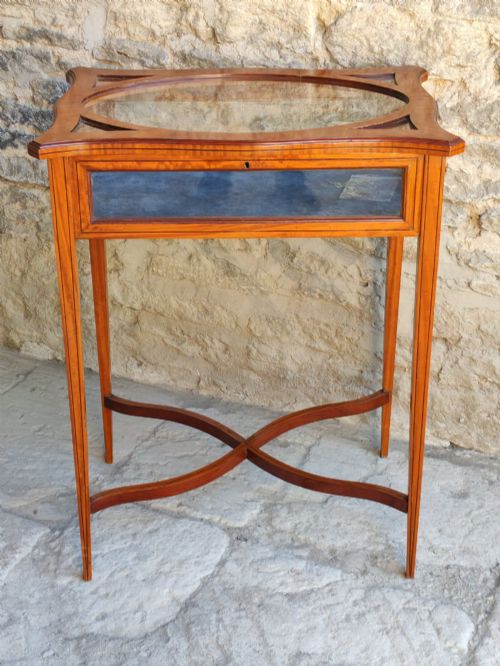
An inlaid satinwood box brings together timber of a luminous golden tone and precise contrasting borders, appearing across the Georgian, Regency and Edwardian periods. Collectors encounter these pieces in forms such as tea caddies, miniature chests of drawers, knife boxes, and personal writing boxes.
The objects span domestic storage items and small decorative pieces, with Georgian and Regency examples showing crisp butterfly, conch shell or geometric stringing. Later Edwardian interpretations continue the tradition of contrasting wood veneers and banded borders.
How they were made
Cabinet-makers constructed these boxes using fine satinwood veneers applied to solid timber carcases, often incorporating mahogany or walnut beneath the surface. Details rely on contrasting timbers such as ebony, rosewood, boxwood and calamander to create stringing and crossbanding.
Marquetry and inlay techniques involve recessing small pieces of stained bone or varied woods directly into the primary satinwood ground to form shells, butterflies or geometric motifs. Brass hinges, escutcheons and locks frequently complete the construction.
Retail Price Guide 2026
Typical UK retail prices for inlaid satinwood box, calculated from the Sellingantiques database of over a million retail prices indexed since 2003. This retail price guide relies exclusively on Sellingantiques data; no external sources or auction records are used, so the figures do not describe the wider market.
What varies in quality
Quality rests upon the choice of timber figure, the crispness of the contrasting inlay work, and the fidelity of the proportions. Superior examples display highly figured satinwood matched neatly across the lid and sides, accompanied by tightly executed boxwood and ebony stringing.
Internal arrangements and original hardware also separate standard items from finer workshop output. Well-preserved original escutcheons, working locks and intact interior compartments elevate a piece significantly.
A. F. Lloyd·Pearce
The Inlaid Satinwood Box Glossary
- Satinwood
- A hard, durable timber with a natural golden sheen and smooth texture, highly prized for fine cabinet-making. It takes a high polish that catches light across the grain.
- Inlay
- A decorative technique where small pieces of contrasting wood, bone or metal are set flush into recesses carved into the surface of the primary timber.
- Stringing
- Very narrow strips of dark or light wood inlaid in thin lines around the borders of panels, drawers or box lids to define the edges.
- Crossbanding
- A border of veneer laid with the grain running perpendicular to the main panel, framing the central surface.
- Escutcheon
- A small protective plate of brass or bone surrounding the keyhole of a box or drawer, often shaped by hand.
Frequently Asked Questions
What were inlaid satinwood boxes used for originally?
These boxes served practical domestic purposes, primarily holding precious dry tea leaves, cutlery, sewing implements or personal correspondence. Their decorative exterior suited placement on prominent surfaces within the home.
Over time, many adapted to new uses, such as knife boxes converted into stationery holders or tea caddies kept simply as display objects.
How do I care for satinwood furniture?
Keep wooden boxes out of direct sunlight and away from rapid temperature changes to prevent the timber and delicate veneer from drying or splitting. Dust gently with a dry, soft cloth and avoid chemical polishes.
Applying microcrystalline wax occasionally helps protect the polished surface without building up heavy residues.
How can I tell a Georgian box from an Edwardian one?
Georgian and Regency pieces tend to feature hand-cut stringing, distinct timber figuring, and motifs like conch shells or butterflies associated with Sheraton-influenced design. Construction often employs secondary hardwoods native to earlier cabinet-making.
Edwardian examples from around nineteen hundred often display lighter internal construction and slightly different veneer thicknesses, reflecting changing workshop machinery.
Are the interiors usually original?
Many boxes retain their fitted compartments, tea canisters, or velvet-lined floors, though some lost removable internal trays over the centuries. Examining the glue blocks and lining paper helps determine whether the interior matches the exterior age.
Minor repairs to interior compartments remain common due to the daily wear and tear these utility objects experienced.