




Sheraton Style Tea Caddy
These Sheraton style tea caddy examples are refined Georgian containers designed to store and preserve precious tea leaves.
What they are
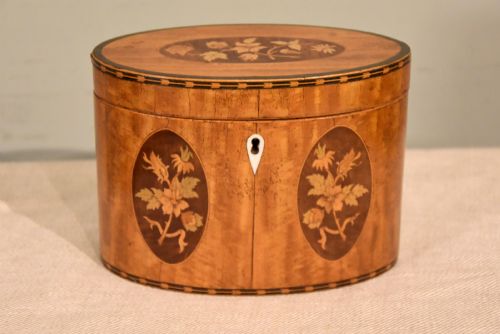
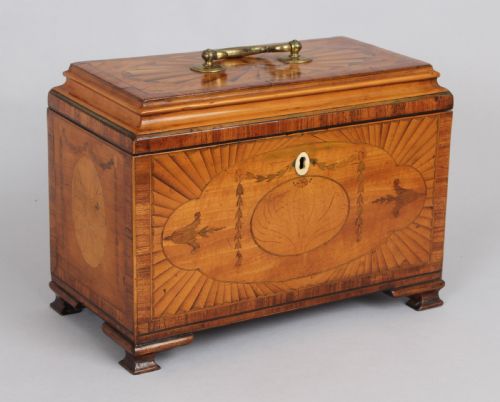
A Sheraton style tea caddy takes the form of an oval, octagonal, or hexagonal vessel designed for the Georgian parlour. These pieces date from the late 18th century, specifically the George III period, reflecting the classicism of the era.
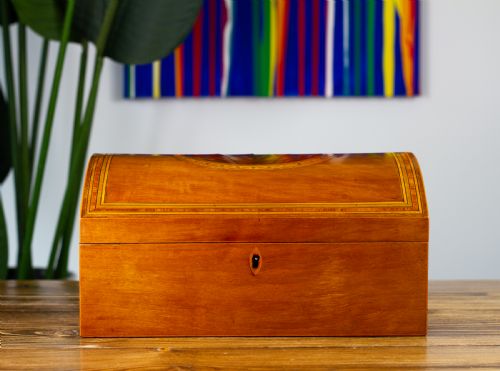
Most examples found here utilise satinwood as the primary timber, often complemented by contrasting woods such as boxwood and ebony stringing. The forms remain geometric and symmetrical, adhering to the neoclassical taste associated with Thomas Sheraton's design books.
How they were made
Cabinet makers constructed these caddies using dense timbers like satinwood and partridge wood, frequently shaping them into multi-sided polygons or sweeping ovals. Surfaces received intricate marquetry and butterfly inlay work, built from thin veneers of exotic woods.
Detailing often includes bone escutcheons and delicate stringing lines of boxwood and ebony inset into the edges. Metal hinges and brass furniture secure the lids and internal compartments, combining structural joinery with decorative ornamentation.
Retail Price Guide 2026
Typical UK retail prices for sheraton style tea caddy, calculated from the Sellingantiques database of over a million retail prices indexed since 2003. This retail price guide relies exclusively on Sellingantiques data; no external sources or auction records are used, so the figures do not describe the wider market.
Materials recorded across these items include satinwood, bone, brass, boxwood, ebony, marquetry, partridge wood, and metal.
What varies in quality
Quality rests in the precision of the marquetry and the choice of timber figure, where richly grained satinwood and partridge wood elevate a piece above plain surfaces. The complexity of the geometry, such as sharp hexagonal angles and fine stringing, distinguishes superior cabinet work.
The refinement of the inlay, including detailed butterfly motifs and well-matched veneers across the facets, separates standard production from exceptional examples. Original brass hardware and intact bone details further indicate a higher standard of preservation and manufacture.
The Sheraton Style Tea Caddy Glossary
- Marquetry
- Decorative veneer work arranged in geometric patterns or pictorial motifs. This technique uses contrasting wood types to create surface ornamentation.
- Satinwood
- A lustrous tropical timber with a golden sheen. It serves as the primary ground for many late 18th century neoclassical pieces.
- Stringing
- Thin lines of contrasting wood inlaid into channels on furniture surfaces. It defines edges and panels on drawers and lids.
- Escutcheon
- A small protective plate surrounding a keyhole, frequently fashioned from bone or brass on these caddies.
Frequently Asked Questions
What was a tea caddy used for?
These containers held expensive loose leaf tea under lock and key in the Georgian home. Servants typically kept the key to control access to the valuable contents.
Tea was an expensive commodity during the 18th century, making secure storage essential for the household.
How do I date a Georgian tea caddy?
Dating relies on timber selection, construction methods, and stylistic cues such as neoclassical marquetry or oval forms. Late 18th century pieces typically display satinwood veneers and delicate boxwood stringing.
Examining the internal compartments and secondary woods also helps determine the exact period of manufacture.
How should I care for satinwood?
Keep wooden caddies away from direct sunlight and dramatic humidity changes to protect the delicate veneer and marquetry. Regular dusting with a soft, dry cloth preserves the polished surface.
Avoid using modern liquid polishes, which can seep into old timber and damage the grain.
Are all these pieces from the 18th century?
The examples documented here originate from the Georgian and late 18th century periods. They reflect the dominant neoclassical aesthetic of the era.
Makers employed traditional hand techniques using timbers like satinwood, partridge wood, and harewood.