

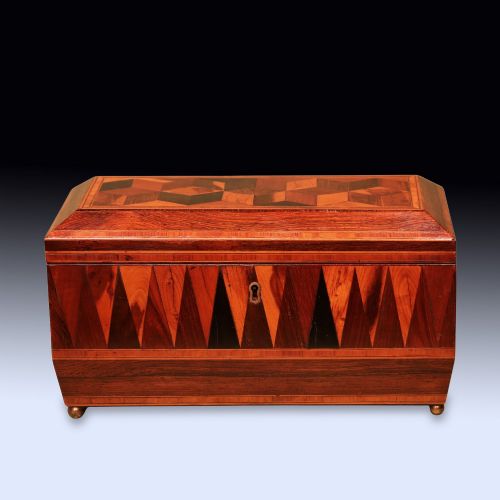


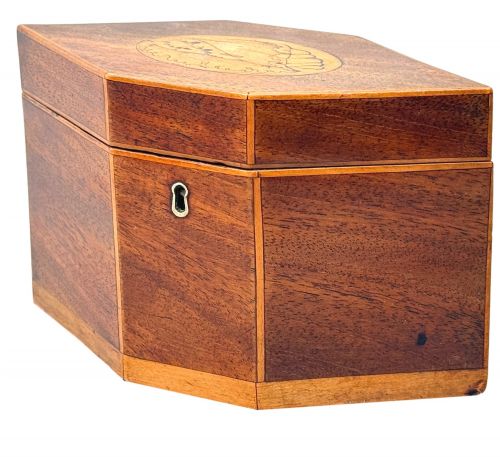

Inlaid Wooden Tea Caddy
An inlaid wooden tea caddy is a handsome tabletop chest designed to keep dry leaves secure, prized for fine cabinet work and rich timber grains.

What an inlaid wooden tea caddy is
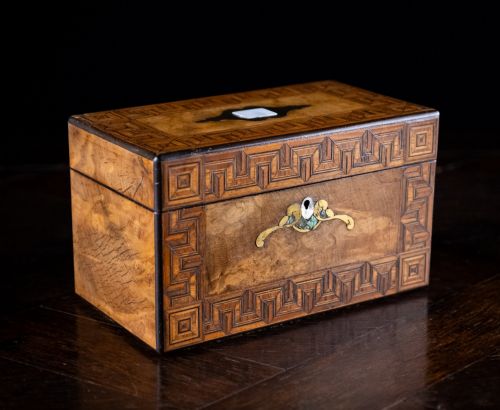
An inlaid wooden tea caddy is a small storage box made for precious tea leaves during the Georgian, Regency, and Victorian eras. These containers sit upon parlour tables or sideboards, combining practical household use with decorative cabinet making.
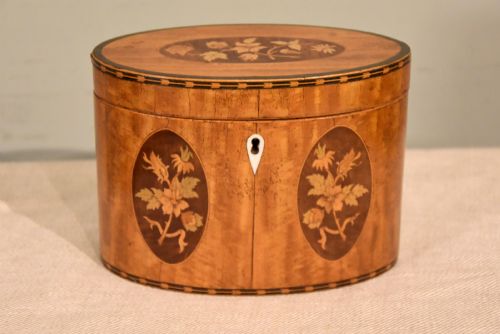
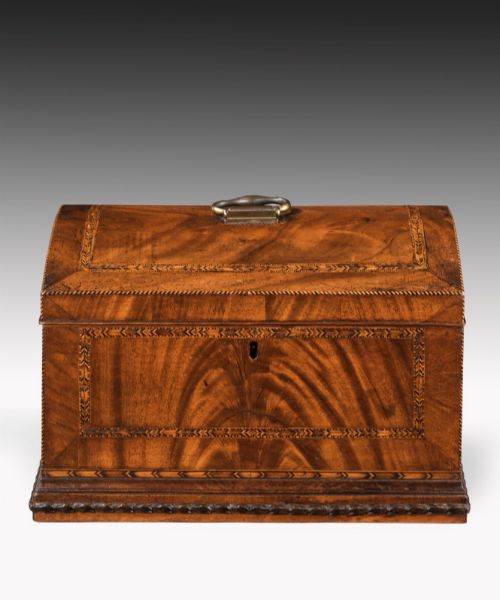
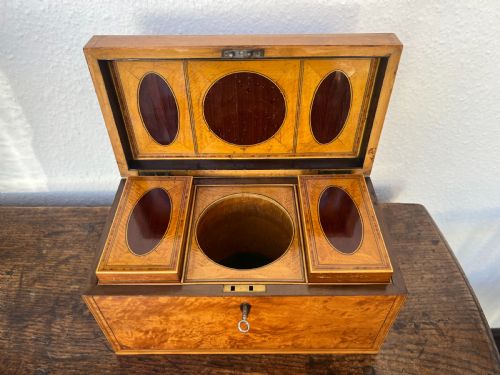
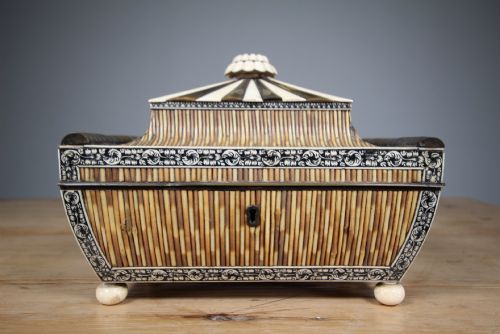
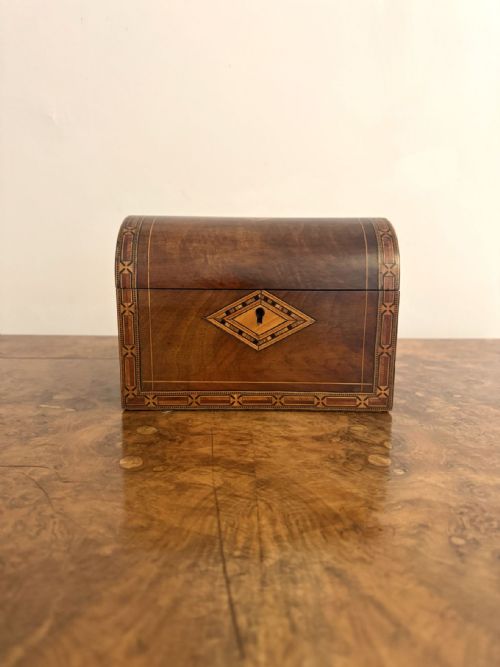
The pieces on this page span the late eighteenth century through to the Victorian period, encompassing Georgian, Regency, and George III styles. Common geometric and oval forms appear alongside domed top variants and fitted interiors.
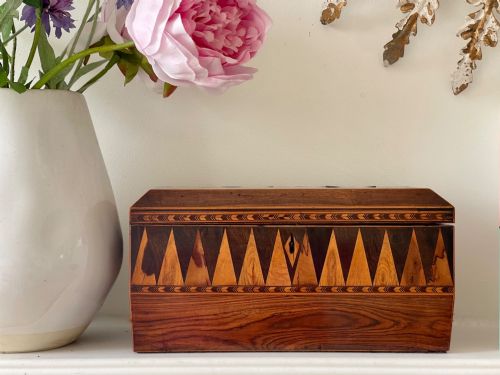
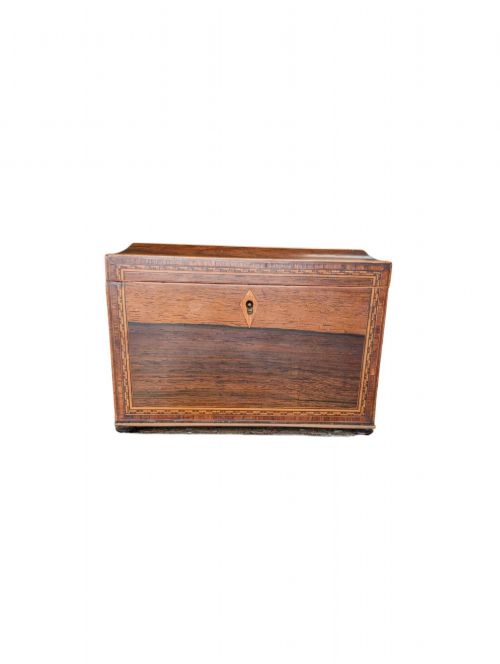
Examples typically feature rich timbers such as rosewood, satinwood, yew wood, and partridge wood. Their surfaces carry contrasting stringing and banding in boxwood, ebony, and bone.
How they were made
Cabinet makers constructed these vessels from dense hardwoods like rosewood, walnut, and satinwood, applying thin veneers over stable carcass woods. They shaped them into ovals, rectangles, and domed profiles using traditional hand woodworking techniques.
Decoration relied on fine stringing and geometric inlays cut from contrasting materials such as boxwood, ebony, bone, and brass. Makers carefully channelled the timber surfaces to receive these pale and dark insertions before polishing the exterior to a smooth finish.
Retail Price Guide 2026
Typical UK retail prices for inlaid wooden tea caddy, calculated from the Sellingantiques database of over a million retail prices indexed since 2003. This retail price guide relies exclusively on Sellingantiques data; no external sources or auction records are used, so the figures do not describe the wider market.
Tea was once so valuable that locking caddies prevented domestic staff from helping themselves to the leaves.
What varies in quality
Quality rests upon the precision of the inlay work and the choice of cabinet timber. Finely figured grains in satinwood and rosewood combined with crisp, tight joints separate superior pieces from simpler utilitarian boxes.
Internal arrangements also dictate standing, with fully fitted interior compartments retaining their original lids holding greater interest than plain hollow chambers.
The Inlaid Wooden Tea Caddy Glossary
- Inlay
- A decorative technique where pieces of contrasting material are embedded into a wood surface to form a design. This method defines the surface decoration on many period tea chests.
- Stringing
- A thin, narrow strip of contrasting wood or bone inlaid into the surface of furniture. It creates delicate borders around panels and lids.
- Satinwood
- A lustrous, yellow-brown timber imported from the tropics, favoured for its reflective grain. Cabinet makers used it extensively for smooth veneered surfaces during the Georgian era.
- Tunbridge Ware
- A distinct type of woodwork decorated with intricate mosaic patterns made from tiny wood blocks. It represents a specialised form of British decorative craft.
Frequently Asked Questions
How were these tea caddies used?
These boxes held precious tea leaves in separate internal compartments, often protecting them from moisture and theft when tea was an expensive luxury commodity.
The lady of the house typically kept the key, measuring out the leaves for each pot during formal social gatherings.
How do I date a tea caddy?
Dating relies upon observing the overall form, timber choice, and specific decorative motifs such as neoclassical ovals or Regency brass fittings.
Georgian and eighteenth-century examples often feature satinwood and delicate stringing, whereas Victorian pieces tend toward heavier rosewood and domed lids.
How should I care for antique wood?
Keep wooden caddies away from direct sunlight and extreme changes in temperature to prevent the delicate veneers and inlays from drying out or lifting.
Occasional light dusting with a dry cloth is generally sufficient to maintain the polished timber surface.