



Golden Satinwood Box
A golden satinwood box brings shimmering timber and understated elegance to a room, offering both decorative presence and practical storage.
What a golden satinwood box is
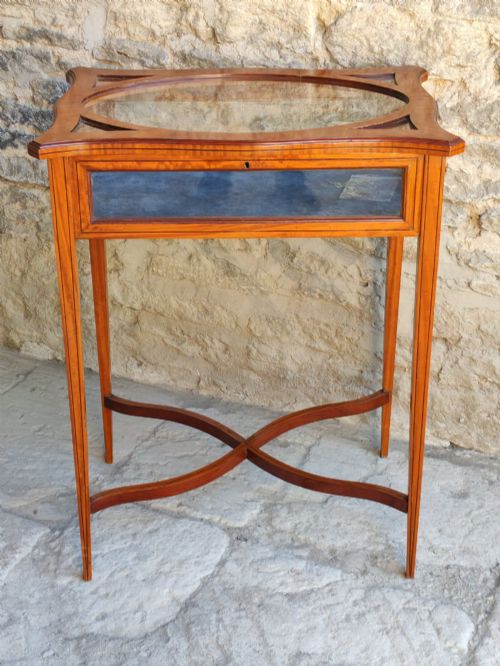
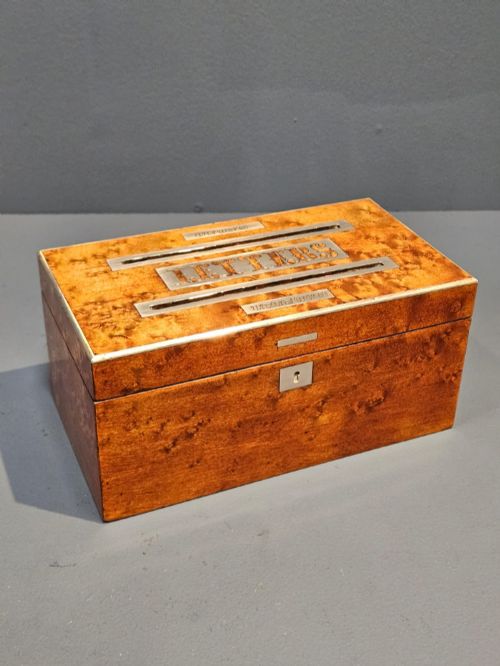
When you search for a golden satinwood box, you encounter pieces spanning the Georgian, Regency, Victorian, and Edwardian eras. These items include dressing tables with fitted vanity boxes, needlework or jewellery boxes, large writing boxes, and decorative boxes.
How they were made
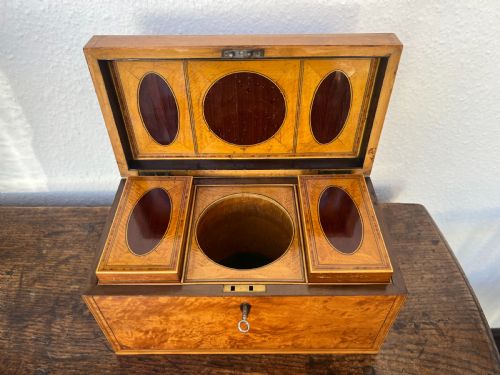
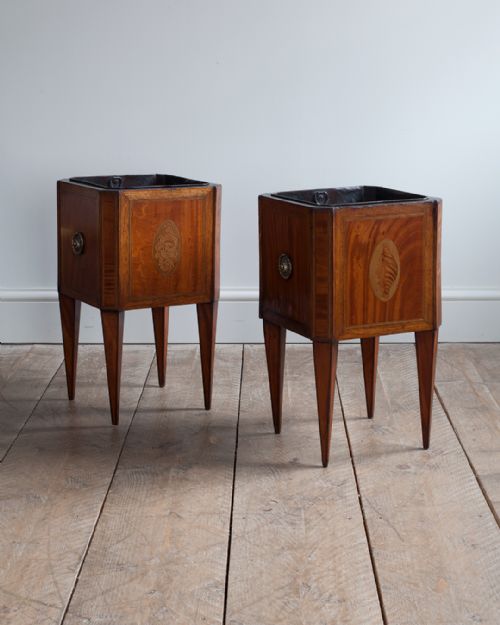
Cabinet makers utilised satinwood as the primary timber, known for its lustrous, light-reflecting grain. They often combined this golden wood with contrasting materials such as ebony, boxwood, and brass to create striking borders and hardware.
Construction involved precise joinery to form rigid carcasses for writing boxes, dressing tables, and smaller containers. Artisans fitted these boxes internally to hold writing implements, vanity accessories, or sewing requisites securely.
Retail Price Guide 2026
Typical UK retail prices for golden satinwood box, calculated from the Sellingantiques database of over a million retail prices indexed since 2003. This retail price guide relies exclusively on Sellingantiques data; no external sources or auction records are used, so the figures do not describe the wider market.
Listings feature satinwood combined with brass, ebony, and boxwood across Georgian, Regency, Victorian, and Edwardian periods.
What varies in quality
Quality rests upon the selection and figure of the satinwood timber itself, with superior examples exhibiting a deeper chatoyancy and more pronounced grain pattern. The crispness of the contrasting inlay, whether ebony or boxwood, also dictates the visual merit.
The refinement of the internal fittings, such as specialised compartments in writing boxes or fitted vanity sections in dressing tables, distinguishes finer productions from simpler utilitarian containers.
Mappin And Webb
The Golden Satinwood Box Glossary
- Satinwood
- A hard, durable timber native to tropical regions, prized for its pale golden colour and silky sheen. It takes a high polish and forms the primary surface of these pieces.
- Boxwood
- A dense, pale wood frequently utilised for fine stringing and inlay work. It provides a sharp contrast against darker timbers.
- Ebony
- A heavy, dark wood used in contrast with lighter satinwood for banding and stringing details.
- Regency
- An English design period spanning the early nineteenth century, characterised by classical restraint and elegant proportions.
Frequently Asked Questions
What periods do these boxes come from?
The pieces span the Georgian, Regency, nineteenth century, and Edwardian eras. Each period brings distinct proportions and decorative detailing to the satinwood carcass.
Cabinet makers of these times adapted the timber to various forms, from large writing desks to small tabletop containers.
What materials are used alongside satinwood?
Workshops frequently paired satinwood with ebony, boxwood, and brass hardware. These contrasting materials highlight the edges and secure the lids of the boxes.
Inlay work often incorporates these contrasting woods to create geometric borders and frames.
How were writing boxes used?
Writing boxes served as portable desks for correspondence, storing paper, ink, and pens in dedicated internal compartments. Owners carried them between rooms or on journeys.
The sloping lids provided a stable writing surface when opened.
How do I care for a satinwood surface?
Keep satinwood furniture and boxes out of direct sunlight to prevent the golden colour from fading over time. Dust gently with a dry, soft cloth.
Avoid using modern silicone polishes, relying instead on traditional wax finishes to maintain the natural lustre.