




Inlaid Mahogany Caddy
An inlaid mahogany caddy is a small lidded box shaped by Georgian and Regency makers to secure valuable dry tea leaves.
Inlaid Mahogany Caddy
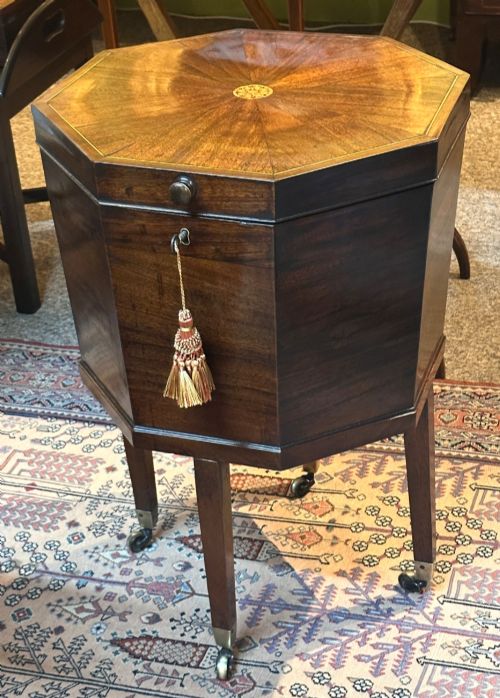
When you search for an inlaid mahogany caddy, you enter a field dominated by Georgian, Regency and Victorian small lidded boxes. These containers were built to house precious tea leaves under lock and key, reflecting the high status of tea in period households.
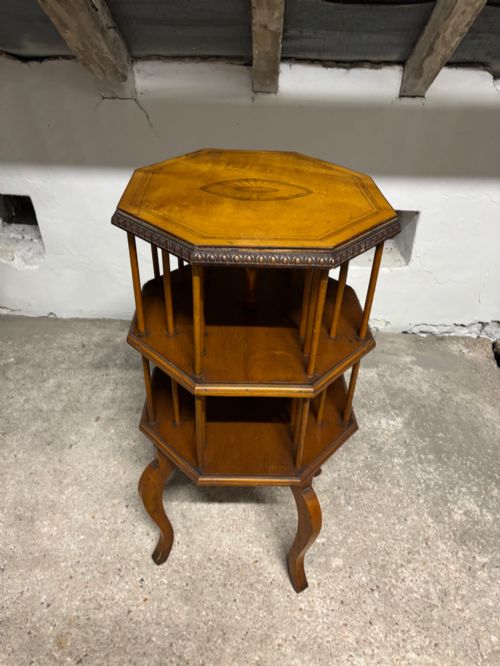
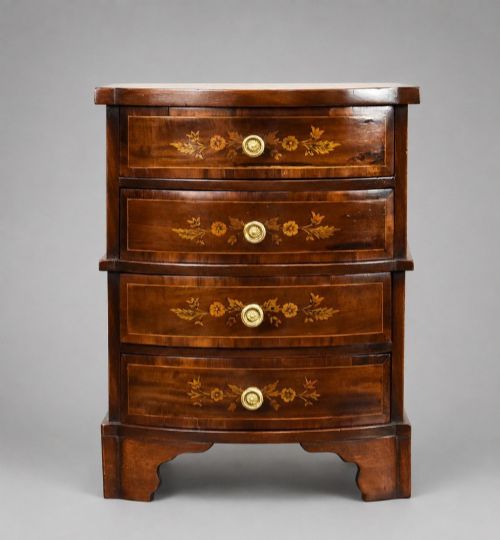
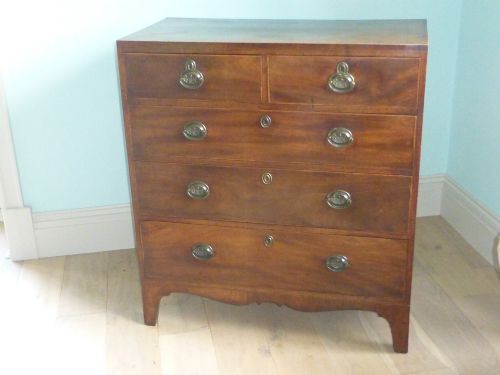
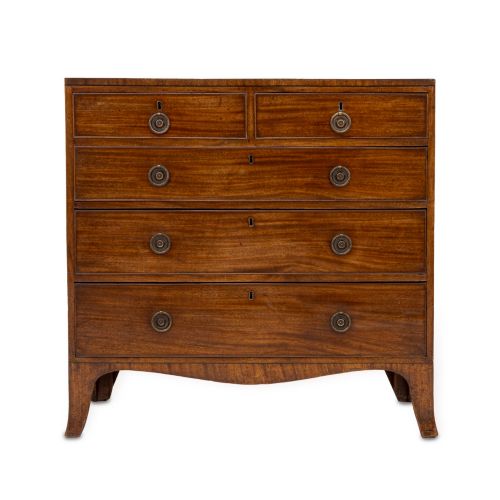
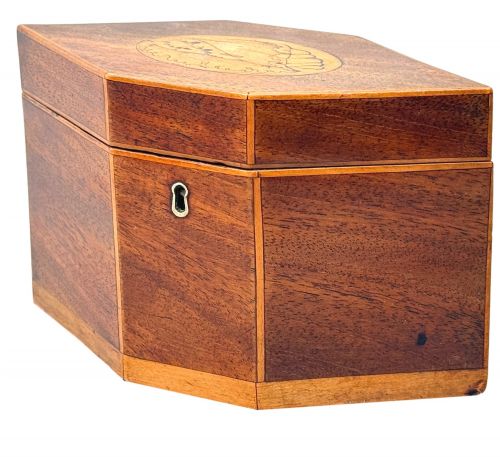
The most common form on this page is the rectangular or octagonal tea caddy, frequently accompanied by dome-topped boxes and small chests of drawers sharing similar decorative veneers. Examples span from the eighteenth century through the nineteenth century, reflecting shifting domestic habits.
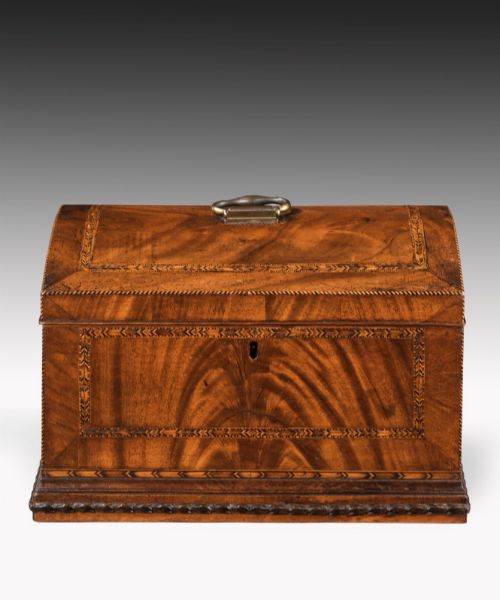
Makers shaped these timber vessels into ovals, hexagons and sarcophagus profiles, sometimes incorporating interior compartments or metal canisters. The tradition crosses stylistic boundaries, touching George III designs and later nineteenth-century interpretations alike.
How they were made
Craftsmen built the carcases from dense timber boards, applying thin veneers of mahogany across the exterior surfaces. Cabinetmakers then executed intricate contrasting wood inlay using boxwood, satinwood and ebony to create geometric lines, stars, shells and fans.
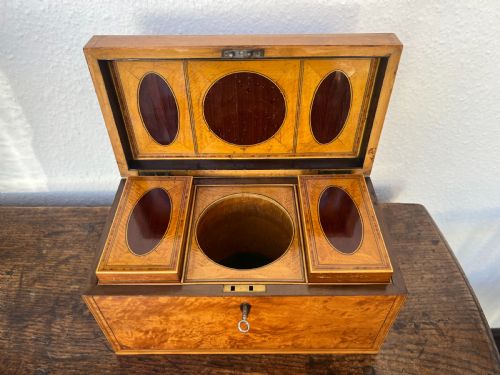
Hardware played a structural and decorative role, with makers fitting small brass locks, hinges and bone escutcheons into the timber housings. Interiors often received secondary linings of foil, paper or fitted wooden compartments designed to keep dry leaves separated.
Several boxes sport hidden compartments designed to outsmart tea-loving servants.
What varies in quality
Quality rests in the precision of the timber preparation and the crispness of the inlaid motifs. Finer pieces demonstrate tight grain selection in the mahogany, paired with sharply cut veneers that sit flush within the primary wood surface.
Proportion and hardware integration separate standard production boxes from exceptional examples. The best specimens retain original brasswork, functional internal partitions and crisp inlay without missing border lines or sloppy joins.
Gillows·Freemans of Norwich
The Inlaid Mahogany Caddy Glossary
- Escutcheon
- A small plate of bone, brass or ivory surrounding the keyhole. This protective shield prevents the surrounding timber from wearing away through repeated use.
- Veneer
- A thin layer of figured timber applied to a secondary wood foundation. This technique allows cabinetmakers to display striking grain patterns economically.
- Line inlay
- Narrow strips of contrasting timber inserted into shallow channels cut into the carcase. It forms delicate borders around the edges of lids and panels.
- Sarcophagus
- A monumental coffin-like form with a steep domed lid adopted for larger tea caddies and cellarettes during the Regency period.
- Caddy top
- A moulded tabletop profile shaped like the inverted lid of a tea box. It frequently appears on small chests of drawers and occasional tables.
Inlaid Mahogany Caddy: Frequently Asked Questions
What were tea caddies used for?
Tea caddies served as secure storage containers for dry tea leaves when tea was an expensive imported commodity. Servants or householders kept the boxes locked to ration consumption and protect the valuable contents.
Inside, compartments separated different varieties of tea, often featuring internal lids or metal canisters to preserve the aroma of the leaves.
How do I date a mahogany tea caddy?
Dating relies on observing the overall shape, construction methods and inlay motifs present on the box. Eighteenth-century examples often display simpler rectangular forms with delicate stringing, while Regency pieces lean toward sarcophagus shapes and bold brass detailing.
Examining interior construction, secondary woods and the style of the brass lock provides further clues to the manufacturing decade.
How should I care for an antique caddy?
Maintain stable indoor humidity away from direct sunlight and heat sources to prevent the mahogany timber and thin veneers from warping or splitting. Gentle dusting with a dry cloth keeps the surface clean without stripping historic finishes.
Avoid applying modern silicone polishes, as older wax finishes respond best to traditional beeswax applied sparingly.
What is the difference between a tea caddy and a cellarette?
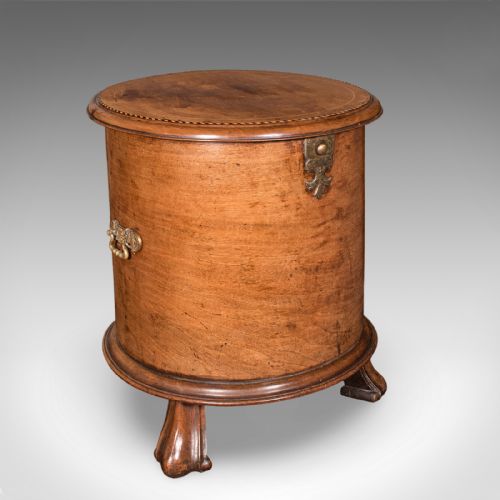
A tea caddy is a small table-top or portable box designed to hold dry tea leaves for daily household use. A cellarette is a substantially larger piece of furniture built to store wine bottles and decanters on the floor.
While both utilise mahogany and similar inlay techniques, their scale and domestic purpose remain entirely distinct.