




Mahogany Tea Box
A mahogany tea box holds the leaves that once commanded a fortune, offering solid timber and clean lines from the Georgian and Regency periods.
What these mahogany tea boxes are
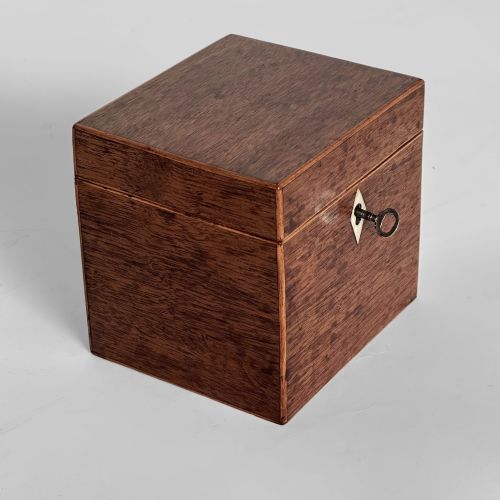
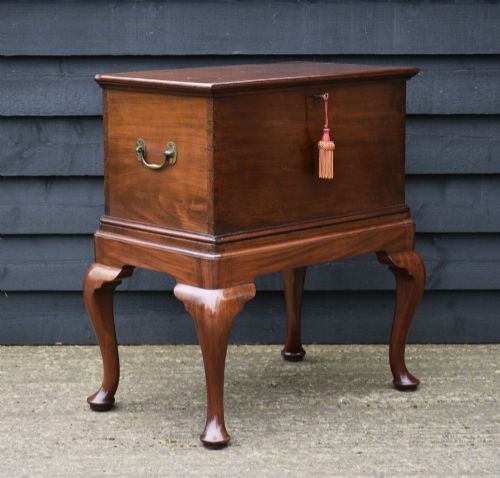
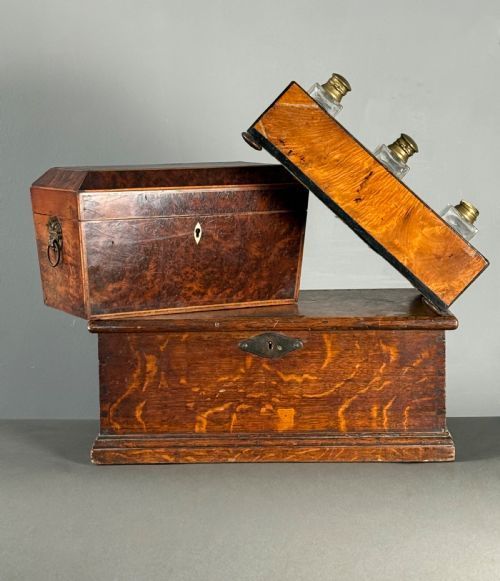
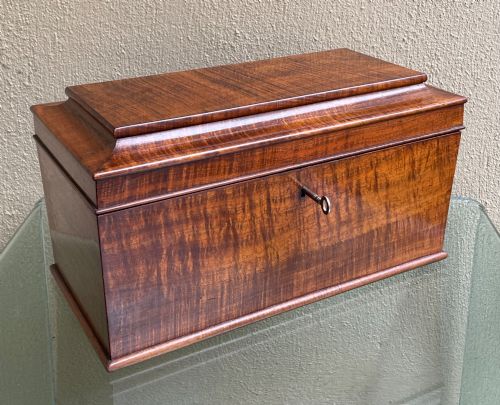
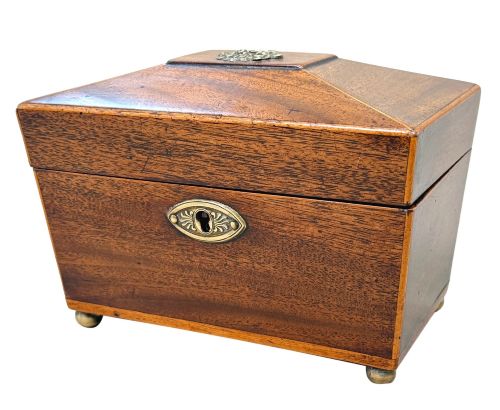
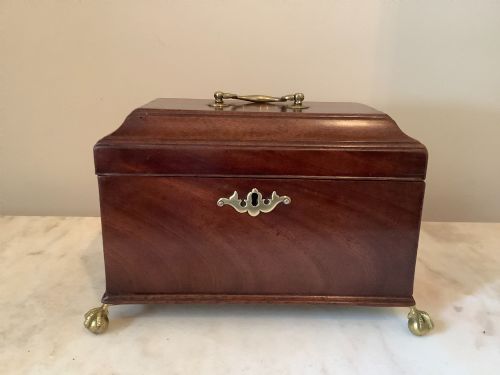
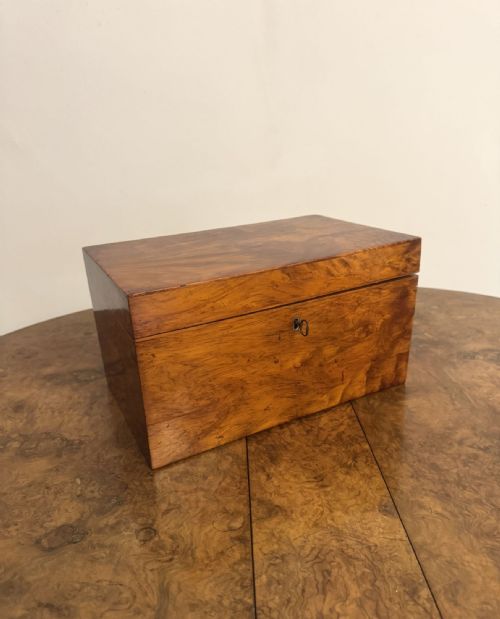
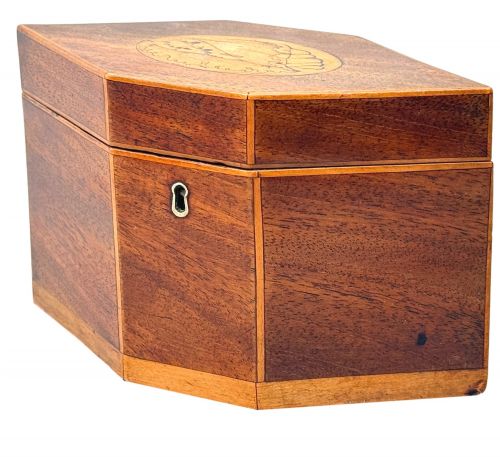
A mahogany tea box is a lidded container designed to store and preserve dry tea leaves securely under lock and key. The examples seen on this page span the eighteenth century and the Regency period, encompassing both simple tea caddies and larger tea chests.
Makers shaped these containers to sit proudly in the parlour or dining room when tea drinking was a social ritual. The survival of these boxes demonstrates the enduring appeal of dense tropical hardwood shaped by period joinery.
How they were made
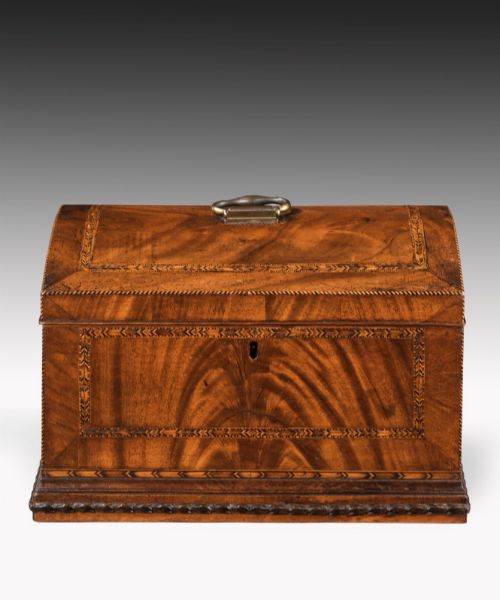
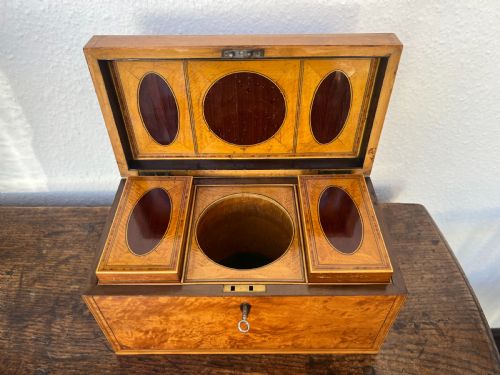
Cabinet makers constructed these boxes primarily from solid mahogany planks, sometimes applying decorative veneers over secondary timbers. Surfaces were frequently brightened with contrasting stringing and geometric borders in boxwood and ebony.
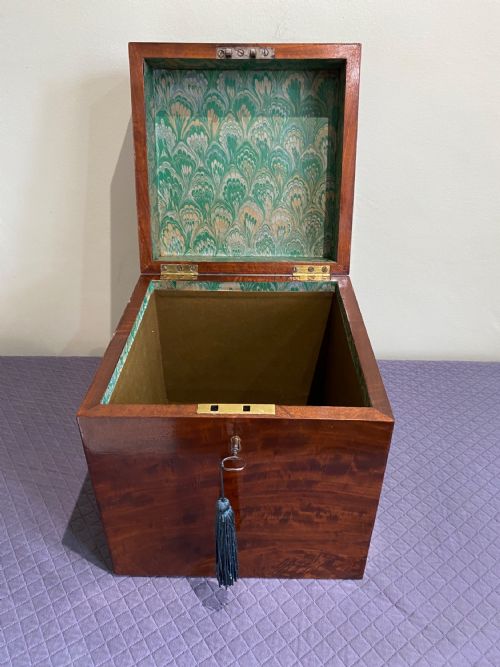
Internal arrangements often included lidded wooden canisters, metal containers, or glass mixing bowls fitted neatly into divided compartments. Fine brass hinges, escutcheons, and working locks completed the construction, securing valuable contents against household servants.
Retail Price Guide 2026
Typical UK retail prices for mahogany tea box, calculated from the Sellingantiques database of over a million retail prices indexed since 2003. This retail price guide relies exclusively on Sellingantiques data; no external sources or auction records are used, so the figures do not describe the wider market.
Some boxes conceal secret drawers requiring a hidden wooden latch to release them, guarding treasures far smaller than a tea leaf.
What varies in quality
The distinction between ordinary and superior pieces rests on the choice of timber and the precision of the inlay. Richly figured mahogany grain paired with crisp boxwood stringing elevates a box above plain, utilitarian examples.
Original internal fittings, such as intact wooden tea canisters or functioning locks with matching keys, mark out the most desirable specimens. Surviving secondary details like secret drawers or original mixing bowls indicate a higher grade of original commission.
The Mahogany Tea Box Glossary
- Tea Caddy
- A box or chest designed for storing loose tea leaves. The word derives from catty, a Chinese unit of weight.
- Stringing
- A narrow line of contrasting inlay used to outline the edges of panels on furniture and boxes. It usually employs boxwood or ebony against mahogany.
- Escutcheon
- A flat plate of brass surrounding the keyhole of a box or drawer. It protects the surrounding wood from wear caused by the key.
- Teapoy
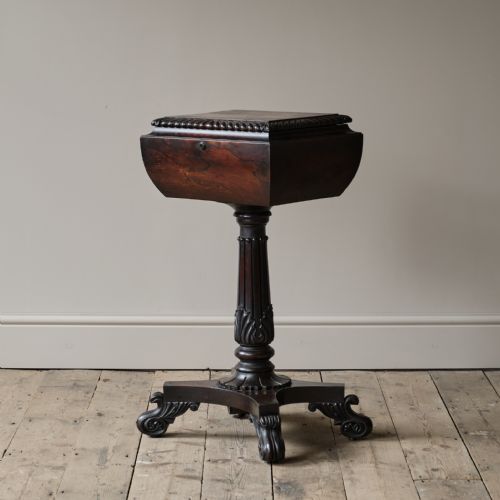
- A small stand or large box supported on a pillar and claw feet, or simply a larger tea chest. It served the same function as a tabletop caddy.
- Crossbanding
- A border of veneer laid so that the grain runs at right angles to the central panel. This technique frames the primary wood of the lid.
Frequently Asked Questions
How were tea boxes used?
Households used them to portion out daily leaves away from dampness and theft. Because tea held immense monetary value, the boxes remained locked.
The mistress of the house kept the key, opening the container only when it was time to brew a fresh pot for guests.
How do I date a mahogany tea caddy?
Dating relies on observing construction methods, timber choice, and decorative styles such as stringing or brass hardware. Georgian examples often display rectilinear forms with subtle boxwood lines.
Later Regency pieces might incorporate bolder brass mounts or richer veneers, reflecting the changing tastes of the early nineteenth century.
Can I use an antique tea box for modern storage?
Many collectors continue to use these boxes for storing small personal items, jewellery, or modern tea bags. Their sturdy construction suits gentle everyday use.
Care should be taken to protect the historical finish from moisture and direct sunlight.