



Secret Drawer Box
A secret drawer box offers a concealed compartment for valuables, bringing a touch of Georgian and Victorian ingenuity into a modern room.
Secret Drawer Box
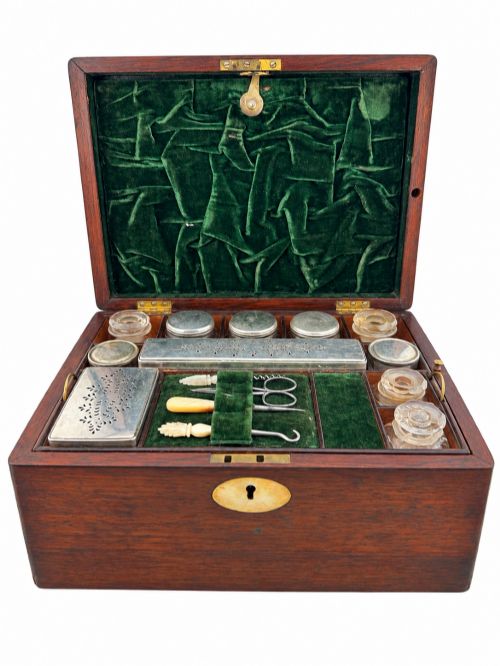
A secret drawer box provides a hidden compartment within traditional forms such as writing slopes, tea caddies, blanket boxes, and miniature chests. These pieces span the Georgian and Victorian eras, reflecting a period when personal security relied on cunning carpentry rather than digital codes.
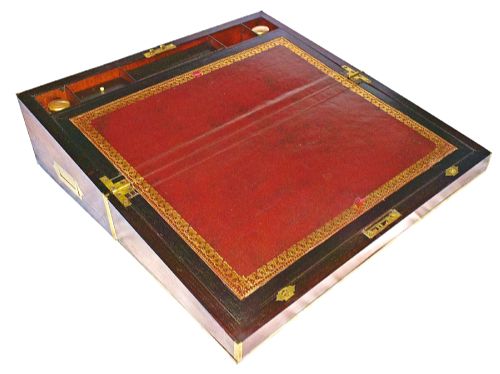
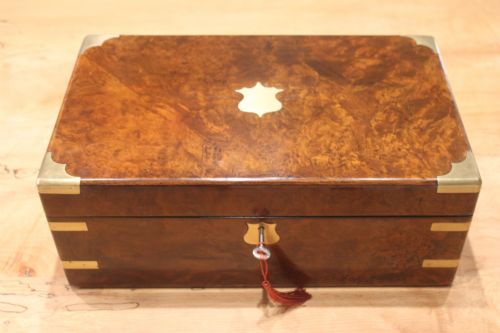
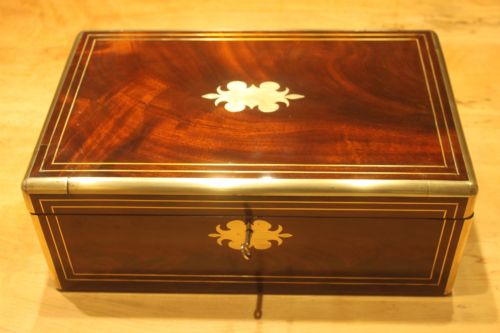
The version a buyer meets most frequently on this page is the Victorian writing slope in walnut or figured walnut, often strengthened with brass binding and fitted with internal secret drawers. These slope boxes open to reveal writing surfaces alongside hidden spaces designed for private papers and valuables.
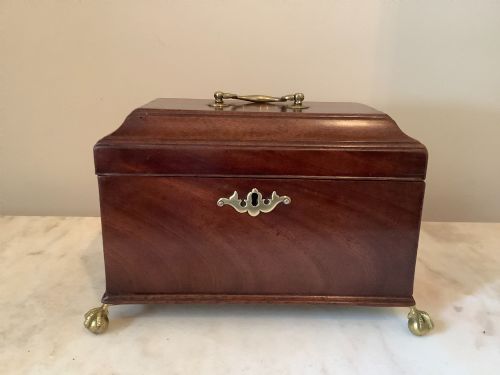
Beyond writing slopes, the selection includes Georgian mahogany and rosewood tea caddies, campaign boxes, oak desk tidies, and pine blanket boxes. Each type incorporates concealed mechanisms, from simple sliding panels to false partitions that release hidden drawers.
Materials and construction
Cabinet makers utilised dense hardwoods such as mahogany, walnut, rosewood, and pollard elm to build the carcass of each box, frequently applying figured veneers like burr walnut or coromandel to visible surfaces. These timbers were selected for stability and finish, allowing smooth internal movement for concealed drawers.
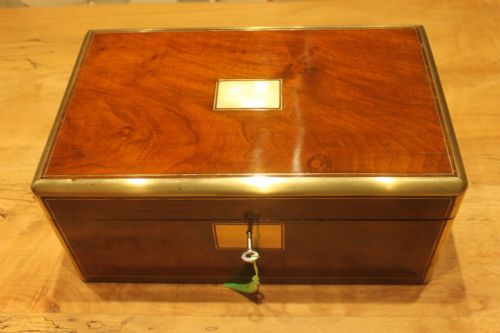
Brass featured heavily in the construction, appearing as edge binding, flush handles, inlay, and robust locks such as Bramah mechanisms. This metalwork added structural reinforcement for travel while accentuating the dark grain of the timber.
Internal mechanisms relied on precise manual joinery, where false bottoms, sliding panels, and dummy partitions operated through gravity, spring catches, or concealed pins to reveal the hidden drawers.
Secret Drawer Box Retail Price Guide 2026
Typical asking prices for secret drawer box among the pieces listed under this phrase on Sellingantiques today, from the lower quarter to the upper quarter. They describe what is for sale here now, not the wider market.
Object forms recorded in the archive range from compact tea caddies and lace boxes to large military document chests and blanket boxes.
Judging quality in secret drawer boxes
Quality rests upon the precision of the concealed mechanism and the execution of the hidden compartment. Superior examples operate smoothly without requiring force, whereas lesser pieces suffer from warped timber that causes hidden drawers to stick.
The choice of exterior timber and veneer work sets the hierarchy between standard utility pieces and high-end examples. Figured walnut, burr walnut, coromandel, and rosewood combined with meticulous brass inlay or binding indicate workshop output intended for wealthy patrons.
Original hardware, including functioning Bramah locks with matching keys, distinguishes a well-preserved box from one altered or repaired over time.
George Austin of Dublin
The Secret Drawer Box Glossary
- Writing slope
- A portable desk with a hinged, sloping lid designed for correspondence. When opened, it reveals storage for stationery and inkwells alongside secret drawers.
- Tea caddy
- A container designed to store tea leaves securely when tea was an expensive commodity. Many period examples incorporate a central mixing compartment flanked by canisters and hidden drawers.
- Bramah lock
- A high-security cylindrical lock patented by Joseph Bramah in the late eighteenth century. These locks were commonly fitted to quality Victorian writing slopes.
- Campaign style
- Furniture constructed for military officers on the move, typically featuring brass corners, flush carrying handles, and robust timber frames designed to withstand travel.
- Figured walnut
- Timber cut from specific parts of the walnut tree, such as the root or branch junctions, displaying intricate and swirling grain patterns. It was favoured by Victorian cabinet makers for luxury boxes.
Secret Drawer Box: Frequently Asked Questions
What did people store in a secret drawer box?
Owners used these hidden compartments to store private correspondence, jewellery, currency, and small valuables. The concealment provided a layer of security in domestic and travel settings.
Because privacy was paramount in households and during travel, the contents often included personal documents and family keepsakes that required protection from prying eyes.
How do I find the secret drawer?
Locating the hidden compartment usually involves removing internal trays, sliding decorative panels, or depressing concealed wooden pins. Cabinet makers designed these mechanisms to require a specific sequence of actions.
Inspecting the internal dimensions of the box often reveals discrepancies in depth, pointing to the space where the secret drawers are housed behind false partitions.
How do I date a secret drawer box?
Dating relies on timber choice, construction techniques, and hardware styles. Georgian pieces often feature solid mahogany or rosewood with subtle inlay, while Victorian examples frequently utilise walnut veneers and brass binding.
Lock types also provide chronological clues, with patented mechanisms appearing more frequently on nineteenth-century boxes produced by established workshops.
Can I use a writing slope every day?
These boxes function well for modern desk organisation and correspondence, provided they receive careful handling. The sloping writing surface accommodates laptops or paper depending on the box dimensions.
Maintenance involves keeping the timber conditioned and operating the secret compartments with care to preserve the original nineteenth-century or eighteenth-century joinery.