




Georgian Mahogany Tea Chest
A georgian mahogany tea chest is a compact wooden store for precious leaf, offering tactile domestic history and rich timber grain.
What these pieces are
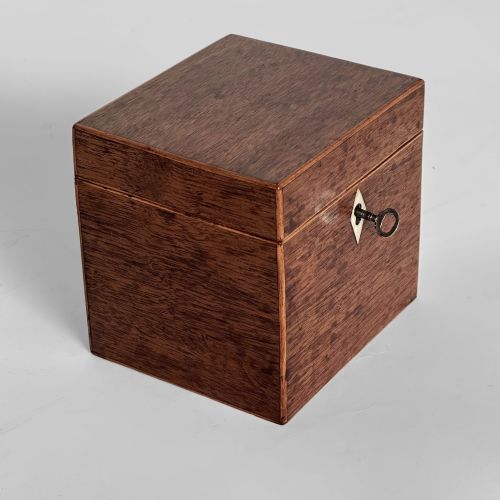
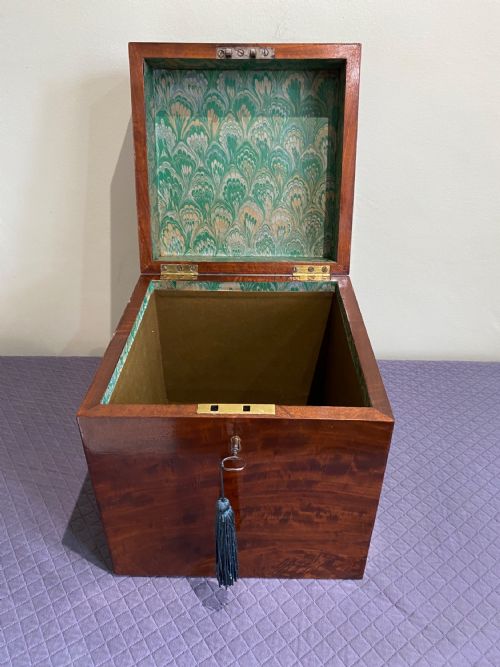
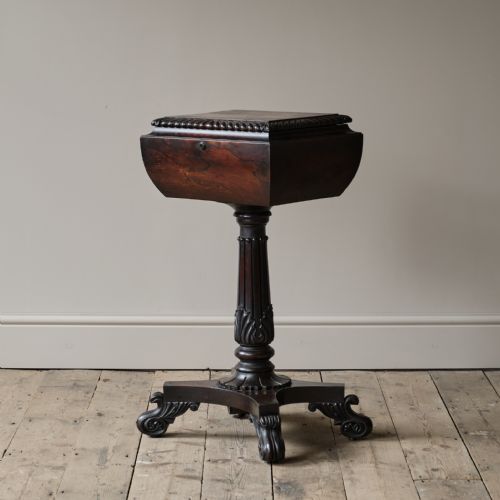
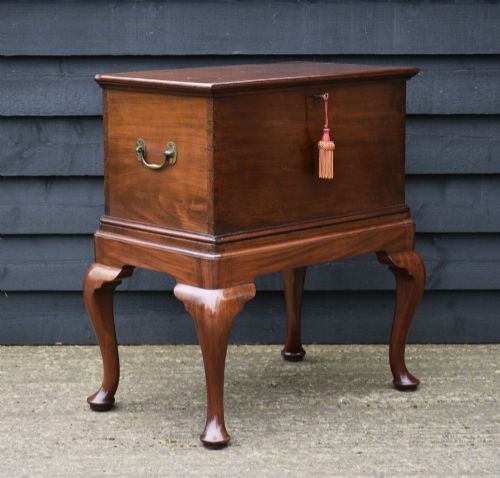
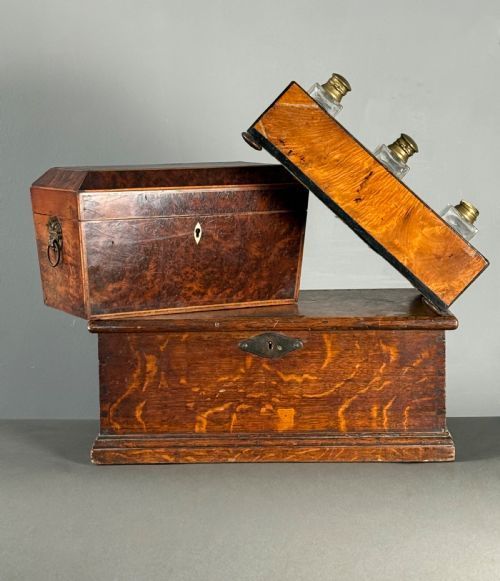
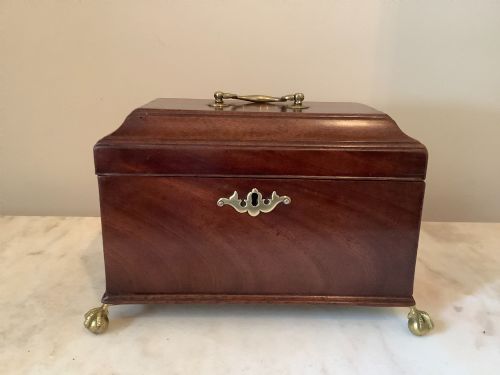
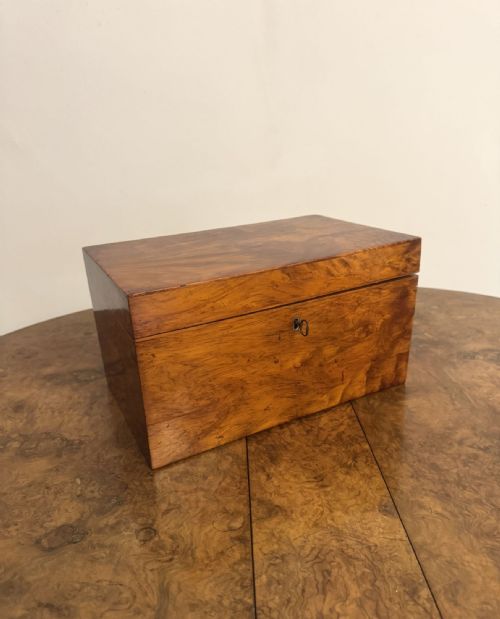
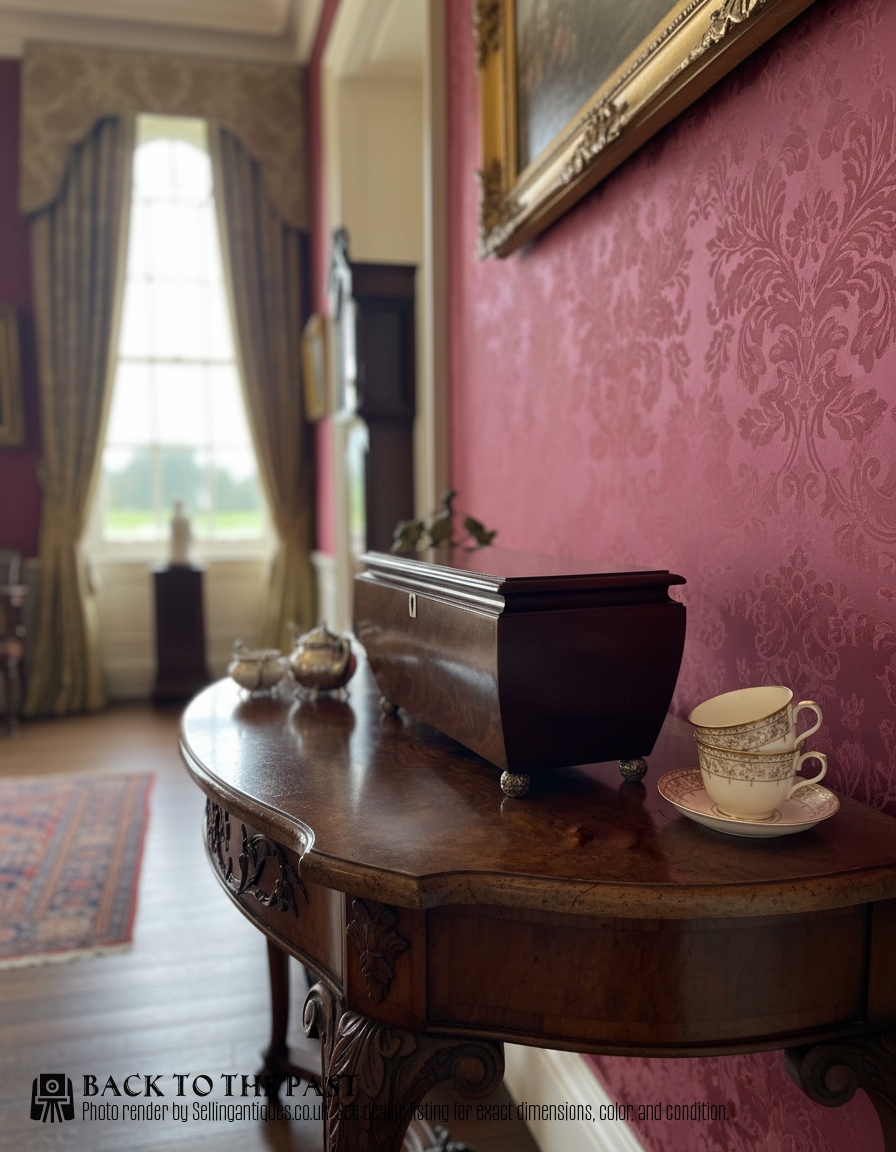
A georgian mahogany tea chest appears in several forms across this selection, including twin compartment caddies, secret drawer boxes, and miniature chests of drawers. These pieces date from the Georgian period, the 18th century, and the 19th century, reflecting the era when imported tea was a high-status commodity that required secure storage under lock and key.
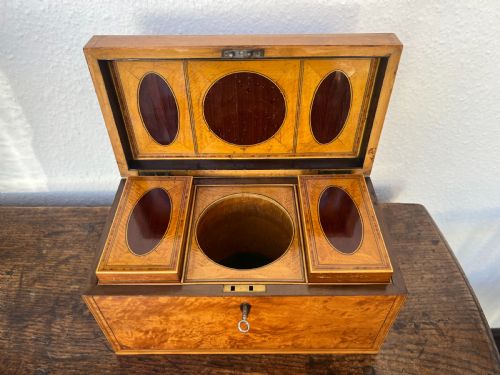
The objects listed display stylistic traits from the Georgian and Regency eras, shifting from straightforward rectangular boxes to more elaborate bombé profiles. Many examples incorporate multiple internal compartments or a central mixing bowl space, fulfilling the practical requirements of tea preparation in a period household.
How they were made
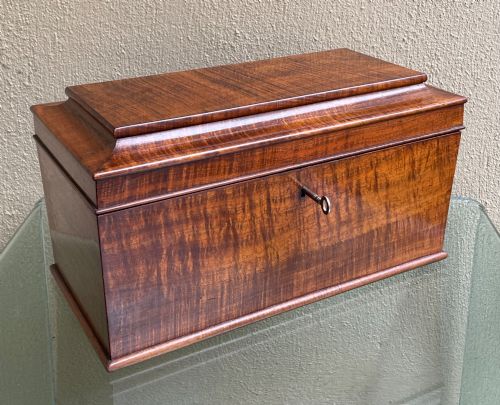
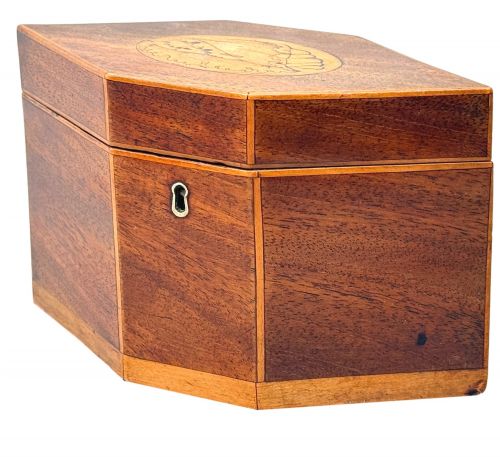
Cabinet makers utilised solid mahogany and flame mahogany veneers over secondary timbers, often accentuating the exterior surfaces with contrasting stringing lines in boxwood or ebony. The structural assembly relies on traditional joinery techniques suited to small scale cabinetry.
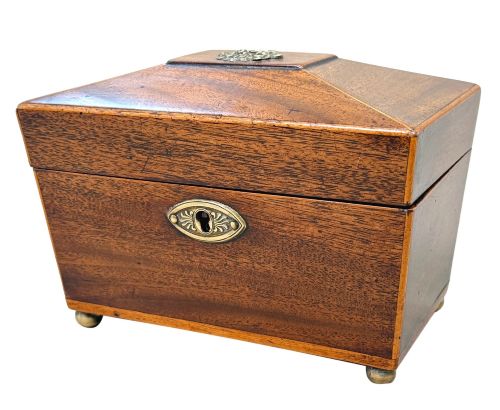
Internal elements frequently incorporate secondary materials such as bone for escutcheons or handles, lead foil lining to preserve leaf freshness, and glass mixing bowls. External hardware typically involves cast brass carrying handles and escutcheons secured with small iron pins.
Retail Price Guide 2026
Typical UK retail prices for georgian mahogany tea chest, calculated from the Sellingantiques database of over a million retail prices indexed since 2003. This retail price guide relies exclusively on Sellingantiques data; no external sources or auction records are used, so the figures do not describe the wider market.
Some tea chests include tiny hidden drawers that only slide open once you locate the secret internal spring.
What varies in quality
The visual appeal of a georgian mahogany tea chest rests heavily on the selection of timber, where active flame mahogany grain and crisp stringing mark out the more ambitious pieces. Simpler versions rely on plain figured mahogany surfaces with minimal inlay work.
Interior complexity also divides the range, distinguishing standard dual compartment boxes from those featuring concealed secret drawers, fitted mixing bowl apertures, or elaborate escutcheon plates.
The Georgian Mahogany Tea Chest Glossary
- Bombé
- A swelling, outward-curved profile found on the sides and front of certain cabinet pieces. This curved form requires advanced woodworking skill to execute cleanly in mahogany veneer.
- Flame mahogany
- A distinctive wood figure resembling flickering flames, produced by cutting through the branch junctions of the tree. Cabinet makers saved this prized grain for the primary display surfaces.
- Stringing
- Narrow inlaid lines of contrasting timber, such as boxwood or ebony, used to edge panels and borders. This decorative technique creates a sharp linear frame around the main grain.
- Escutcheon
- A protective plate surrounding the keyhole, commonly made from brass or bone. It prevents the key from damaging the surrounding mahogany timber during daily use.
- Lead foil
- A thin metallic lining used inside storage compartments to seal out moisture and retain the aroma of loose tea leaves. It represents the functional interior packaging of the period.
Frequently Asked Questions
What is a georgian mahogany tea chest?
A georgian mahogany tea chest is a lidded wooden box built to store dry tea leaves securely during the 18th and 19th centuries.
These containers featured fitted interiors with compartments and sometimes a glass bowl for blending different grades of leaf.
How were these boxes used?
Households kept precious tea under lock and key in the parlour or dining room, with the head of the house controlling the key.
Servants brought the chest to the table where the tea was measured out and mixed before brewing.
How do I spot flame mahogany?
Flame mahogany shows a swirling, patterned grain that resembles tongues of fire spreading across the surface of the timber.
Cabinet makers placed these distinctive veneers on the most visible parts of the lid and front.
What are secret drawers?
Secret drawers are concealed compartments hidden behind movable partitions or false bottoms within the interior framework.
Owners used them to store small valuables, keys, or private papers alongside their tea supply.
Did these chests hold mixing bowls?
Many examples include a circular central recess designed to hold a glass bowl used for rinsing leaves or blending.
Smaller single caddies focused entirely on storage without space for liquid preparation.