

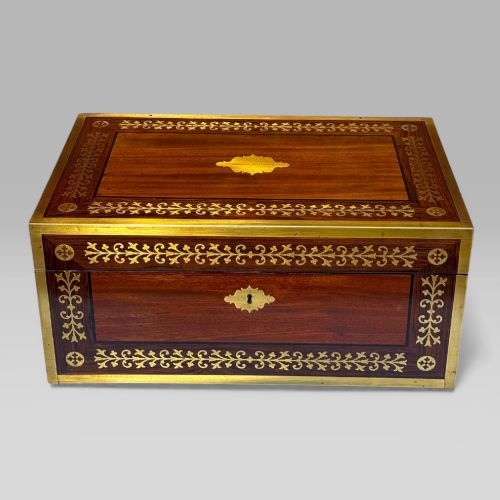

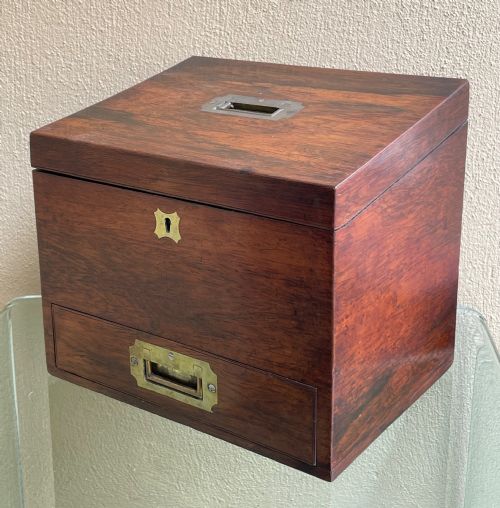
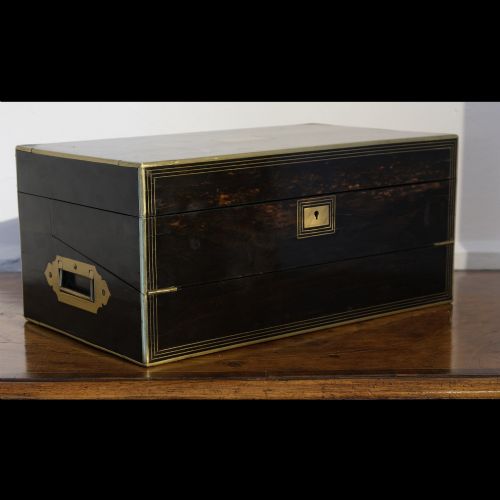
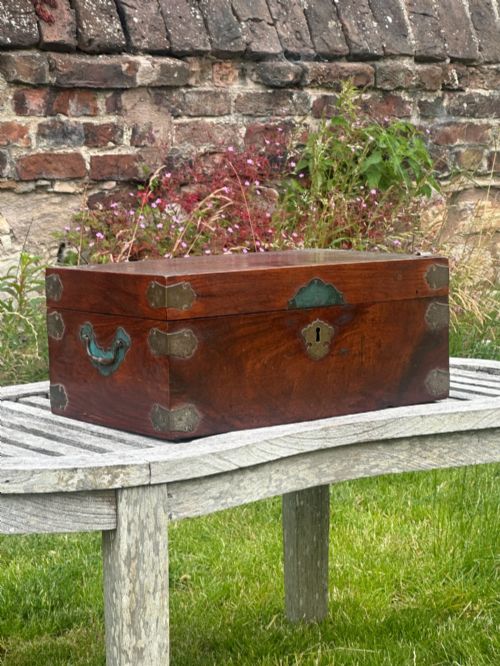
Campaign Writing Slope
When you examine a campaign writing slope, you hold a portable desk built to travel across the British Empire.
Campaign Writing Slope
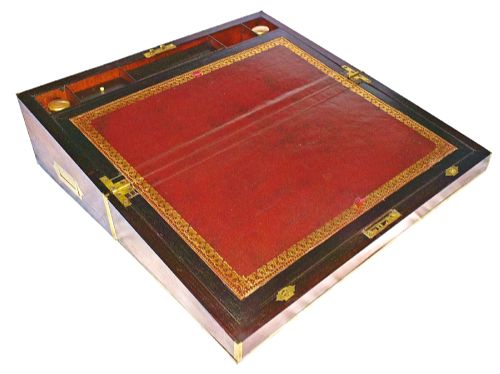
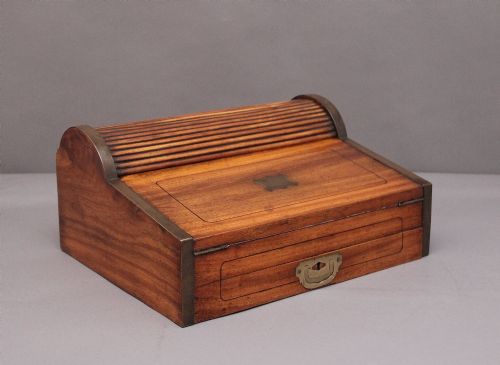
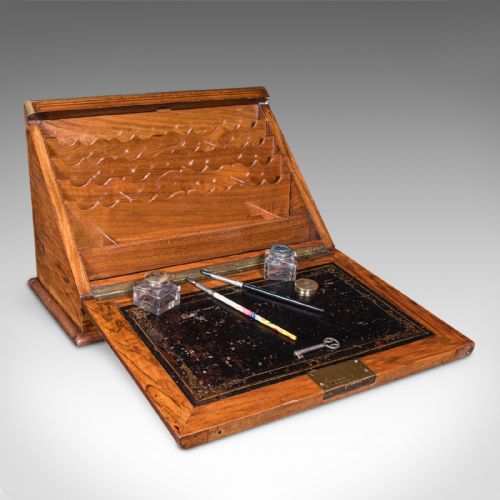
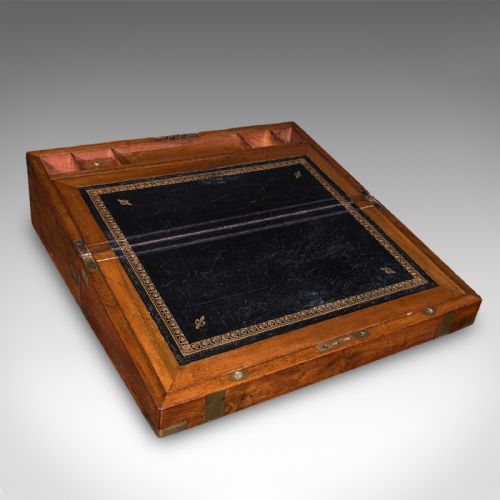
A campaign writing slope is a portable desk designed for officers and travellers requiring a secure, flat writing surface while on the move. The form typically folds open to reveal a sloping writing bed lined with leather, alongside compartments for inkwells, pens and stationery.
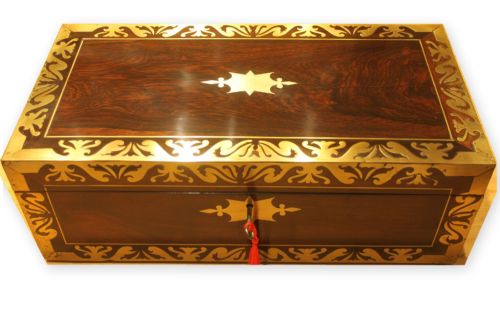
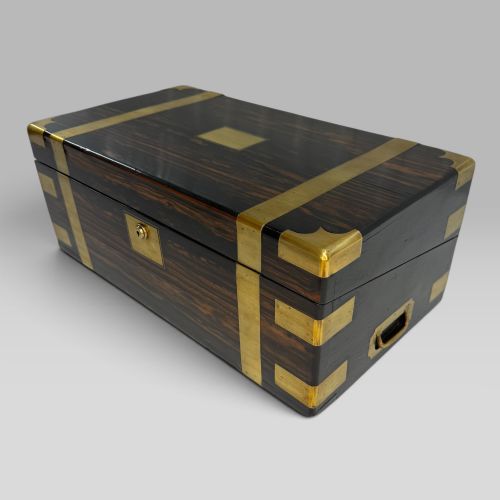
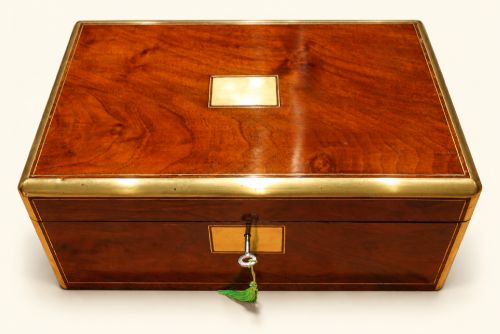
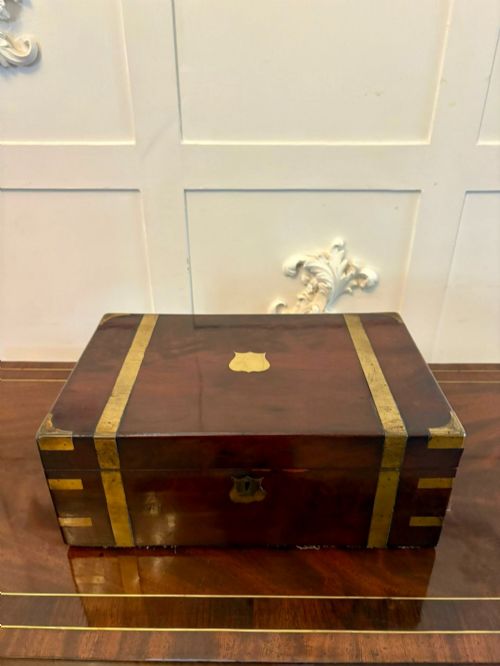
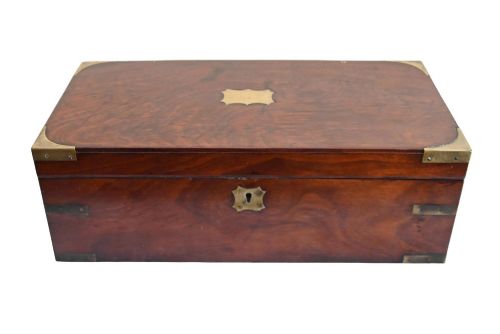
Most examples encountered on this page date from the Georgian, Regency and Victorian periods, reflecting the height of campaign furniture production. These pieces range from plain mahogany and camphor wood boxes intended for military service to highly decorative rosewood, walnut and coromandel models intended for domestic use.
Beyond standard writing boxes, the selection includes variants with secret drawers, book rests, candle sconces and even matching stands. The unifying characteristic remains the compact, hinged carcass designed to fold shut and lock securely for transport.
What varies in quality
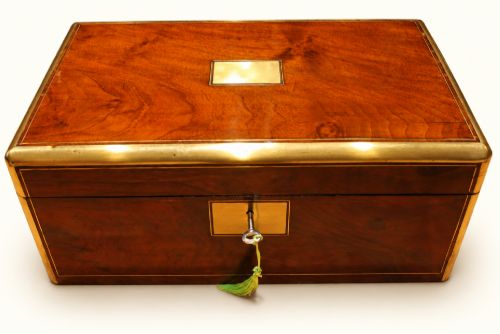
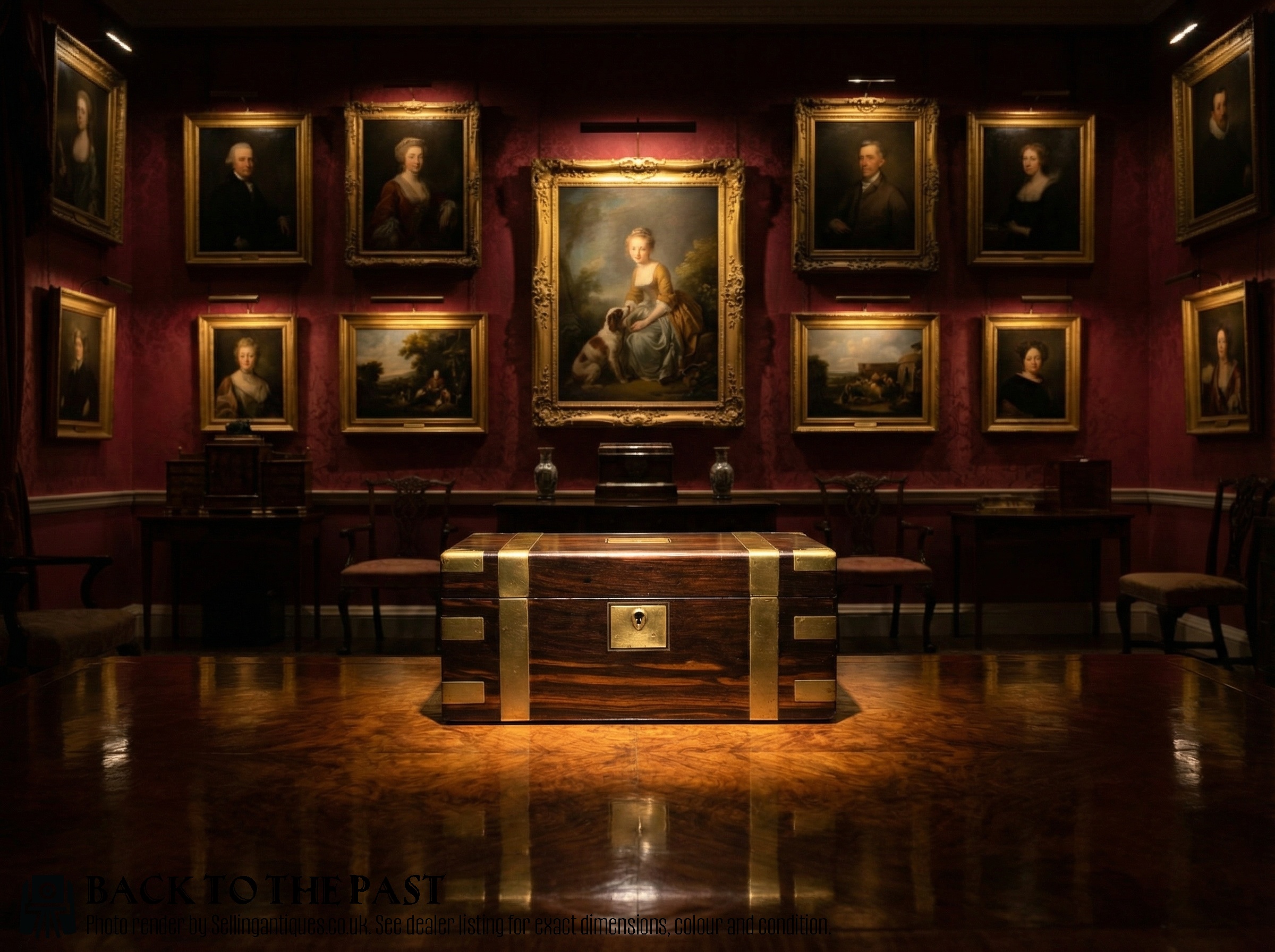
Quality rests in the precision of the hardware and the selection of the timber. Top-tier examples feature heavy, hand-cast brass mounts countersunk flush into the wood, robust locking mechanisms by makers such as Bramah, and highly figured veneers like burr walnut, pollard oak or amboyna.
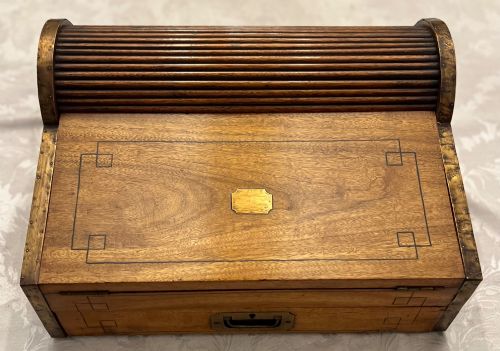
Simpler boxes intended strictly for military utility display utilitarian pine carcasses with minimal brass work and straightforward mahogany or camphor construction. The presence of integrated candle sconces, sovereign sections, secret drawers and original working keys elevates the sophistication of individual pieces.
Campaign Writing Slope Retail Price Guide 2026
Typical asking prices for campaign writing slope among the pieces listed under this phrase on Sellingantiques today, from the lower quarter to the upper quarter. They describe what is for sale here now, not the wider market.
Listings feature woods including mahogany, rosewood, walnut, coromandel, camphor wood and padouk, spanning the Georgian, Regency and Victorian periods.
Wells and Lambe·Austin
The Campaign Writing Slope Glossary
- Brass bound
- The reinforcement of box edges and corners with inset brass strips and brackets to prevent splitting during transit. This technique defines much of the military campaign aesthetic.
- Secret drawers
- Concealed storage compartments hidden behind false panels or accessed via hidden wooden pins within the writing slope interior. These were used to secure valuables and sensitive correspondence.
- Bramah lock
- A patented high-security cylindrical lock invented by Joseph Bramah in the late eighteenth century. These locks are commonly found on superior quality nineteenth-century boxes.
- Sloping writing bed
- The angled, hinged folding panels that open to create a slanted surface for writing letters. They frequently lift up to reveal bulk storage space underneath.
- Campaign furniture
- Portable furnishings designed to dismantle or fold for military officers and officials on active service. Pieces often incorporated recessed handles and protective brass corners.
Campaign Writing Slope: Frequently Asked Questions
What is a campaign writing slope?
A campaign writing slope is a portable antique desk designed to fold in half for travel. Officers and travellers used them to store stationery, ink and documents while on the move.
Inside, they feature a sloping leather-lined writing surface and compartments for pens and inkwells. Many also incorporate hidden drawers for valuables.
How do you use a writing slope?
To use the box, you release the latches, open the hinged lid and fold down the two sloping halves to create a flat or angled writing plane. The interior compartments keep your writing materials organised during use.
When finished, you fold the writing bed back into the carcass, lower the fall fronts if applicable, and secure the lid with a key. This packs all your correspondence securely into a single portable box.
How do you date a campaign writing slope?
Dating relies on timber choices, brass work styles and construction details. Georgian and Regency examples often feature simpler mahogany or rosewood forms with flush brass strapwork, while Victorian versions frequently showcase figured walnut, elaborate brass inlay and complex secret drawer mechanisms.
Locks, hinges and secondary woods inside the drawers also help pinpoint the era of manufacture. Earlier pieces lean toward utilitarian military function, whereas mid-nineteenth-century boxes often prioritise decorative domestic elegance.
What timbers were used for writing slopes?
Cabinetmakers utilised durable hardwoods capable of enduring travel. Mahogany and camphor wood appear frequently on military pieces due to their stability and resistance to humidity.
For domestic settings, makers turned to decorative veneers such as rosewood, walnut, burr walnut, pollard oak and coromandel. These finer woods were often paired with contrasting brass inlay and fitted leather interiors.