



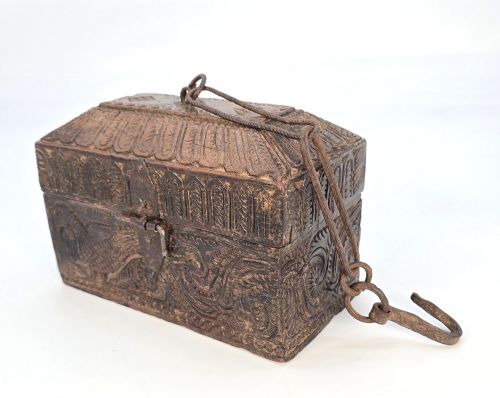
Vintage Wooden Caddy Box
A vintage wooden caddy box holds the history of dry leaf storage, crafted in timber from Georgian tea caddies to Edwardian tantalus sets.
Vintage Wooden Caddy Box
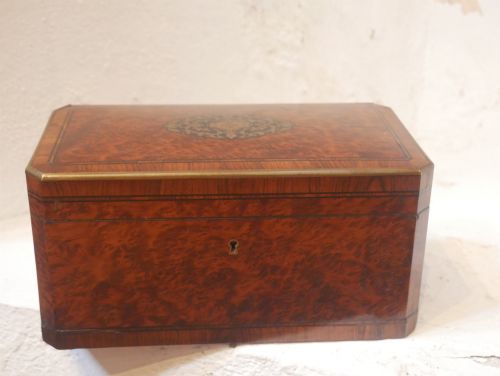
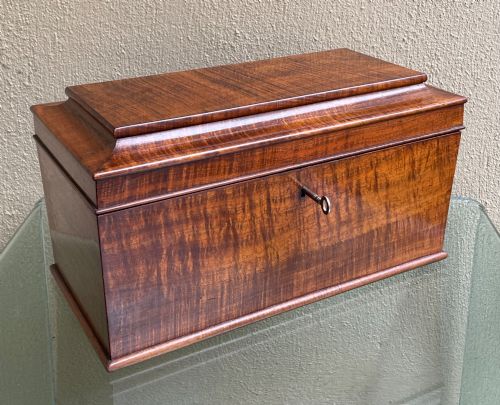
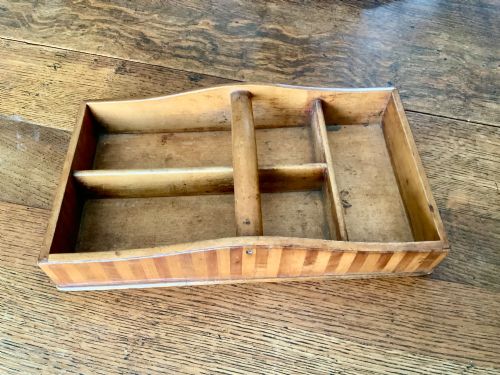
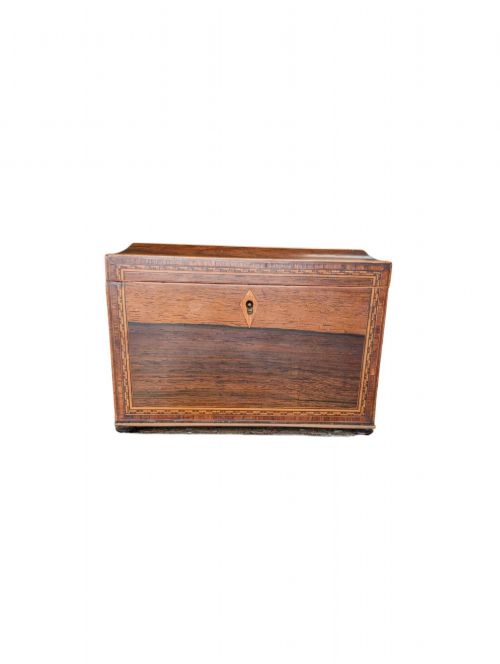
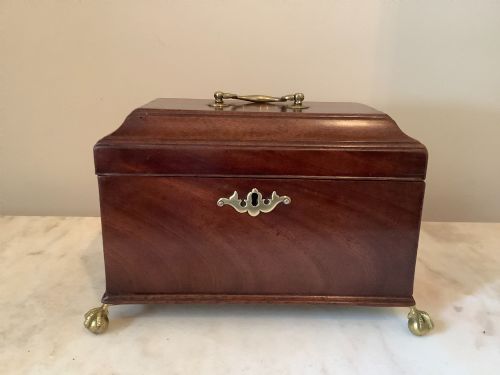
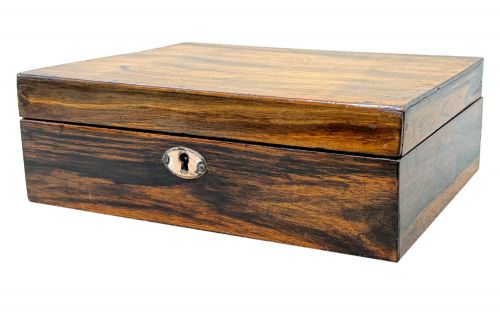
A vintage wooden caddy box covers a varied range of small domestic containers designed primarily for storing tea, alongside related receptacles like decorative boxes, work boxes, and cellarettes. When you search for a vintage wooden caddy box, you encounter pieces spanning from the 18th century through the Georgian, Regency, Victorian, and Edwardian periods.
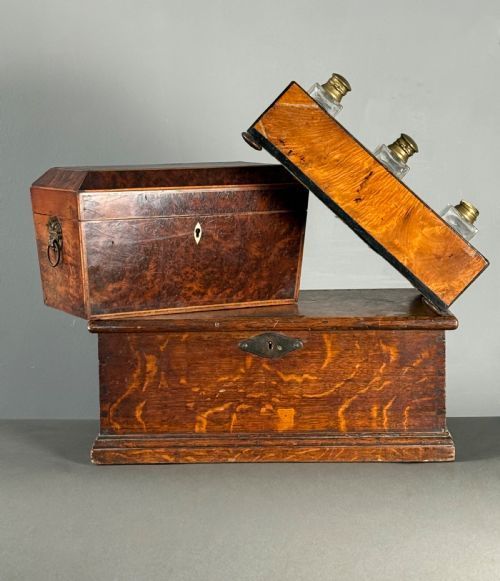
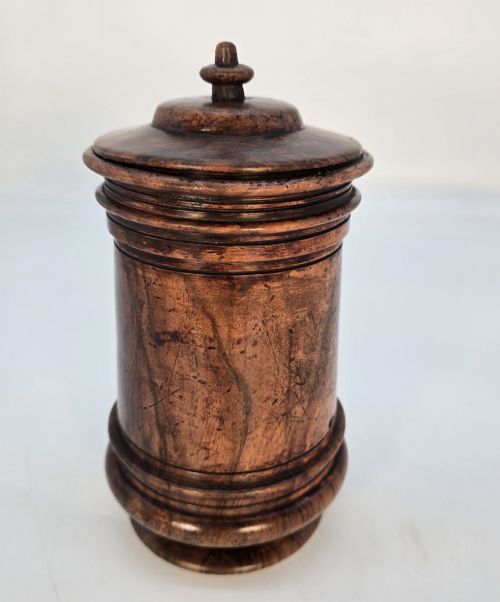
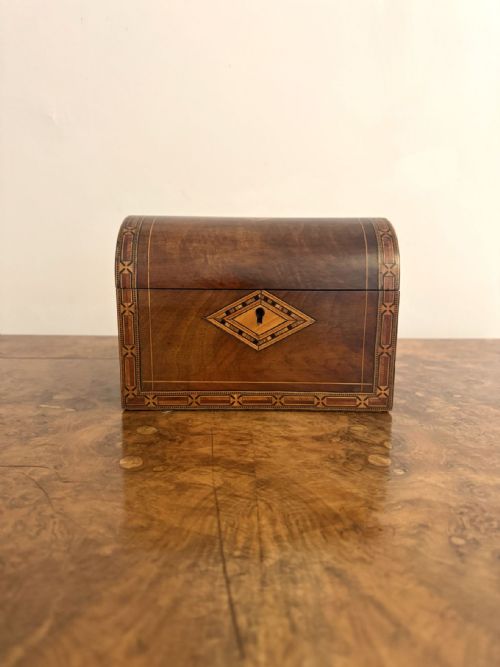
The selections most frequently met on this page include mahogany, walnut, and rosewood tea caddies, often featuring inlaid details such as Tunbridge work or satinwood banding. Alongside standard rectangular tea caddies, the form extends to specialised objects like spice boxes, tobacco jars, and multi-bottle tantalus decanter sets housed in oak or exotic timbers.
Originating largely from British workshops alongside continental examples like French Napoleon III pieces and 18th-century Indian carved teak items, these boxes reflect the changing domestic habits of elite and middle-class households. Buyers select them both for their compact craftsmanship and their functional utility as keepsake cases or desktop storage.
How they were made
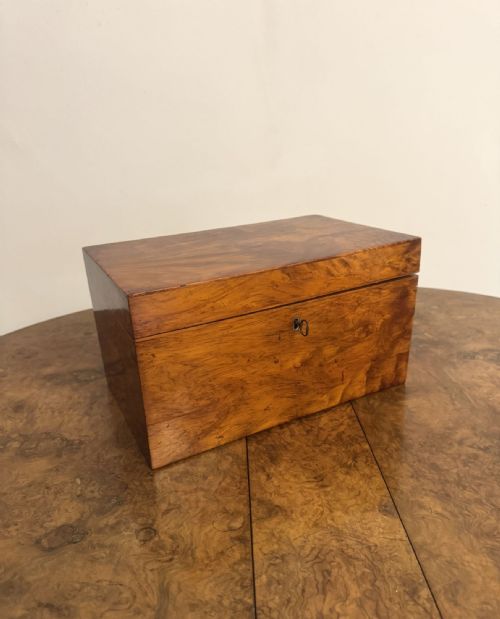
Cabinet makers utilised dense hardwoods including mahogany, walnut, rosewood, coromandel, and yew, often selecting figured veneers like flame mahogany or burr yew for visual depth. Carved teak, oak, and satinwood further broaden the palette across different regional workshops.
Decoration relied on precision joinery, contrasting stringing in ebony or boxwood, mother of pearl and bone details, and specialised surface treatments like Tunbridge inlay. Brass hardware, locks with keys, and silver plating provided both structural reinforcement and decorative contrast.
Some miniature tea caddies were made small enough to test cabinet maker apprenticeships before they tackled full-sized furniture.
What varies in quality
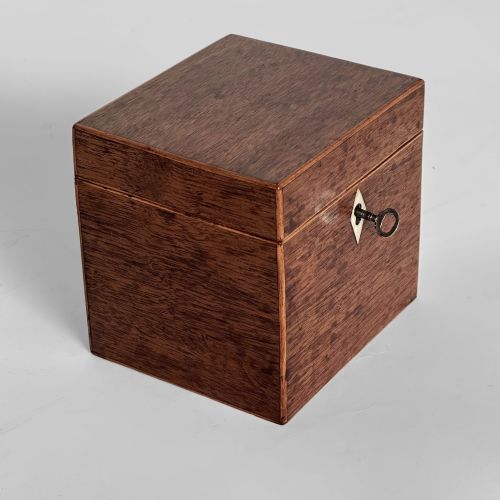
The standard of a box rests heavily on the choice of timber figure, such as the richness of a burr yew cube or flame mahogany grain, matched with meticulous veneer alignment across all sides. Superior examples demonstrate crisp execution in inlay work, such as geometric Tunbridge patterns or fine satinwood oval medallions.
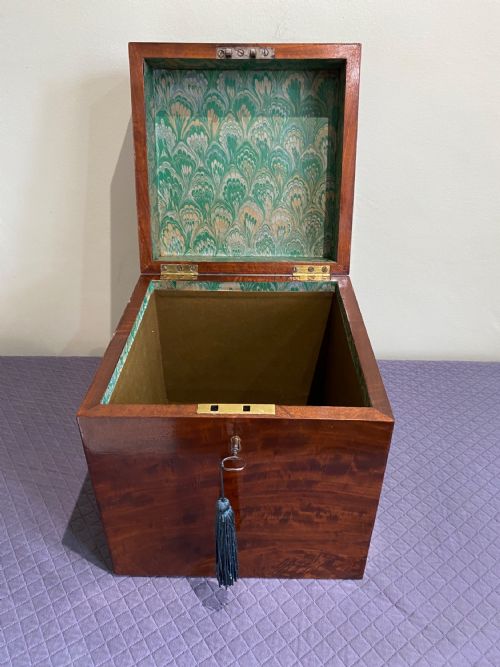
Interior architecture also distinguishes better pieces, evidenced by original lidded compartments, functioning locks with keys, intact foil linings, or secret drawers. The integrity of the secondary woods, precision of the dovetail joints, and retention of original brass carrying handles or escutcheons separate ordinary containers from finer collector pieces.
Tahan Paris
The Vintage Wooden Caddy Box Glossary
- Caddy
- A small box or chest once used for storing tea leaves when tea was an expensive commodity. Many retain interior dividing lids or mixing bowls.
- Tantalus
- A locking beverage stand holding decanters visible yet secured behind a wooden and metal bar. Late Victorian and Edwardian examples often combine oak with silver plate.
- Cellarette
- A large freestanding cooler or storage box designed for wine bottles, usually placed beneath a sideboard. Georgian and Regency versions frequently employ solid mahogany or walnut with brass mounts.
- Tunbridge inlay
- A meticulous form of woodwork creating mosaic pictures or geometric borders from thousands of tiny tinted wood blocks. It appears characteristically on Regency and Victorian boxes.
- Treen
- Small handmade wooden domestic objects and utility wares. Antique treen tobacco jars represent the simpler, turned utility side of timber craftsmanship.
Vintage Wooden Caddy Box: Frequently Asked Questions
What were tea caddies used for?
Tea caddies served as secure storage containers for precious tea leaves when tea was heavily taxed and treated as a luxury commodity. Wealthy households kept them locked to control access by servants.
Inside, many caddies featured separate lidded canisters or compartments for different tea varieties, alongside a central glass or metal mixing bowl for blending leaves.
How do I date a wooden box?
Dating relies on combining timber choices, hardware types, and construction styles such as hand-cut dovetails or veneer thickness. Georgian and Regency pieces often feature lighter satinwood banding and fine brass escutcheons, whereas Victorian examples tend to utilise heavier timbers like coromandel or walnut.
Secondary woods inside the box, keyhole linings, and lock stamps also offer reliable clues to the exact manufacturing era.
What is a tantalus?
A tantalus is a locking decanter stand introduced in the Victorian era that displays liquor bottles while preventing unauthorized access. Turning the key releases the locking bar to lift the decanters.
They are typically mounted in oak with silver-plated hardware and serve as decorative barware rather than traditional storage boxes.
How do I care for antique wood?
Antique wooden boxes require stable indoor humidity away from direct sunlight and heat sources to prevent timber shrinkage and veneer splitting. Periodic application of microcrystalline wax helps nourish the dry grain without building up heavy residue.
Handling brass mounts and hinges gently prevents loosening the historic screws embedded in aged timber.