




Inlaid Tea Chest
An inlaid tea chest is a fine wooden box made to hold valuable dry leaves, designed to keep them dry and secure under lock.
Inlaid Tea Chest
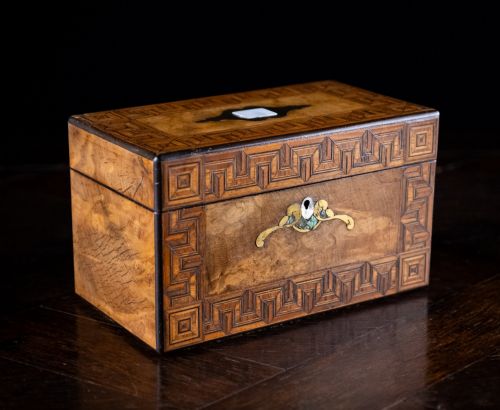
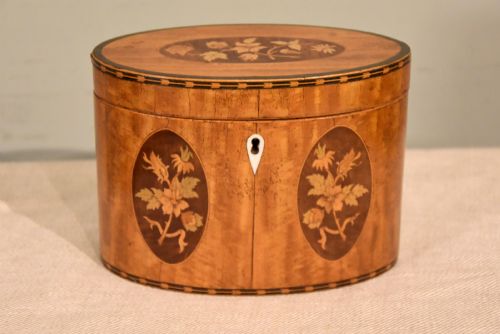
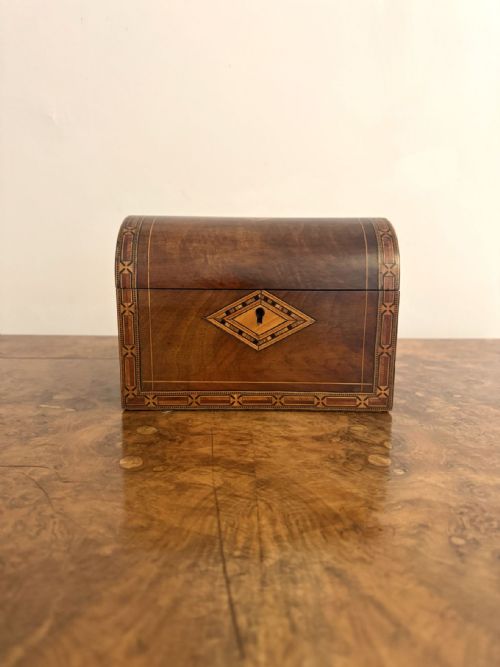
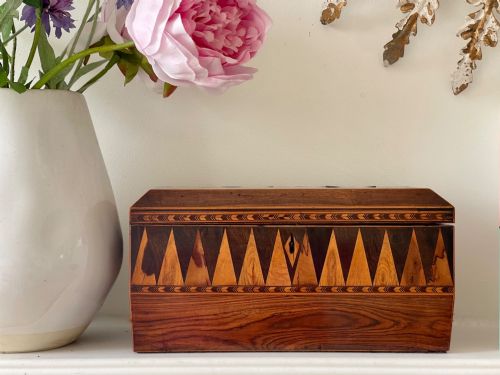
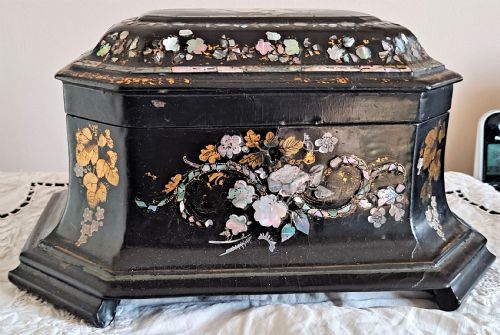
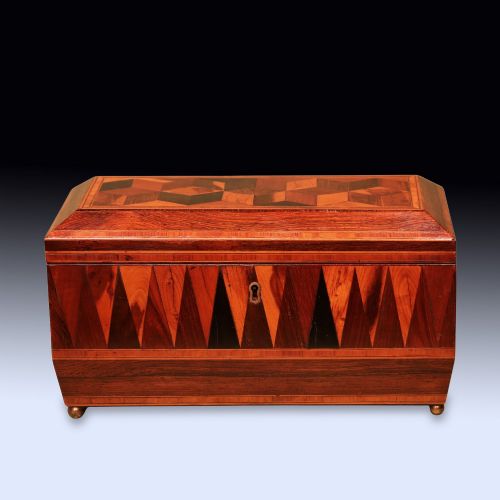
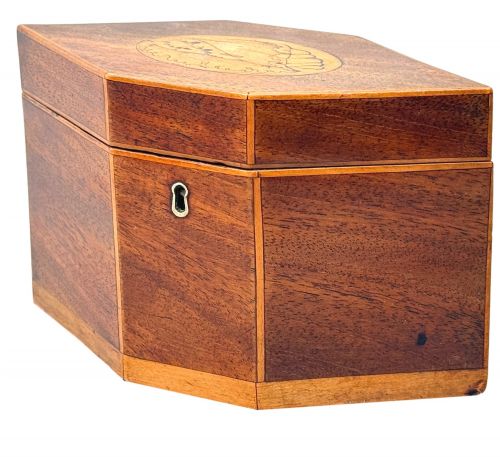
An inlaid tea chest, often catalogued as a tea caddy or teapoy, represents a domestic accessory produced across the Georgian, Regency, and Victorian eras. These boxes frequently appear in forms such as rectangular containers, oval shapes, and grand sarcophagus profiles.
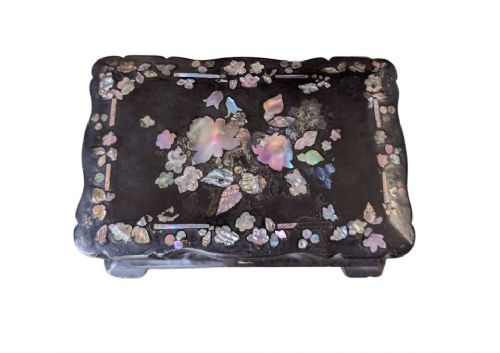
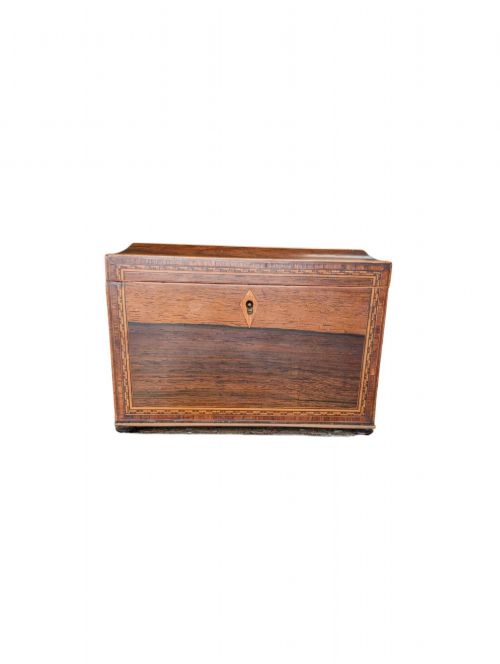
Makers fashioned these pieces from timbers including mahogany, rosewood, satinwood, walnut, and yew wood. Many examples incorporate intricate surface embellishments like brass stringing, shell motifs, star patterns, and parquetry designs.
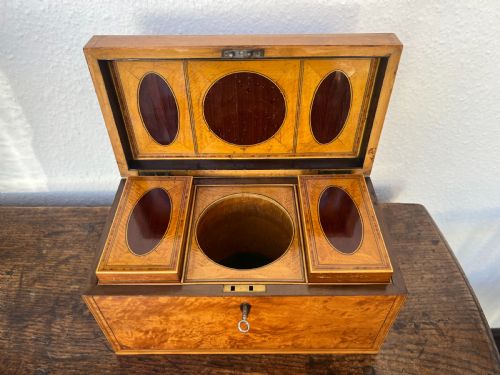
The interior arrangements typically include fitted compartments or inner canisters for storing different tea varieties. Surviving pieces span from eighteenth-century domestic items to late nineteenth-century productions involving specialist techniques like Tunbridge Ware.
How they were made
Craftsmen built the carcases of these boxes using dense hardwoods like mahogany and rosewood, often applying decorative veneers such as satinwood, harewood, or burr walnut over secondary timbers. They introduced contrasting linear details using boxwood, ebony, and bone stringing to delineate panels and geometric borders.
Surface ornamentation relied heavily on precision woodworking methods, incorporating parquetry, marquetry, and multi-coloured wood mosaics for pictorial panels such as butterflies or architectural scenes. Artisans also integrated cast brass handles, escutcheons, and mother of pearl inlay to enrich the exterior appearance.
Inlaid Tea Chest Retail Price Guide 2026
Typical asking prices for inlaid tea chest among the pieces listed under this phrase on Sellingantiques today, from the lower quarter to the upper quarter. They describe what is for sale here now, not the wider market.
Several boxes retain tiny wooden keys smaller than a thumb, designed to protect luxury leaves from curious seventeenth-century servants.
What varies in quality
Internal architecture dictates much of the merit, with finer boxes retaining original fitted compartments, crystal mixing bowls, and functioning locks with matching keys. The crispness of the parquetry and the integration of delicate brass or mother of pearl details demonstrate the skill of the maker.
Henry Hollamby
The Inlaid Tea Chest Glossary
- Teapoy
- A pedestal table or large box designed for holding tea equipment. These pieces often stand on a central pillar with tripod legs or take the form of substantial floor-standing caddies.
- Tunbridge Ware
- A type of woodwork originating from Kent characterised by mosaic patterns formed from thousands of tiny coloured wood blocks. Artisans assembled these minuscule pieces to create pictorial views and geometric borders on box lids.
- Sarcophagus form
- A box shape featuring a sloped, domed lid resembling a stone coffin popular during the Regency and Victorian periods. This architectural silhouette allowed for deeper storage capacity within the body.
- Escutcheon
- A protective metal plate surrounding the keyhole of a box. These elements were frequently cast in brass and shaped to complement the decorative scheme of the inlay.
- Parquetry
- A geometric mosaic of wood pieces used for surface decoration on floors and furniture. On tea chests, this technique creates repeating patterns of contrasting timbers.
Inlaid Tea Chest: Frequently Asked Questions
What is an inlaid tea chest?
An inlaid tea chest is a decorative wooden container produced to store high-value loose tea leaves safely under lock and key. These boxes served an important function in historical households where tea was an expensive commodity.
They range from compact eighteenth-century oval containers to elaborate nineteenth-century sarcophagi with multiple internal compartments. The exterior surfaces typically feature contrasting wood veneers, brass stringing, or microscopic mosaic work.
How were these boxes used?
Households used these containers to keep precious dry tea leaves secure from dampness and theft by domestic staff. The mistress of the house typically held the key and measured out the leaves for each pot.
Inside, the boxes often contained separate lidded canisters for black and green teas, alongside a glass bowl used for blending the leaves or washing spoons. This made the caddy a central piece of hospitality in the drawing room.
How do I date an inlaid tea chest?
Dating relies upon observing the combination of timber choices, box silhouettes, and inlay techniques used across different stylistic periods. Eighteenth-century examples frequently favour satinwood and mahogany with simple oval or rectangular shapes.
Regency and Victorian pieces often introduce rosewood, sarcophagus profiles, heavier brass mounts, and complex parquetry or Tunbridge Ware decoration. The construction methods of the internal compartments and drawer linings also offer chronological clues.
Are original interiors common?
Original internal fittings appear on many surviving examples, though some boxes have lost their inner canisters over centuries of use. Complete interiors often include matching wooden lids for the tea compartments and sometimes original glass mixing bowls.
Finding a box with intact linings and a functional lock significantly enhances its historical integrity. Collectors value these complete internal arrangements as they demonstrate the original purpose and design of the piece.
How do I care for antique wood?
Maintaining antique wooden boxes requires keeping them away from direct sunlight and sudden changes in central heating humidity. These environmental precautions prevent the delicate veneers and boxwood stringing from shrinking and lifting.
Gentle dusting with a dry, soft cloth is usually sufficient for surface maintenance. Avoid using modern aerosol polishes, which can build up and damage historical wax finishes.