


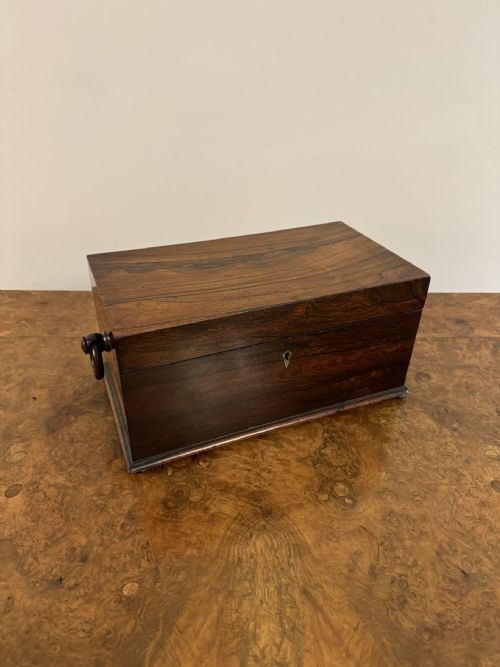


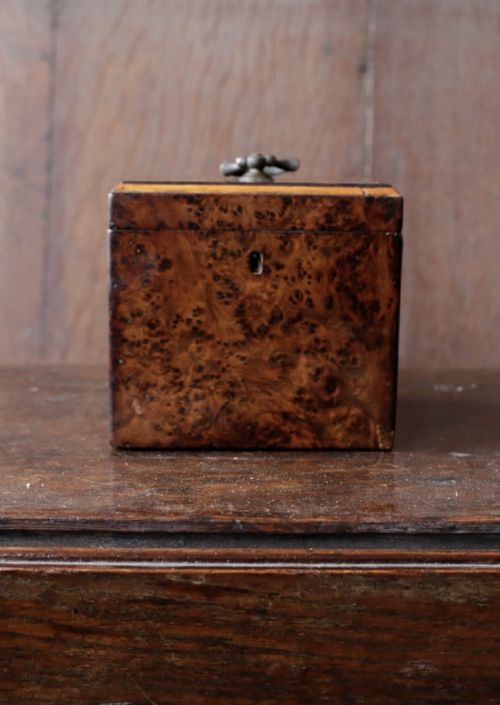


Brown Wood Tea Box
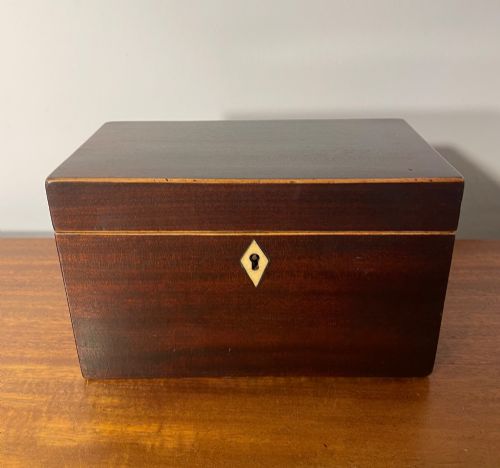
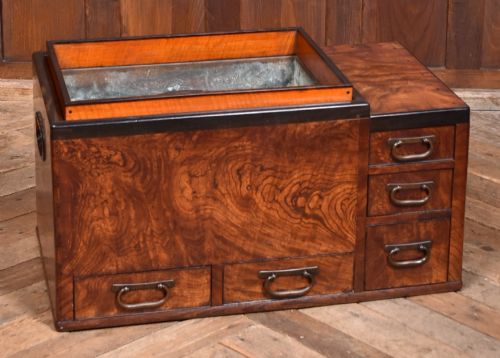
A brown wood tea box is a timber container made for storing loose leaf tea during the Georgian and Victorian eras.
Brown Wood Tea Box
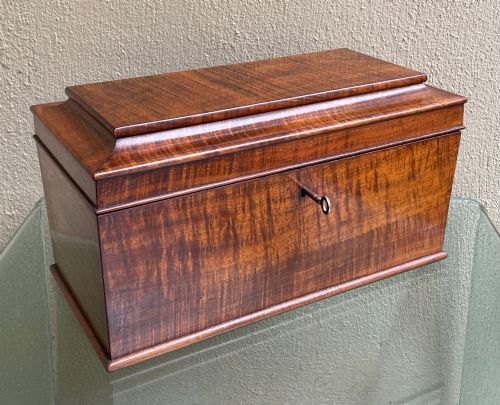
The most common forms on this page include rectangular and octagonal caddies, often featuring dual interior compartments. Makers also produced larger freestanding teapoys and sarcophagus-shaped boxes during the William IV and Victorian periods. Each piece reflects the high status of tea as a commodity in historical British households.
Materials and construction methods
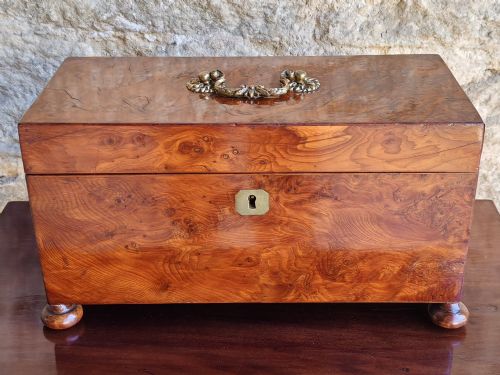
Cabinetmakers utilised dense tropical hardwoods such as mahogany and rosewood, alongside decorative veneers including burr yew, burr elm, partridge wood and amboyna. These materials provided stability and rich natural grain patterns suitable for high-status household objects. Workshops frequently enhanced the timber surfaces with contrasting boxwood stringing and shell inlay.
Construction involved precise joinery to create tight compartments that protected dry tea leaves from damp air. Many examples incorporate fitted interior lids, brass carrying handles, escutcheons and functioning locks. Specialised decorative techniques like Tunbridge Ware appear on select Victorian specimens.
Brown Wood Tea Box Retail Price Guide 2026
Typical asking prices for brown wood tea box among the pieces listed under this phrase on Sellingantiques today, from the lower quarter to the upper quarter. They describe what is for sale here now, not the wider market.
Several boxes include secret compartments cunningly concealed behind sliding partitions to keep private ledgers away from prying eyes.
Factors of quality and execution
The choice of timber veneer sets the baseline for visual distinction, with highly figured burr yew, burr thorn and partridge wood commanding attention. Cabinetmakers who selected symmetrical grain patterns across all visible surfaces demonstrated superior skill. Intricate wood inlay and geometric stringing further elevate a piece above plain utilitarian boxes.
Internal completeness determines practical preservation and integrity. Examples retaining original cut glass mixing bowls, internal lids with small ivory or wooden knobs, and working brass locks represent higher survival quality. The crispness of the box joints and the retention of the original warm polish finish complete the assessment.
Henry Hollamby
The Brown Wood Tea Box Glossary
- Tea caddy
- A small box or chest designed to store loose tea leaves. These containers typically featured internal compartments to keep black and green teas separate.
- Teapoy
- A freestanding piece of furniture comprising a tea storage box mounted on a central pillar with tripod feet or a cabinet base. They often doubled as small work tables.
- Stringing
- A narrow inlaid line of contrasting wood used to create decorative borders on cabinet surfaces. This technique is frequently seen on Georgian mahogany and rosewood boxes.
- Escutcheon
- A flat plate of brass surrounding a keyhole to protect the surrounding wood from wear. They are standard fixtures on lockable tea storage vessels.
- Tunbridge Ware
- A form of decorative woodwork characterised by intricate mosaic patterns made from tiny segments of naturally coloured woods. It gained popularity in Victorian spa towns.
Brown Wood Tea Box: Frequently Asked Questions
What is a brown wood tea box?
A brown wood tea box is a historical timber container built to store loose leaf tea safely in domestic settings. These vessels date primarily from the Georgian, Regency and Victorian periods.
Cabinetmakers constructed them using dense hardwoods like mahogany and rosewood, often highlighting decorative grain patterns through burr veneers and shell inlay.
How were these boxes used?
Households used these boxes to store valuable dry tea leaves under lock and key in the parlour or dining room. Tea was an expensive commodity, so the mistress of the house kept the key.
Inside, compartments separated different tea varieties, and many boxes included a central glass bowl for blending leaves or sugar.
How do I date a wooden tea box?
Dating relies on observing the timber species, construction methods, hardware and overall style of the piece. Georgian examples often feature straight lines and simple mahogany or yew veneers.
Regency and Victorian pieces frequently adopt bolder forms, such as sarcophagus shapes, heavier rosewood veneers, or elaborate Tunbridge Ware mosaic decoration.
Are original interiors common?
Many surviving boxes retain portions of their original internal fittings, including lidded compartments and sometimes mixing bowls. Complete interiors add significantly to the historical integrity of the piece.
Replacements or missing internal lids occur frequently due to the fragile nature of thin wooden partitions over centuries of domestic use.
How do I care for antique wood?
Keep wooden tea boxes away from direct sunlight, heat sources and damp environments to prevent timber warping and veneer lifting. Maintaining a stable room temperature protects the polish and structural glue.
Apply a light application of appropriate conservation wax occasionally to nourish the hardwood grain without building up heavy residues.