


Dark Mahogany Tea Caddy
A dark mahogany tea caddy brings deep timber grain and heavy brass fittings to a room, holding the history of the Georgian parlour.
Dark Mahogany Tea Caddy
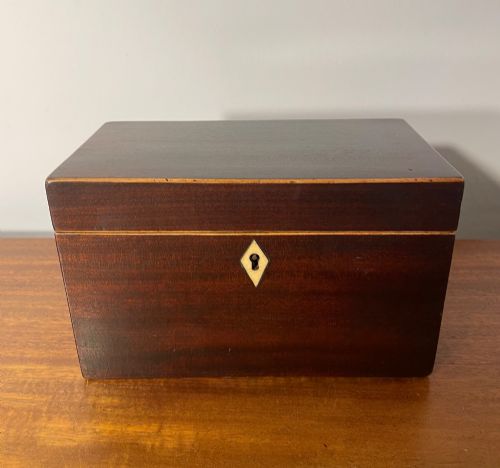
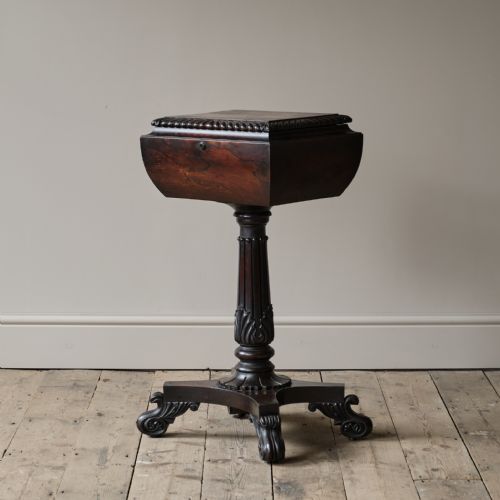
A dark mahogany tea caddy is a wooden box designed to store loose tea safely away from moisture and light. Most examples on this page date from the Georgian, Regency, and nineteenth-century periods, taking the form of tea caddies, larger teapoys on stands, and fitted boxes.
The selection ranges from simple rectangular chests to sarcophagus shapes with brass handles and claw feet. Makers often included interior compartments for green and black tea leaves, sometimes retaining original glass mixing bowls.
How they were made
Cabinetmakers constructed these pieces using solid mahogany and fine wood veneers applied to a secondary timber base. Boxwood and bone stringing often outlines the lids and panels, providing sharp contrast against the dark wood.
Hardware such as escutcheons, hinges, and lion-mask ring handles were cast in brass and set flush into the timber. Interiors frequently featured fitted wooden lids inside the main compartment to preserve the aroma of the leaf.
Current listings feature mahogany as the primary timber, complemented by brass hardware, bone inlay, and boxwood stringing across Georgian and Victorian periods.
What varies in quality
Quality rests in the choice of timber figure, from straight-grained planks to richly figured flame mahogany. Superior boxes display precise mitre joints and crisp boxwood stringing that remains entirely flush with the surrounding surface.
The presence of original maker stamps, such as those attributed to Gillows or Strahan, elevates a piece significantly. Finer examples retain their internal foil lining, original glass bowls, and working locks with matching keys.
Strahan·Gillows
The Dark Mahogany Tea Caddy Glossary
- Tea caddy
- A small box or chest intended for the dry storage of tea leaves. The word derives from catty, the Chinese unit of weight.
- Teapoy
- A larger tea container mounted upon its own pedestal stand or legs. Some versions include internal mixing bowls and sliding drawers.
- Sarcophagus form
- A distinct casket shape featuring a domed or peaked lid tapering down to a heavy rectangular base. This silhouette proved popular during the Regency period.
- Escutcheon
- A protective metal plate surrounding a keyhole. On these pieces, they are typically cast in brass and secured with small pins.
- Stringing
- Thin inlay lines of a contrasting wood, such as boxwood, set into the mahogany surface. This technique frames the lid edges and panel borders.
Dark Mahogany Tea Caddy: Frequently Asked Questions
What is a dark mahogany tea caddy?
A dark mahogany tea caddy is a timber container built to hold tea leaves in the eighteenth and nineteenth centuries. These boxes protected precious imported leaves from damp air.
They range from small tabletop chests to elaborate standing teapoys with internal compartments and glass mixing bowls.
How do I date a tea caddy?
Dating relies on observing the cabinetmaking style, hardware construction, and timber species. Georgian and Regency pieces often feature sarcophagus silhouettes, brass lion-mask handles, and intricate boxwood stringing.
Later Victorian examples introduce heavier carved details while maintaining the traditional mahogany carcass.
What is the difference between a caddy and a teapoy?
A tea caddy is a portable box designed to sit upon a table, sideboard, or tea chest. It contains lidded canisters for storing leaf varieties.
A teapoy is a much larger piece of furniture supported by a pillar and claw foot or four legs, operating as an independent stand.
How were tea caddies used originally?
In the Georgian era, tea was an expensive commodity kept under lock and key by the head of the household. The host would measure out the leaves using the internal canisters.
The mixing bowl allowed the host to blend black and green teas before brewing the drink in a ceramic teapot.
How do I care for a mahogany caddy?
Keep the timber away from direct sunlight and strong heat sources to prevent the mahogany veneer from drying and lifting. Dust the surface gently with a dry, soft cloth.
Avoid using modern liquid polishes or silicone sprays, which can damage the historic polish and accumulated wax.