
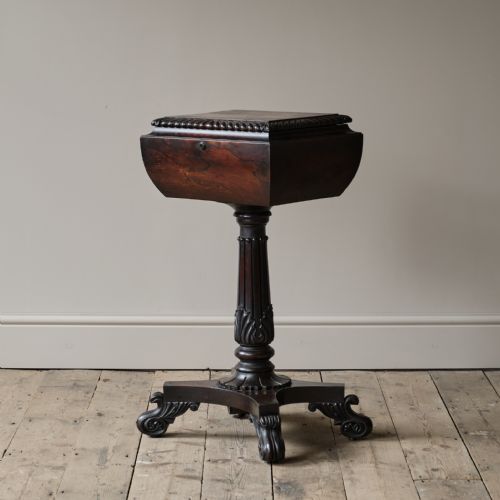
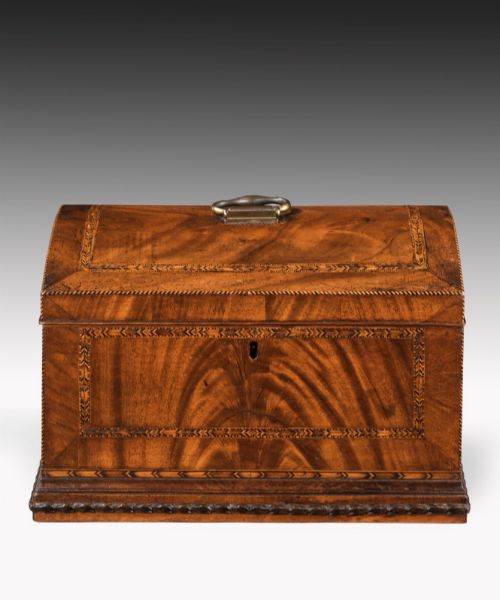
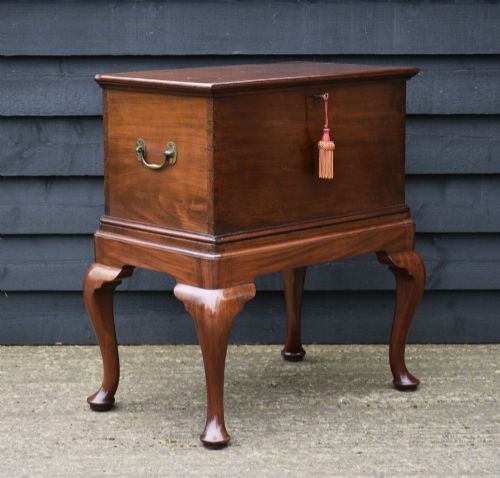
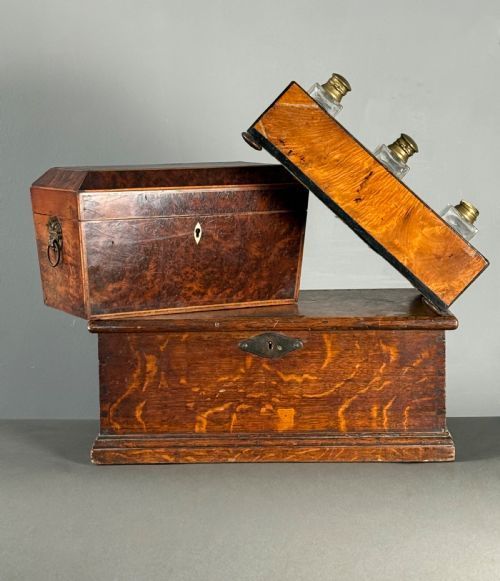

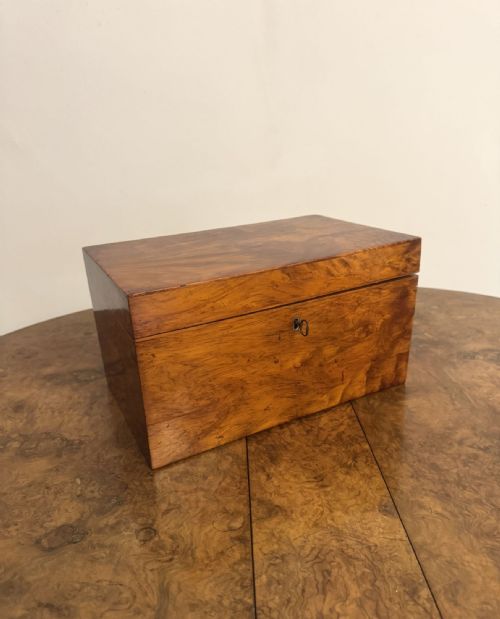

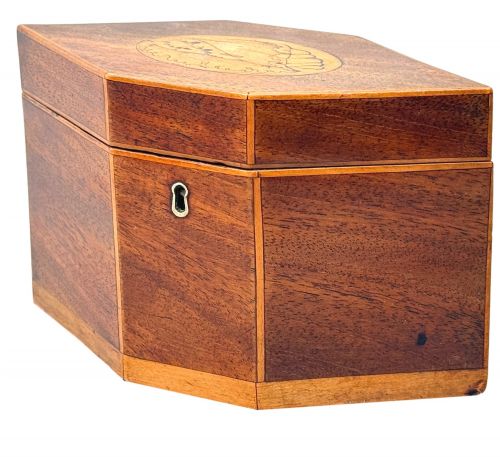
Mahogany Tea Caddy Box
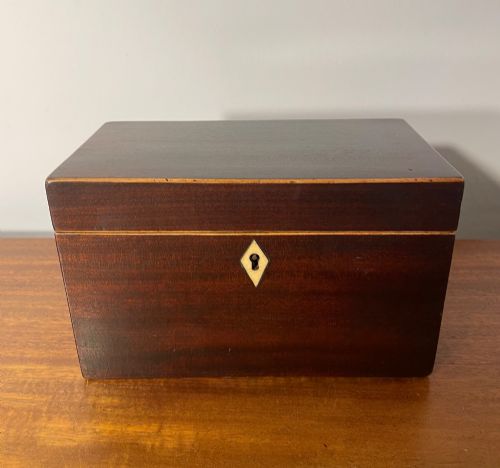
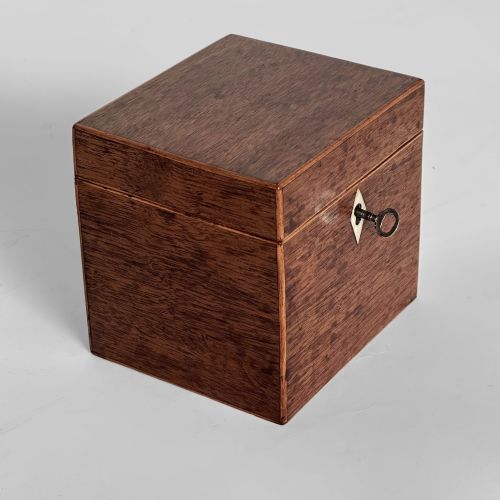
A mahogany tea caddy box holds leaves securely under lock and key, combining fine cabinet work with the domestic rituals of the tea table.
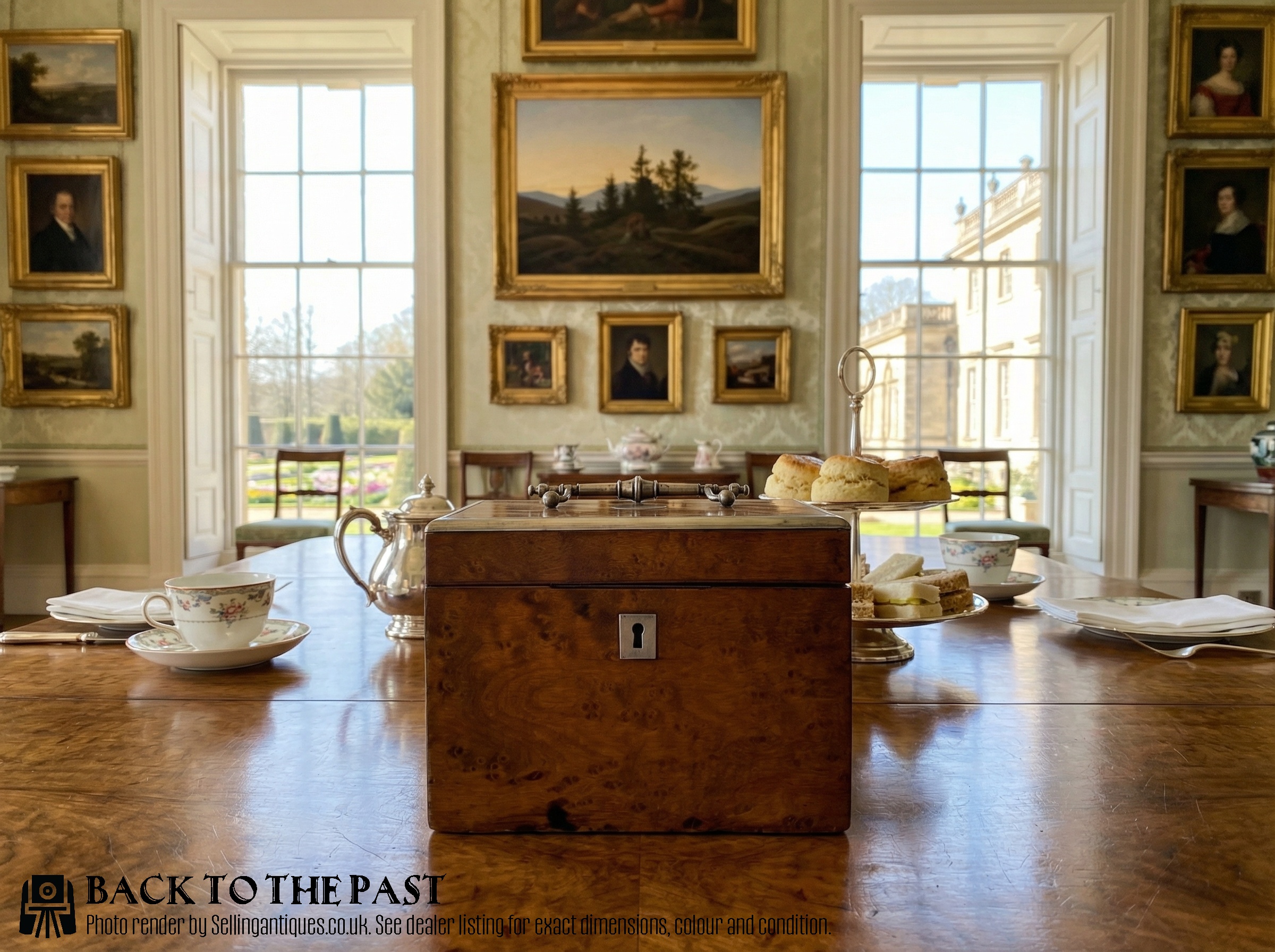
Mahogany Tea Caddy Box
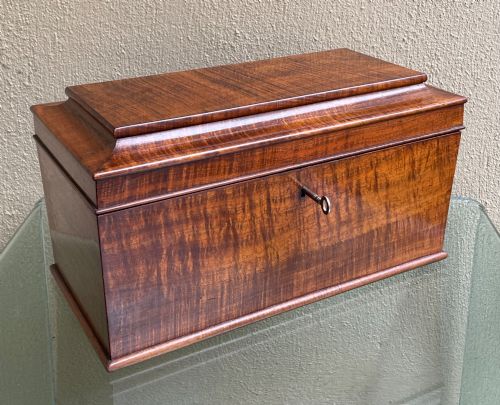
A mahogany tea caddy box is a small lidded chest designed for storing dried leaves during periods when tea was a costly commodity. The examples found here span the Georgian, Regency, and Victorian eras, alongside pieces catalogued under the eighteenth and nineteenth centuries.
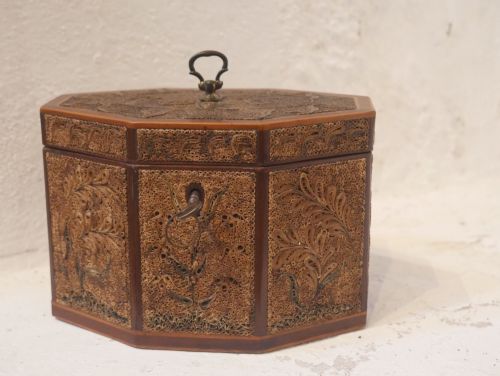
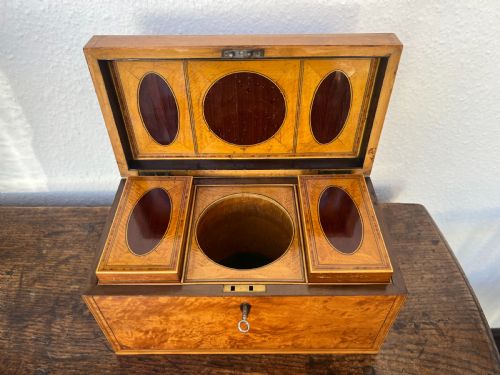
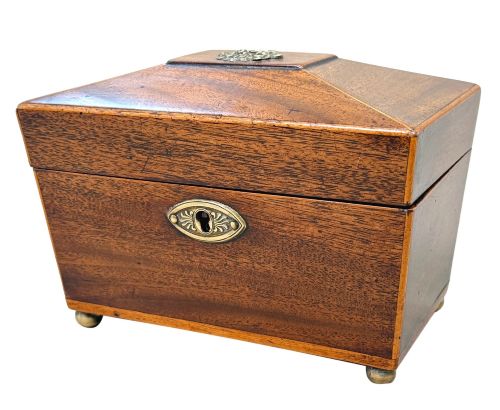
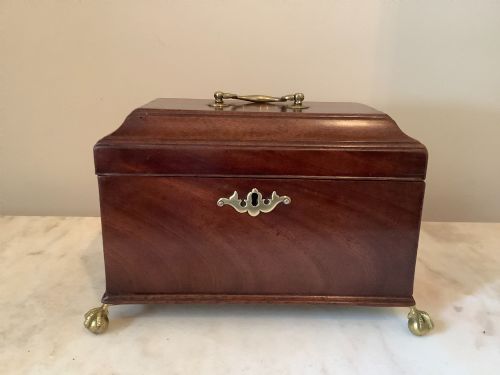
Most items take the form of tea caddies, teapoys, and decorative boxes, appearing in rectangular, hexagonal, oval, domed, and sarcophagus shapes. Buyers frequently encounter versions with fitted interiors, interior compartments, secret drawers, and occasionally original glass mixing bowls.
Makers utilised mahogany as the primary timber, often enhanced by decorative elements such as flame grain patterns, brass hardware, bone, boxwood, and ebony details. Certain pieces also incorporate paper filigree work, painted finishes, and mother of pearl.
How they were made
Cabinet makers constructed these boxes using solid mahogany or applied mahogany veneers over secondary timbers, often selecting figured wood such as flame mahogany or burr maple for the outer surfaces. Fine contrasting stringing and geometric motifs in boxwood and ebony define the inlaid examples.
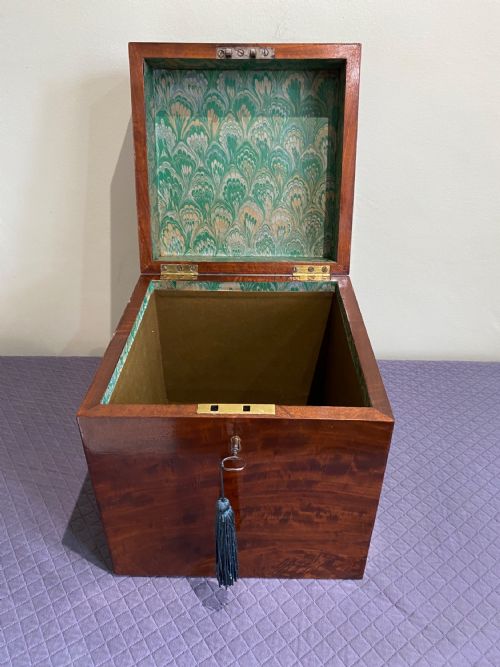
Internal compartments were built to separate different varieties of tea leaves, sometimes featuring individual wooden lids to preserve aroma. Working brass locks, hinges, and escutcheons were fitted by hand to secure contents that required careful safeguarding.
Listings feature periods from the eighteenth century through the Victorian era, utilising materials including mahogany, boxwood, bone, and glass.
What varies in quality
The standard of a mahogany tea caddy box rests on the choice of timber and the precision of its construction. Finely figured grain, crisp boxwood line inlay, and sophisticated forms like the sarcophagus or bombé shape distinguish the better examples from plain rectangular boxes.
Internal arrangement further separates output, with complete interior lidded canisters, intact glass mixing bowls, and functioning secret drawers indicating higher original cost and superior workshop execution.
The Mahogany Tea Caddy Box Glossary
- Tea caddy
- A small box or chest designed to hold tea leaves. The term evolved from catty, the Chinese unit of weight.
- Teapoy
- A pedestal table fitted with a tea caddy box on top, or a large caddy designed to stand on the floor. These pieces served tea in formal reception rooms.
- Sarcophagus form
- A box shape featuring a convex sloping lid and heavy plinth base, echoing classical monumental design. This silhouette became popular during the Regency period.
- Bombé
- A swelling, outwardly curved convex profile on the sides of a box. This curved construction requires advanced woodworking skill.
- Stringing
- Thin inlaid lines of contrasting timber, such as boxwood or ebony, set into the mahogany surface to create decorative borders.
Mahogany Tea Caddy Box: Frequently Asked Questions
What is a mahogany tea caddy box used for?
These boxes stored dry tea leaves securely under lock and key when tea was an expensive household commodity. Separate internal compartments kept different blends distinct before brewing.
Today, collectors utilise them to store jewellery, small keepsakes, or simply as decorative desk and tabletop accessories.
How do I date a Georgian tea caddy?
Dating relies on architectural proportions, secondary timbers, and decorative techniques like stringing and inlay. Georgian pieces often display straight-sided rectangular, oval, or hexagonal forms.
Later Regency and Victorian versions frequently introduce sarcophagus shapes, heavier brass feet, and more elaborate veneering.
What are mixing bowls inside tea caddies for?
The glass bowls found inside certain caddies allowed users to blend different tea leaves or dilute strong brews with water. They served a functional role at the tea table during the eighteenth and nineteenth centuries.
Many surviving boxes retain their cut glass bowls, though others now show empty compartments where bowls once sat.
How do I care for antique mahogany boxes?
Keep wooden boxes away from direct sunlight and sudden temperature shifts to prevent the mahogany veneer from warping or splitting. Gentle dusting with a dry cloth maintains the surface.
Applying microcrystalline wax sparingly helps nourish antique polish without building up heavy residue.