




Flame Mahogany Caddy
Flame mahogany caddy selections bring intense grain patterns and tactile warmth to period interiors, prized for holding fine tea.
Flame Mahogany Caddy
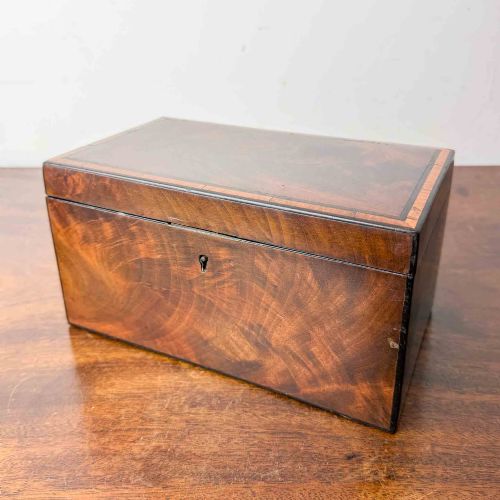
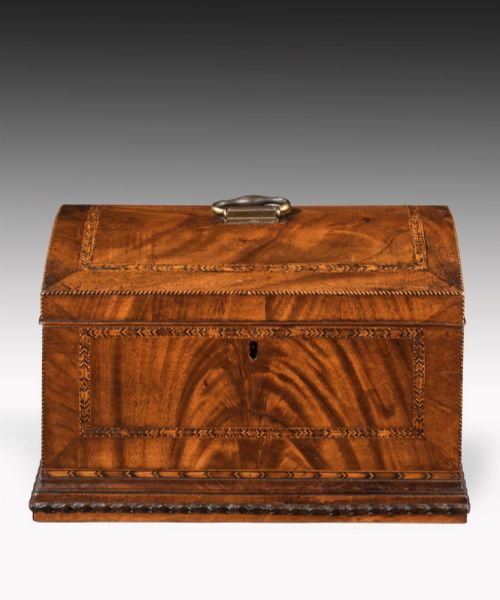
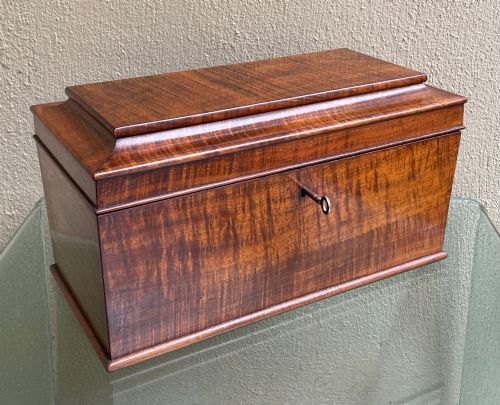
A flame mahogany caddy is a specialised wooden box designed to store tea leaves securely under lock and key during periods when tea was a costly commodity. The examples you encounter on this page span from the Georgian and Regency eras through the nineteenth century, taking forms such as sarcophagus shapes, double canisters, and teapoys.
The material identity rests upon the distinctive flame mahogany veneer, which displays undulating, fiery grain patterns created by cutting across the branch junction of the tree. These pieces frequently incorporate secondary woods like boxwood or satinwood for stringing and inlay, alongside interior elements such as glass mixing bowls and brasses.
How they were made
Cabinetmakers constructed these caddies by applying thin sheets of flame mahogany veneer over solid foundational timbers, laying the grain carefully to mirror or balance the patterns across the lid and front. This technique required expert handling of animal glues and hand saws to achieve smooth, flush surfaces that showed off the dramatic figuring of the wood.
Interior compartments were fitted with precision to hold individual tea canisters, often lined with foil or paper, alongside recessed spaces for glass bowls used to blend leaf varieties. Details such as bone escutcheons, brass drop handles, and fine stringing lines completed the construction.
Flame Mahogany Caddy Retail Price Guide 2026
Typical asking prices for flame mahogany caddy among the pieces listed under this phrase on Sellingantiques today, from the lower quarter to the upper quarter. They describe what is for sale here now, not the wider market.
Listings feature flame mahogany caddy forms spanning the Georgian, Regency, and Victorian periods, incorporating materials such as brass, boxwood, and glass.
What varies in quality
The distinction between ordinary and exceptional examples lies in the exuberance of the veneer selection and the crispness of the cabinetwork. A superior flame mahogany caddy displays symmetrical, highly figured grain that wraps seamlessly around the corners of the box.
Internal completeness heavily influences standing, particularly the presence of original mixing bowls, interior lids with functioning pulls, and working locks with matching keys. The precision of inlaid boxwood or ebony stringing also marks the difference between standard production and master craftsmanship.
Gillows
The Flame Mahogany Caddy Glossary
- Flame mahogany veneer
- A thin slice of wood cut from the fork of a mahogany tree where the branch meets the trunk. This specific cut produces a rippling, flame-like pattern highly valued by Georgian and Regency cabinetmakers.
- Teapoy
- A small stand or table fitted with a lidded box on top to hold tea canisters and mixing bowls. They often sat beside the fireplace or tea table in prosperous homes.
- Sarcophagus shape
- A distinctive box profile featuring a steep, stepped lid and a tapered body resting on paw feet or a plinth base. This neoclassical form was popular during the Regency period.
- Mixing glass
- A small glass bowl fitted inside the caddy for diluting or blending different teas before serving. Surviving original bowls add considerable interest to a piece.
- Escutcheon
- A small protective plate surrounding the keyhole, typically cast in brass or carved from bone. It prevents the wood from splitting around the lock mechanism.
Flame Mahogany Caddy: Frequently Asked Questions
How were tea caddies used?
Households used these boxes to store black and green teas securely away from moisture, dust, and domestic staff. The mistress of the house kept the key to control access to the precious leaves.
The interior glass bowl served as a mixing vessel where different teas could be combined or watered down before serving. Once the tea was portioned, the box was locked again.
How do I date a tea caddy?
Dating relies on observing the overall shape, construction methods, and secondary decorative details. Georgian examples tend to feature straight-sided box forms with delicate inlay, while Regency pieces often adopt sarcophagus silhouettes with bold brass feet and ring handles.
Interior fittings and the thickness of the mahogany veneers also provide clues to the period of manufacture. Surviving examples span from the late eighteenth century through the Victorian era.
Are original interiors important?
Original interiors add significant character and completeness to any antique box. Finding intact interior canisters, lids, and matching glass bowls pleases collectors who value historical integrity.
While many caddies lost their original bowls or canister lids over the centuries, surviving components demonstrate how the piece functioned in period daily life.