
Regency Mahogany Box
When you search for a regency mahogany box, you are looking at utilitarian containers elevated through fine cabinetmaking.
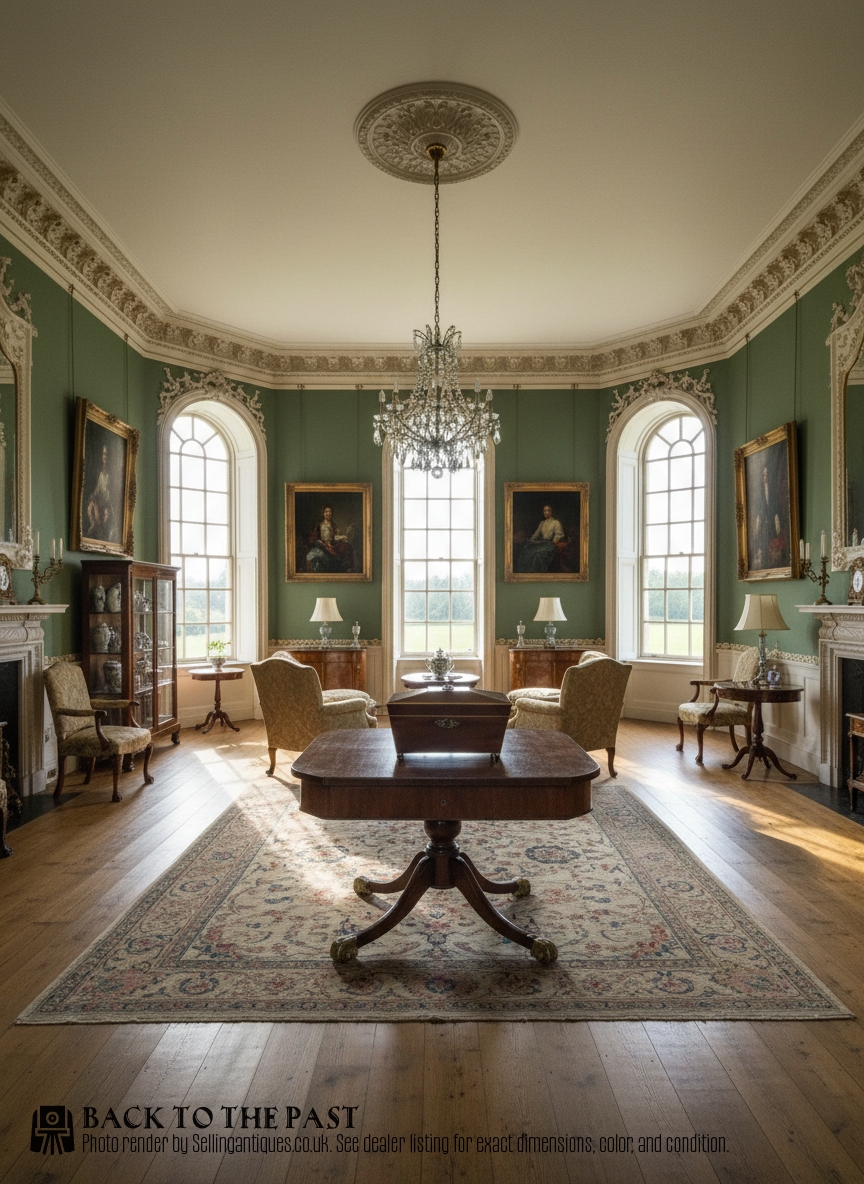
Regency Mahogany Box
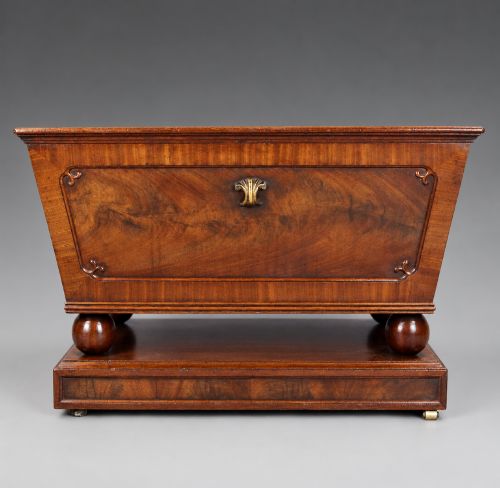
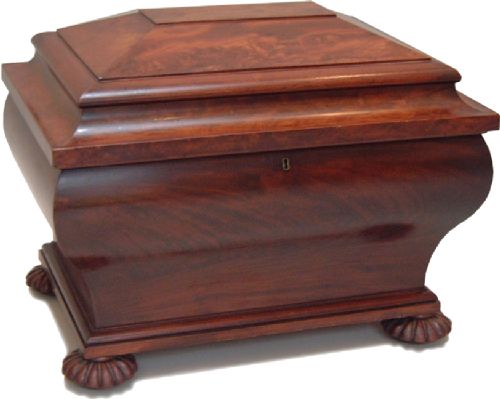
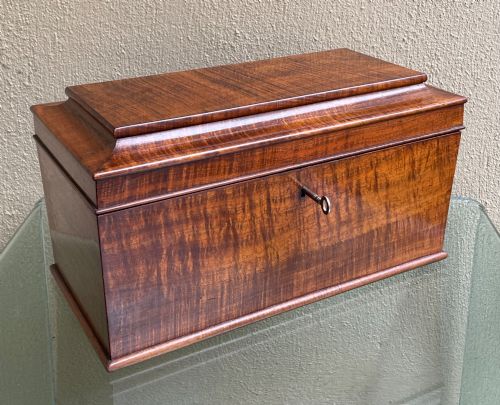
The term regency mahogany box covers a broad assortment of containers made during the late Georgian and early 19th century periods, utilised for tea, writing, sewing, and bottle storage. Most examples encountered on this page originate from the Regency, George III, and George IV eras, often featuring distinctive architectural proportions and sarcophagus or rectangular forms.
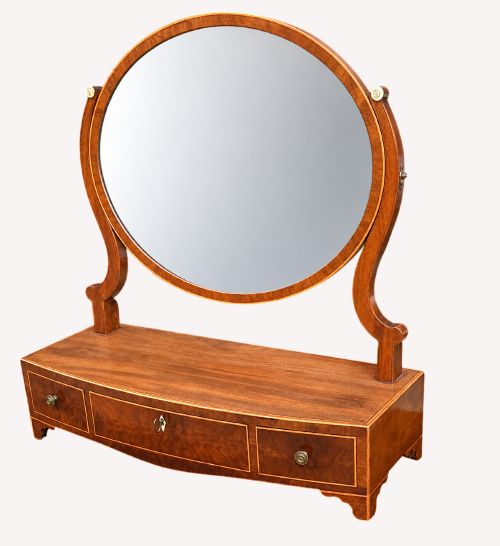
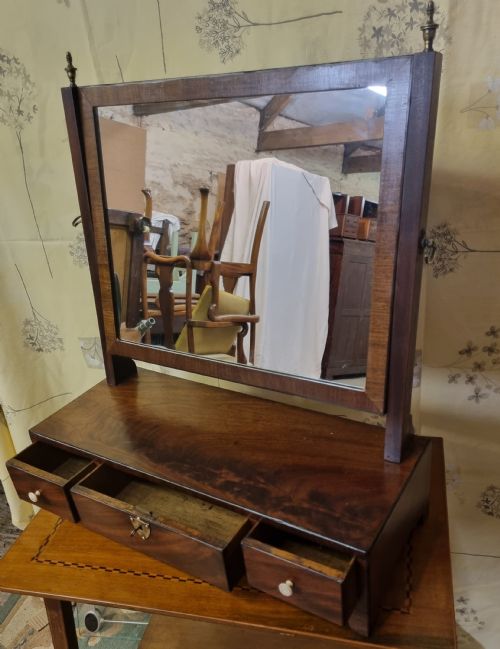
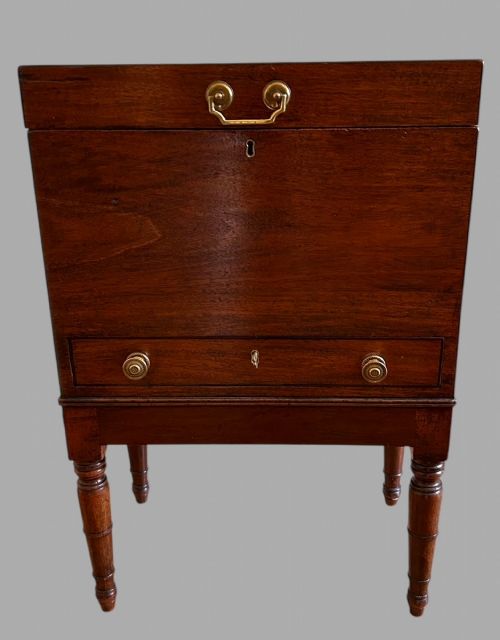
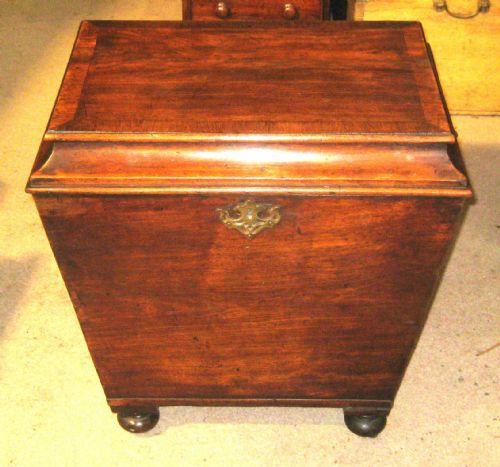
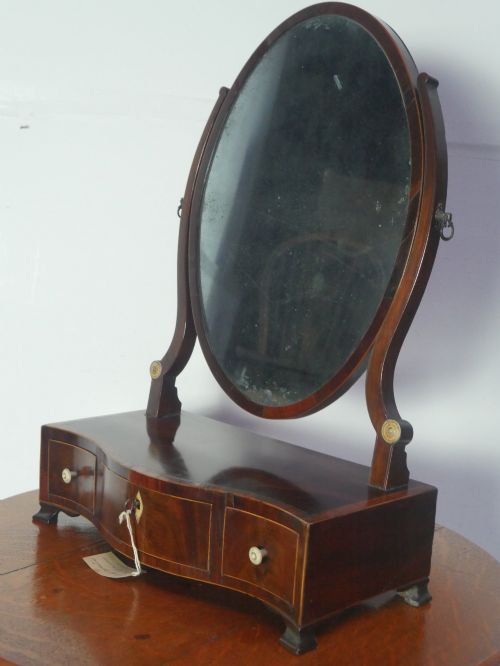
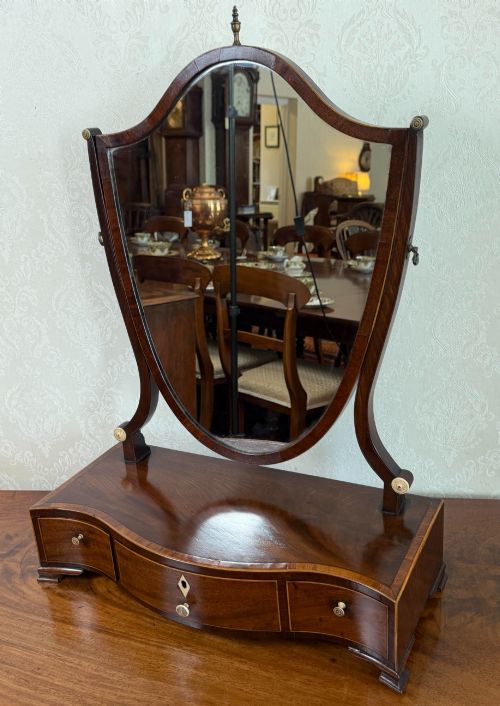
Beyond standard tabletop containers like tea caddies and jewellery boxes, the category extends to larger forms such as wine coolers, cellarettes, and dressing table mirrors framed in mahogany. These pieces served specific domestic functions in period households, acting as secure receptacles for valuable provisions, personal accessories, or correspondence.
Makers of these items frequently applied decorative stringing in boxwood or ebony, contrasting against the dark grain of the primary timber. The surviving specimens demonstrate how master craftsmen blended rigid utility with the prevailing neoclassical design sensibilities of the early 1800s.
Materials and construction methods
Solid mahogany and flame mahogany veneer provide the primary structural foundation and visual character for these containers, frequently supported by secondary timbers like oak for internal linings and drawer construction. Cabinetmakers selected veneers with dramatic grain patterns for prominent exterior surfaces, such as lids and drawer fronts, to create striking optical movement.
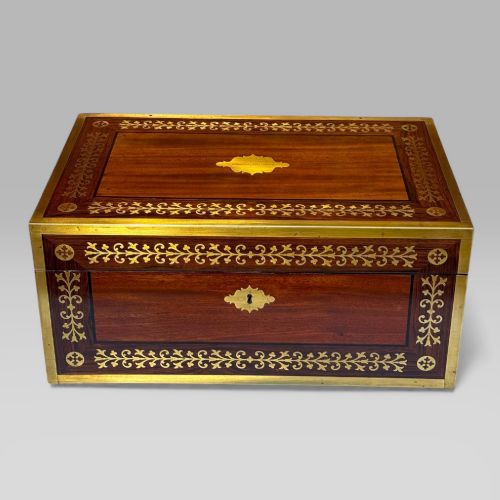
Brass fittings, including carrying handles, escutcheons, and inlaid stringing lines, reinforce corners and accentuate the geometric profiles of the boxes. Boxwood and ebony inlay appear as fine contrasting borders, dividing panels and defining the edges of the lids and bases.
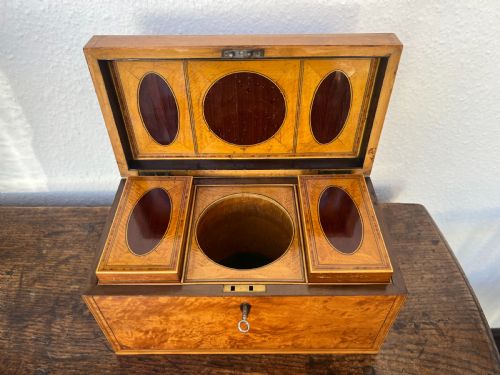
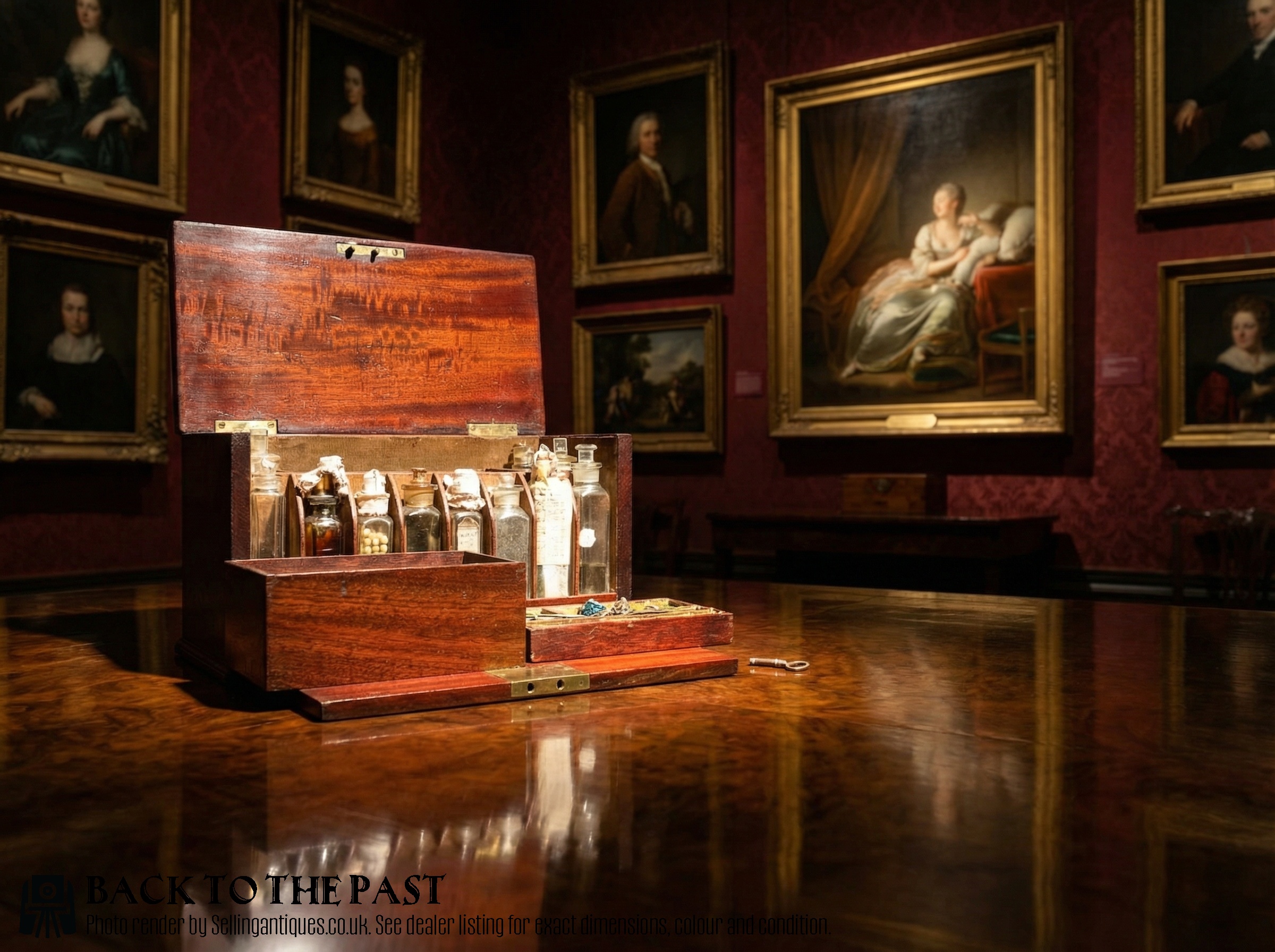
Interior compartments often utilise specialised fittings such as glass bottles, fabric linings, and bone knobs to organise the intended contents, whether tea leaves, writing implements, or medical equipment. Joinery techniques rely on tight dovetail joints for drawers and precise mitres for exterior framing, ensuring structural durability across centuries.
Regency Mahogany Box Retail Price Guide 2026
Typical asking prices for regency mahogany box among the pieces listed under this phrase on Sellingantiques today, from the lower quarter to the upper quarter. They describe what is for sale here now, not the wider market.
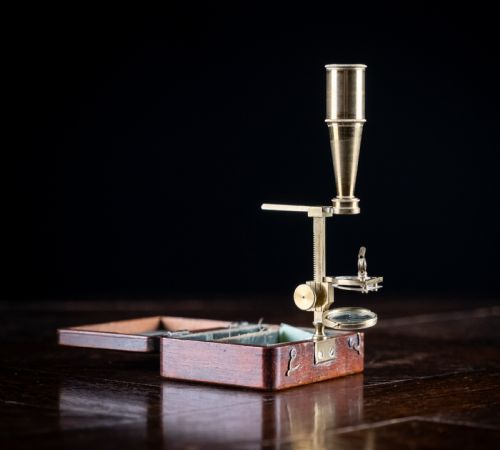
Medical cupping sets and pocket microscopes occasionally slip into the box category, proving that Regency folks liked to bleed or magnify their problems.
Assessing quality in early containers
The hierarchy of quality in these pieces rests primarily upon the selection of timber figures and the precision of the veneer work. Superior examples display symmetrical flame mahogany patterns that wrap continuously around the carcass, whereas lesser items use plain, unfigured boards.
Execution of decorative details separates standard production from master craftsmanship, specifically regarding the crispness of brass inlays, stringing, and corner mounts. Original internal fittings, functioning locks with matching keys, and intact lead linings in cellarettes elevate the historical and structural integrity of an individual piece.
Proportion and architectural balance dictate the visual success of the box, with finer items maintaining harmonious dimensions rather than clumsy scaling. The condition of the polish, whether a rich patinated finish or a heavy modern intervention, significantly impacts the authenticity and tactile appeal of the mahogany surface.
Thomas Hope·John Millikin·Gillingtons·Joseph Egg·Cary London
The Regency Mahogany Box Glossary
- Sarcophagus
- A coffin-shaped box profile featuring a steep, stepped lid and a tapering body, frequently utilised for wine coolers, tea caddies, and work boxes during the Regency period.
- Teapoy
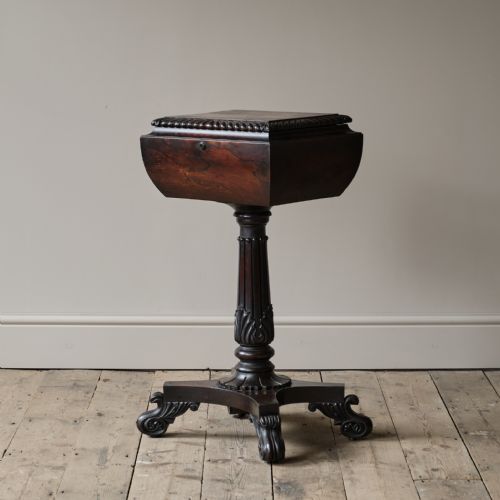
- A small stand or table equipped with a lidded box on top, designed specifically to hold tea containers and mixing bowls in the drawing room.
- Cellarette
- A large freestanding or floor-standing box designed to hold wine bottles, often fitted with internal partitions, lead linings, or brass carrying handles.
- Stringing
- A narrow strip of contrasting light or dark wood, such as boxwood or ebony, inlaid into shallow channels on the surface of a piece to form geometric borders.
- Campaign box
- A portable container designed for travel, featuring recessed brass handles, reinforced corners, and fold-out writing surfaces or compartments for military and colonial officers.
Regency Mahogany Box: Frequently Asked Questions
What were tea caddies used for?
Tea caddies served as secure storage containers for expensive imported tea leaves, protecting the dry goods from moisture and light. Wealthy households kept these boxes locked in the drawing room to control access to the precious leaves.
Inside, the containers typically featured two or more internal compartments with fitted lids, sometimes accompanied by a central glass or crystal mixing bowl. This allowed servants or hosts to blend different tea varieties before brewing.
How do I distinguish a cellarette from a wine cooler?
While the terms are often used interchangeably in historical records, cellarettes strictly refer to enclosed boxes or cabinets designed to hold bottles securely, frequently equipped with interior racks or dividers. Wine coolers can encompass open vessel forms or metallic tubs intended for chilling bottles in ice water during formal dining.
Both items occupied the dining room floor beneath sideboards or tables during the Georgian and Regency periods. Surviving mahogany examples often include lead linings or brass bands to handle moisture and heavy bottle weights.
What is the difference between a work box and a teapoy?
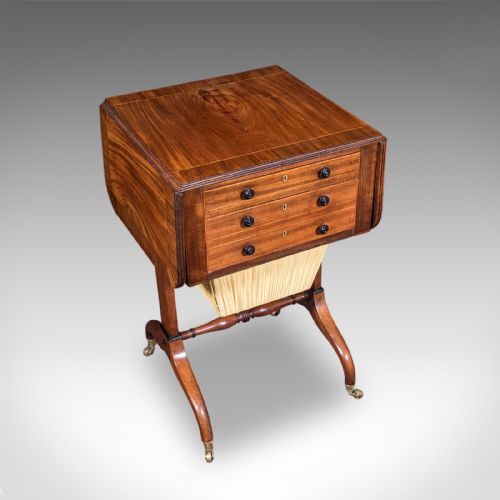
A work box is a portable tabletop container designed to hold sewing implements, threads, and small needles, whereas a teapoy is a larger, pedestal-mounted box intended for storing and preparing tea. Work boxes frequently incorporate lift-out trays and silk-lined compartments tailored to needlework.
Teapoys stand on independent pillar bases with tripod or platform feet, positioning the container at a comfortable height beside a chair. Both forms highlight the specialised nature of early 19th-century domestic storage furniture.
How can I tell a Regency box from a Victorian copy?
Regency pieces generally exhibit sharper neoclassical proportions, restrained use of boxwood and ebony stringing, and heavy, high-quality mahogany timbers with natural grain patination. Victorian reproductions often feature coarser dovetail construction, darker and more uniform commercial stains, and heavier cast brass hardware without hand-finished detailing.
Examining the secondary woods inside drawers and compartments provides further clues, as earlier pieces rely on native oak or pine rather than later imported conifers. Original locks, hand-cut screws, and period paper linings also help confirm an early 19th-century origin.