



Tea Caddy on Stand
A tea caddy on stand elevates dry leaf from the shelf to a focal point of the room, offering enclosed storage mounted firmly on legs.
Tea Caddy on Stand
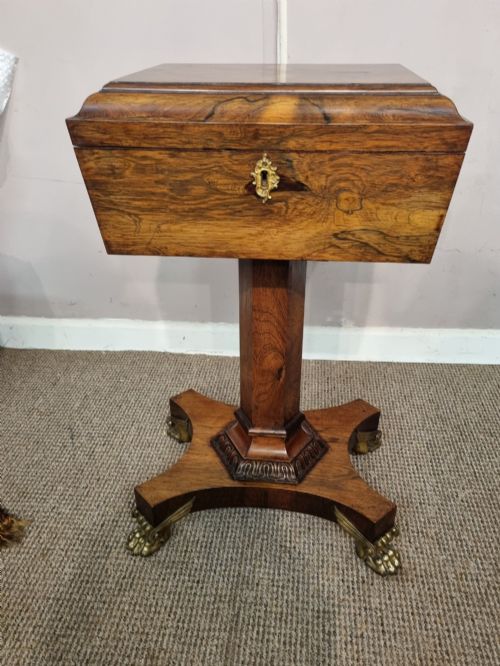
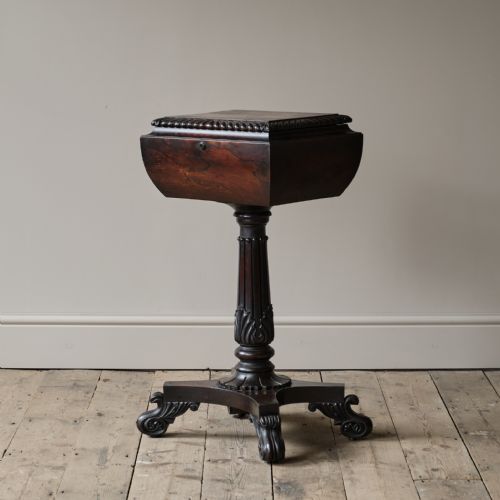
A tea caddy on stand, frequently catalogued as a teapoy, unites a lidded storage box with a dedicated support structure or pedestal base. The form emerged strongly during the Georgian and Regency periods, persisting through the William IV and Victorian eras.
Most examples you encounter on this page take the form of freestanding boxes supported by pillars, carved feet, or table frames. They combine the secure storage of precious tea leaves with the formal presence of occasional furniture.
Makers of the period utilised various timbers such as mahogany, rosewood, and burr walnut to construct these receptacles. Alongside standard tea storage, some variations incorporate compartments for glasses, mixing bowls, or work box fittings.
How they were made
Cabinet makers constructed the box carcasses from dense tropical hardwoods like mahogany and rosewood, often applying decorative veneers such as flame mahogany, burr maple, or burr elm to the exterior surfaces. These veneers created rich grain patterns across the sarcophagus shaped or rectangular lids.
Many Regency and William IV iterations incorporate contrasting brass inlay, brass stringing, or delicate carved feet to define the structural silhouette. Interior compartments frequently retain remnants of foil lining or secondary lidded canisters designed to preserve the aroma of the contents.
Tea Caddy on Stand Retail Price Guide 2026
Typical asking prices for tea caddy on stand among the pieces listed under this phrase on Sellingantiques today, from the lower quarter to the upper quarter. They describe what is for sale here now, not the wider market.
Tea was once so valuable that locking the caddy was a serious daily ritual entrusted only to the head of the household.
What varies in quality
The distinction between standard production and exceptional execution lies in the selection of timber veneers and the precision of the joinery. Finer specimens display book-matched figuring across the lid and cabinet sides, along with integrated brass detailing that remains flush with the wood.
Structural integrity of the stand or pedestal also dictates quality, with superior pieces exhibiting robust carving on the feet and stable pillar mountings. Furthermore, attribution to known workshops elevates an example through documented craftsmanship and superior interior layout.
Gillows·Strahan
The Tea Caddy on Stand Glossary
- Teapoy
- An alternative term for a tea caddy on stand, derived from historical Anglo-Indian vocabulary. It denotes a small table or chest designed specifically for the service or storage of tea.
- Sarcophagus
- A distinct box shape characterised by a domed or sloping lid and a heavy, panelled body resembling a classical stone coffin. This profile is frequently seen on Regency examples.
- Veneer
- A thin layer of figured wood applied over a secondary timber base to create decorative exterior surfaces. Cabinet makers utilised burr walnut, flame mahogany, and rosewood in this manner.
- Jardiniere
- A decorative stand or receptacle intended to hold plants or flowers. Certain variants share construction traits and forms with tea caddies on stands from the Georgian period.
- Stringing
- A narrow strip of contrasting wood or metal inlaid into the surface of furniture to form linear borders. It outlines panels on many Regency rosewood pieces.
Tea Caddy on Stand: Frequently Asked Questions
What is a tea caddy on stand?
A tea caddy on stand is a lidded box designed for storing tea, raised on legs or a pillar base. These pieces functioned as portable or freestanding items of furniture in grand reception rooms.
Cabinet makers of the Georgian and Regency eras produced them to safeguard expensive imported tea leaves under lock and key.
How were teapoys used originally?
Households utilised these boxes to keep precious tea blends secure from domestic staff and damp air. The interior typically contained removable canisters or mixing bowls for preparing the brew.
As social habits shifted during the nineteenth century, some examples were adapted or repurposed into work boxes or spirits tables.
How do I identify a Regency teapoy?
Regency examples often feature dark exotic timbers like rosewood, frequently accented with brass inlay or gilt mounts. Their silhouettes lean toward classical architectural forms, including sarcophagus shapes and pillar supports.
Makers working in this period favoured symmetrical designs and rich surface contrasts over heavy carving.
Where should I place a teapoy at home?
These pieces sit well as occasional tables beside armchairs or sofas, echoing their historical placement in period drawing rooms. Their lidded interiors offer practical hidden storage for small contemporary items.
Positioning them away from direct sunlight and heat sources protects the delicate rosewood and mahogany veneers from drying out.