


Antique Mahogany Teapoy
An antique mahogany teapoy is a designated container for dry tea leaves, combining refined domestic utility with cabinet-making skill.
Antique Mahogany Teapoy
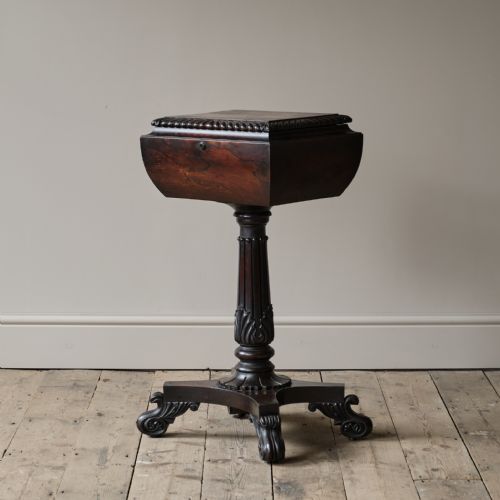
An antique mahogany teapoy is a specialised piece of furniture designed to hold tea leaves securely away from moisture and light during periods when tea was a costly commodity. The examples encountered on this page stem from the Georgian, Regency, William IV, and Victorian eras, demonstrating the enduring popularity of the form throughout the nineteenth century.
Most pieces take the form of a lidded box on a stand, although variants exist in the evidence, including sarcophagus-shaped boxes, side tables, and occasional combinations with jardinieres or tea stoves. Woods such as solid mahogany and flame mahogany predominate, frequently paired with contrasting satinwood or walnut details and brass fittings.
Origins span English, Irish, and Scottish workshops, with notable attributions to known makers like Gillows of Lancaster and Strahan of Dublin. Buyers encounter both freestanding pieces on pillars or four carved feet and box forms intended to sit atop other furniture.
Materials and construction methods
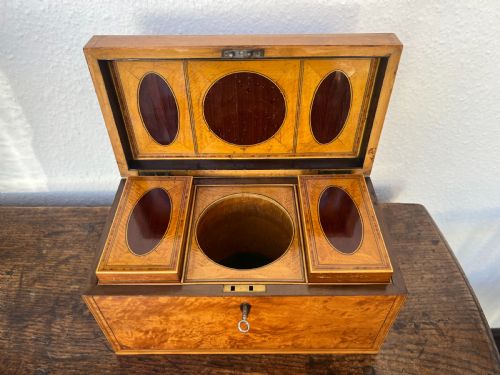
Cabinet-makers utilised solid mahogany and figured flame mahogany to construct the primary body of each teapoy, exploiting the rich grain patterns for decorative effect. Secondary woods and contrasting veneers like satinwood and walnut provided interior compartments and subtle border details.
Structural support relied on sturdy central pillars with platform bases, slender corner legs, or four carved feet, often fitted with brass castors to allow repositioning. Metalwork components such as brass handles, hinges, and locks secured the valuable contents and added functional contrast to the timber.
The archive and active listings demonstrate that nineteenth-century mahogany teapoys frequently incorporate satinwood interiors, brass castors, and pillar supports.
Distinctions in craftsmanship
Quality in an antique mahogany teapoy rests on the selection of timber, particularly where figured flame mahogany or contrasting satinwood veneers are matched across the lid and sides. Superior pieces display precise joinery in the internal tea canisters and mixing bowls, maintaining structural integrity over centuries.
The sophistication of the carved supports and the presence of documented maker stamps, such as those from Gillows, separate standard production items from exceptional workshop commissions. Fine brass hardware and well-executed turning on the pedestals further distinguish the upper tier of surviving examples.
Gillows·Strahan
The Antique Mahogany Teapoy Glossary
- Teapoy
- A pedestal table or lidded box designed specifically for storing and preparing loose tea leaves in the parlour or drawing-room. The term derives from Hindi and Persian roots relating to three feet.
- Flame mahogany
- A decorative veneer cut from wood where the grain creates a rippled, flame-like pattern across the surface. Cabinet-makers reserved this timber for prominent exterior panels.
- Sarcophagus
- A monumental coffin-like box shape with a domed lid, adopted by furniture makers during the Regency period for tea caddies and teapoys. It provided a grand architectural silhouette.
- Jardiniere
- An ornamental receptacle designed to hold plants or flowers, occasionally found combined with the form of a tea caddy or teapoy in nineteenth-century domestic interiors.
Antique Mahogany Teapoy: Frequently Asked Questions
What is an antique mahogany teapoy used for?
These pieces served as secure, lockable storage cabinets for expensive dry tea leaves during the eighteenth and nineteenth centuries, keeping the contents fresh and protected from household servants.
Today, collectors utilise them as occasional tables, bedside stands, or decorative storage units in living spaces.
How do I distinguish between Regency and Victorian teapoys?
Regency examples typically exhibit classical restraint, bold mahogany veneers, and architectural forms like the sarcophagus box supported by robust pedestals.
Victorian pieces often introduce heavier carved ornamentation, elaborate feet, and distinct proportions that reflect changing nineteenth-century domestic tastes.
Are all teapoys mounted on stands?
The evidence shows a clear split between freestanding teapoys mounted on pillars or four carved feet and smaller boxes designed to sit on side tables.
Both variants utilise similar mahogany and satinwood materials but serve different functional roles within the historic drawing-room.
Did Irish and Scottish makers produce different styles?
Regional workshops in Dublin and Scotland applied distinct local interpretations to standard British furniture patterns, utilising fine native and imported timbers.
Documented pieces from makers like Strahan demonstrate regional cabinet-making traditions that mirror broader Regency and William IV design trends.