
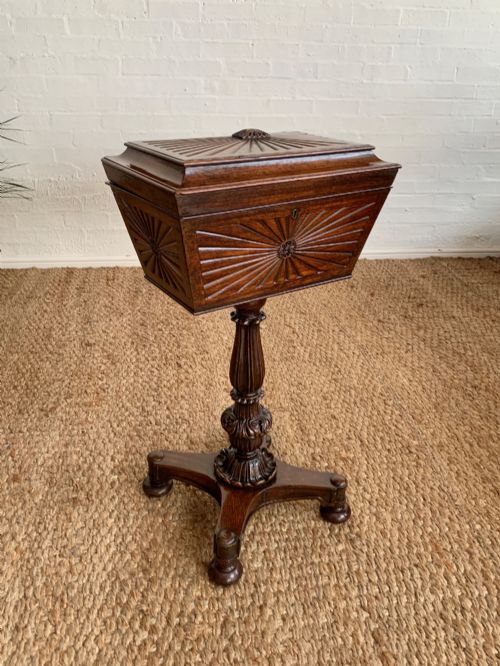
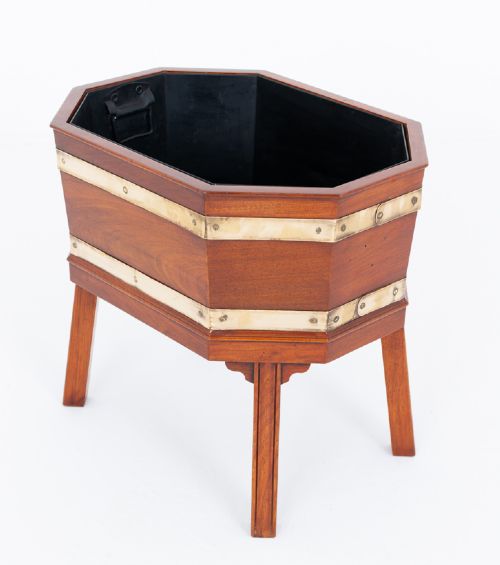


Regency Pedestal Caddy
These pieces known as a regency pedestal caddy combine elegant proportions with period craftsmanship to serve tea in style.
Regency Pedestal Caddy
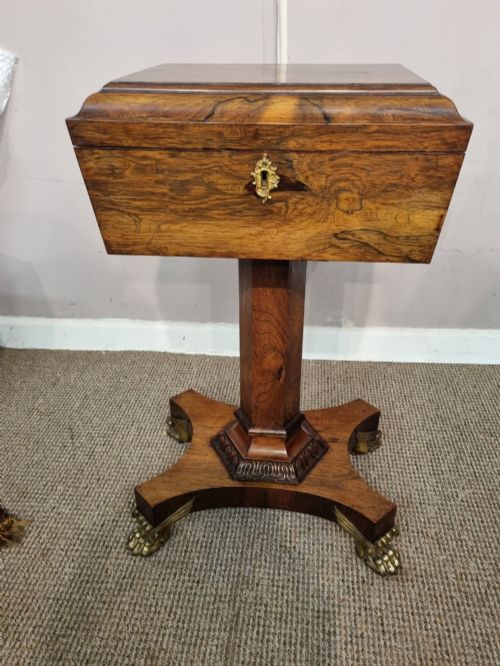
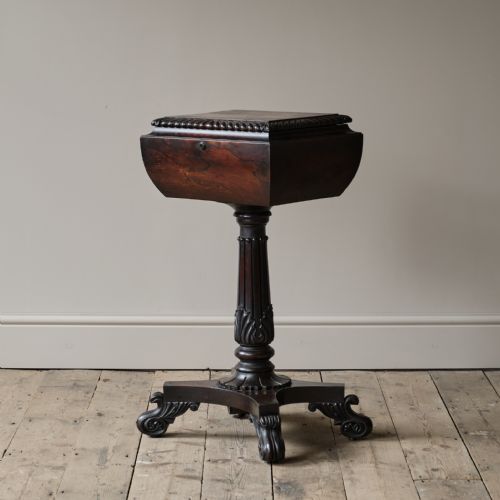
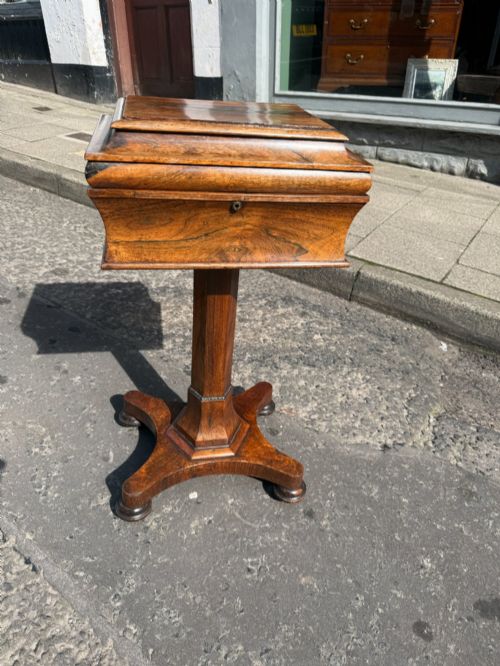
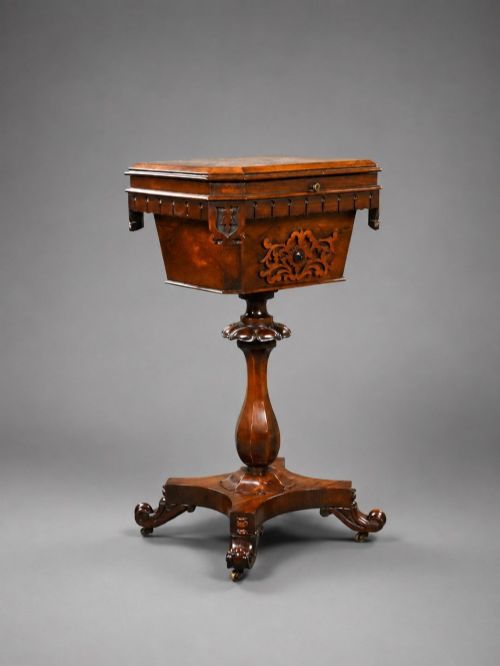
A regency pedestal caddy typically takes the form of a teapoy or tea caddy mounted on a central pillar and stand. Buyers searching this phrase will find varied examples originating from the Regency, Georgian, and William IV periods, alongside later Victorian interpretations.
The dominant forms on this page include sarcophagus-shaped boxes, work tables with caddy tops, and tea stoves standing on carved feet or platforms. Rosewood and mahogany provide the primary structural woods for these decorative items.
Makers and workshops of the era employed rich veneers like flame mahogany and burr maple to catch the light in formal reception rooms. These distinct forms offer both storage and display functions within period interiors.
How They Were Made
Cabinet makers constructed these pieces using solid hardwoods like mahogany and rosewood, often applying thin veneers of burr maple or flame mahogany over secondary timbers. Brass inlay and intricate carved feet add decorative contrast to the polished wooden surfaces.
Turning and joinery shaped the central pedestals and stands, supporting lidded internal compartments designed for storing tea leaves. Fine detailing such as sunburst carving demonstrates the high level of woodworking skill applied during manufacture.
What Varies in Quality
The choice of timber and veneer figure dictates much of the visual appeal, with rich flame mahogany and figured rosewood sitting at the upper end of the scale. Subtle details like precision brass inlay and crisp carving separate standard workshop output from exceptional cabinet work.
Proportion and stability in the pedestal base also influence the overall standard of a piece. Well-balanced stands with original internal fittings retain greater integrity compared to those altered or converted over subsequent centuries.
Gillows
The Regency Pedestal Caddy Glossary
- Teapoy
- A small stand or table designed to hold tea canisters and mixing bowls, usually featuring a lidded compartment on a central pedestal.
- Sarcophagus
- A box shape with a sloping lid resembling a stone coffin, popular for tea caddies and work boxes during the early nineteenth century.
- Flame mahogany
- A decorative veneer cut from wood where the grain pattern resembles flickering flames, favoured for formal cabinet work.
- Sunburst carving
- A radial decorative motif carved into wood surfaces, often seen on tables and stands from the William IV period.
- Jardiniere
- An ornamental pot or stand for holding plants and flowers, occasionally appearing in similar forms to nineteenth-century tea furniture.
Regency Pedestal Caddy: Frequently Asked Questions
What is a regency pedestal caddy used for?
These pieces served originally to store and dispense precious tea leaves in wealthy nineteenth-century households.
Today they function effectively as decorative side tables or storage boxes in traditional and contemporary living spaces.
How do I identify a Regency teapoy?
Look for classical proportions, central pedestal supports, and characteristic woods such as rosewood and mahogany.
Details like brass inlay and sarcophagus lids often point towards the Regency and William IV eras.
Are these pieces suitable for modern homes?
Their compact footprint makes them versatile as occasional tables or display pieces beside seating.
Internal compartments can still store small items while the polished exterior adds warmth to a room.
What is the difference between mahogany and rosewood versions?
Mahogany examples often feature straight grain or dramatic flame patterns with a warm reddish-brown hue.
Rosewood pieces typically display darker, heavily figured grain often enhanced with contrasting brass inlay.