


Antique Tea Chest on Stand
An antique tea chest on stand combines the secure storage of precious leaves with the formal elegance of a dedicated pedestal table.
Antique Tea Chest on Stand
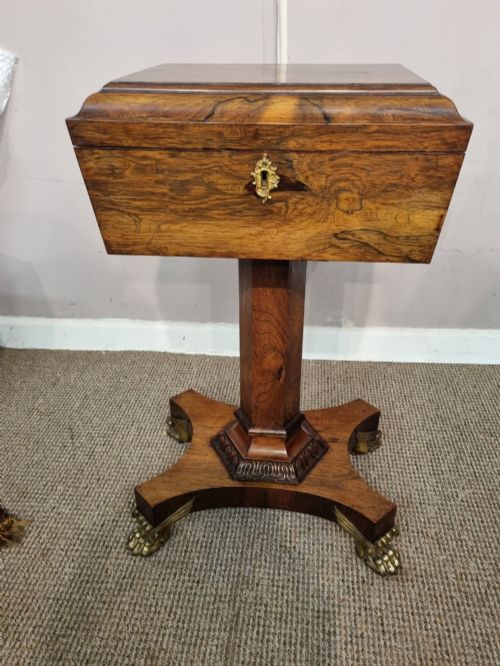
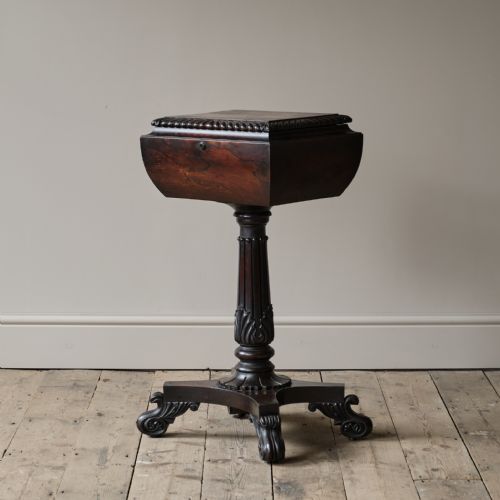
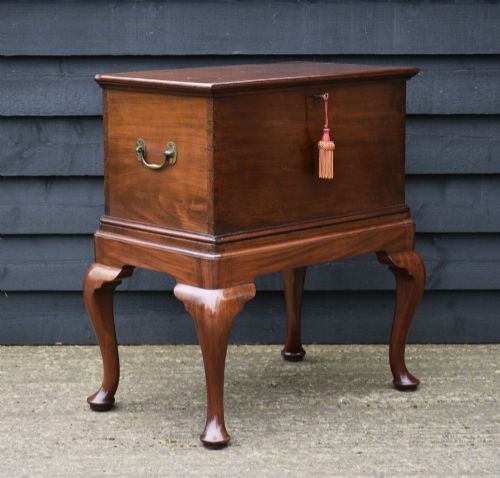
An antique tea chest on stand, frequently recorded as a teapoy or tea poy, sits on a supporting base or legs rather than resting directly on a tabletop. These pieces date across the Georgian, Regency, William IV, and Victorian periods, reflecting shifting interior fashions from the early nineteenth century onwards.
The form typically comprises a lidded box, often sarcophagus-shaped, mounted securely upon a central pillar or four carved feet. Surviving examples encompass various regional origins, including English, Irish, and Scottish workshops, alongside continental pieces.
Makers utilised these stands to elevate the tea container into a prominent piece of parlour furniture. The upper box generally contains internal compartments designed for loose leaves and mixing bowls.
How they were made
Cabinetmakers constructed the main bodies of these pieces using dense hardwoods like mahogany and rosewood, frequently selecting figured veneers such as flame mahogany or burr elm for the exterior surfaces. Workshops added decorative detailing through contrasting brass inlay, delicate stringing, and precise carved elements upon the feet and pillars.
The internal compartments required fine joinery to form fitted caddies and housings for glass mixing bowls. Stands were engineered with sturdy central pillars or carved pillar supports to bear the substantial weight of the hardwood boxes above.
Tea was once so valuable that locking the box was essential to prevent domestic staff from helping themselves.
What varies in quality
Quality rests upon the selection of timber veneers and the precision of the cabinetwork. Pieces displaying highly figured flame mahogany, burr elm, or intricate brass inlay demonstrate superior craftsmanship compared to plain timber surfaces.
The structural integrity of the stand and the refinement of the carved feet differentiate standard production from exceptional workshop output. Documented attributions or stamps from notable makers elevate the historical standing of a piece.
Strahan of Dublin·Gillows
The Antique Tea Chest on Stand Glossary
- Teapoy
- A pedestal table featuring a lidded box for storing tea leaves. This term derives from the Hindi and Persian words for three feet, though many later examples possess four carved supports.
- Sarcophagus
- A coffin-shaped box profile with sloping sides and a domed lid. Cabinetmakers adopted this architectural form for the upper containers of Regency and Georgian pieces.
- Veneer
- A thin layer of decorative wood applied over a secondary timber base. Master craftsmen used figured varieties like flame mahogany and burr elm to create striking exterior patterns.
- Caddy
- An internal storage compartment or container housed within the main box. These small vessels kept different varieties of tea leaves dry and secure.
Antique Tea Chest on Stand: Frequently Asked Questions
What is a teapoy?
A teapoy is an antique tea chest mounted on a stand or pedestal base. These pieces served as both storage containers for expensive tea leaves and decorative furniture for the drawing room.
Inside the lidded box, compartments kept different tea varieties separate alongside spaces for mixing bowls.
How do I date a tea poy?
Dating relies on observing the prevailing style, timber choices, and construction methods. Regency and Georgian examples often feature brass inlay and sarcophagus profiles, whilst Victorian pieces introduce heavier carved details and alternative woods like burr walnut.
Makers' stamps or specific regional characteristics also provide clear indicators of period origin.
Where were tea caddies kept?
Tea caddies were housed securely inside the upper box of the teapoy, which remained locked to protect valuable leaves. The stand elevated the entire unit for convenient access during social gatherings.
Interior containers were frequently fitted with small lids and individual foil-lined compartments to preserve freshness.
How do I care for rosewood furniture?
Rosewood requires stable environmental conditions away from direct sunlight and excessive heat to prevent timber movement. Regular dusting with a soft cloth maintains the polished surface without harsh chemical polishes.
Maintaining moderate humidity protects the underlying veneer and delicate brass inlay from lifting.