


Rosewood Teapoy Chest
A rosewood teapoy chest brings compact elegance to a room, offering a refined storage vessel that collectors prize for its decorative wood grain and historical utility.
Rosewood Teapoy Chest
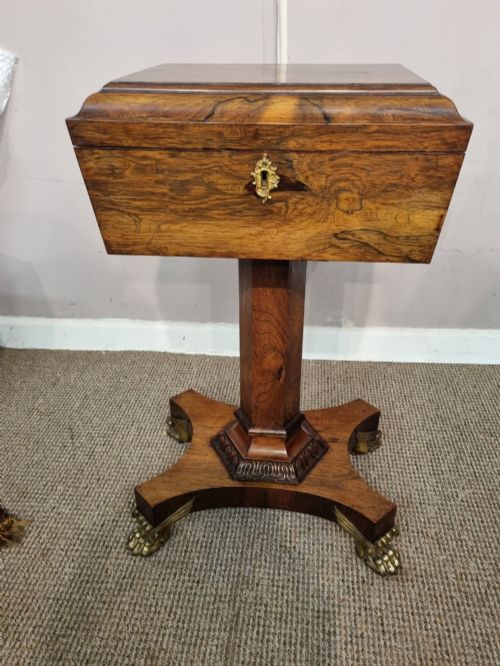
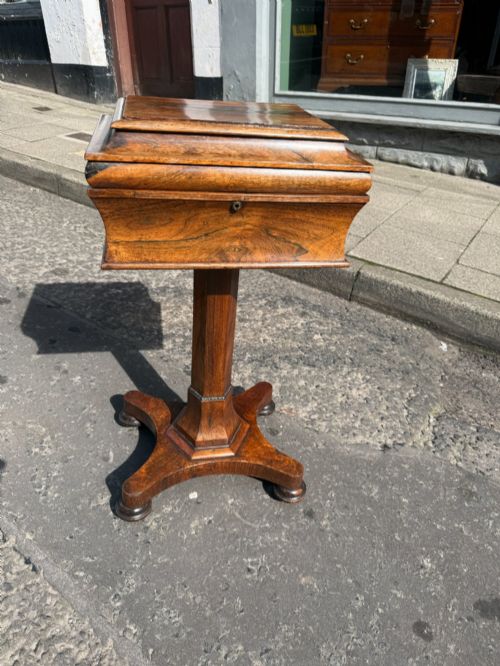
When you search for a rosewood teapoy chest, you examine specialised receptacles designed to store tea leaves safely away from humidity and light in prosperous nineteenth-century homes. The items seen on this page span the Georgian, Regency, and William IV periods, capturing the height of sophisticated domestic craftsmanship.
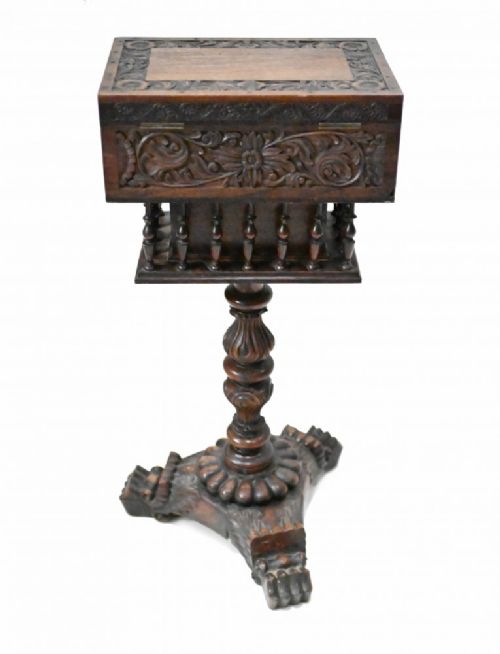
The inventory also includes Anglo-Indian colonial variants carved from padouk alongside traditional British forms fashioned from rich timbers. Each object serves as a tangible link to historical domestic routines centred on the social ritual of tea.
Materials and construction methods
Cabinet makers utilised dense exotic timbers, selecting rich rosewood veneers and solid padouk to achieve deep colouration and striking grain patterns. These wooden structures frequently incorporate precise brass inlay arranged in classical geometric or floral motifs across the lid and body.
Interior compartments required meticulous joinery to form snug lidded caddies and spaces for glass mixing bowls. Skilled artisans constructed sturdy pedestals, often supported by quadruped or tripod bases terminating in castors for mobility.
Listings on this page span the Regency, Georgian, and William IV periods, featuring rosewood, brass, padouk, and glass.
Distinguishing quality in craftsmanship
The superiority of a piece rests upon the crispness of its brass inlay and the harmonious grain matching across the rosewood surfaces. Finer examples display meticulous hand-carving and well-preserved interior fittings rather than plain replacement boxes.
Structural integrity of the central pillar and the stability of the support base dictate the enduring merit of the furniture. Superior specimens maintain their original configuration of internal canisters and retain harmonious proportions throughout.
The Rosewood Teapoy Chest Glossary
- Teapoy
- A small stand or chest designed specifically for holding tea caddies and serving tea in the parlour. This term derives from Anglo-Indian origins where it originally referred to a three-legged table.
- Caddy
- A small box or container used to hold tea leaves securely. Multiple caddies were often fitted neatly inside the main teapoy chest.
- Padouk
- A heavy tropical hardwood valued for its durability and reddish-brown hue. Makers utilised this material in colonial workshops to produce intricately carved variants.
- Inlay
- A decorative technique where contrasting materials such as brass are inserted into recesses cut into the wood surface. Regency examples frequently feature precise brass lines and motifs.
Rosewood Teapoy Chest: Frequently Asked Questions
What is a teapoy chest?
A teapoy chest is a specialised nineteenth-century container built to store expensive loose tea leaves securely in a drawing room. These pieces typically feature hinged lids opening to reveal fitted interior compartments.
Many examples stand on dedicated pedestals or function as small side tables within period interiors.
How were teapoys used originally?
Households utilised these chests to keep precious tea leaves locked away from servants and damp air. The hostess would mix different blends inside the chest before service.
Internal glass bowls within the compartments often served for blending or rinsing leaves during the ritual.
How do I date a rosewood teapoy?
Dating relies on observing stylistic markers from the Georgian, Regency, and William IV periods visible in the woodwork and brass detailing. Regency pieces often exhibit clean classical lines and precise brass inlay.
Later nineteenth-century iterations introduce heavier carved elements, particularly in colonial workshop productions.
Where do colonial teapoys originate?
Colonial variants originate from workshops operating in regions influenced by British trade and settlement, utilising native timbers like padouk. These pieces often feature dense traditional carving distinct from metropolitan British furniture.
Makers combined local craftsmanship techniques with European forms popular during the nineteenth century.