



Rosewood Work Box Table
A rosewood work box table combines a refined surface for parlour tasks with fitted interior compartments for sewing and writing.
Rosewood Work Box Table
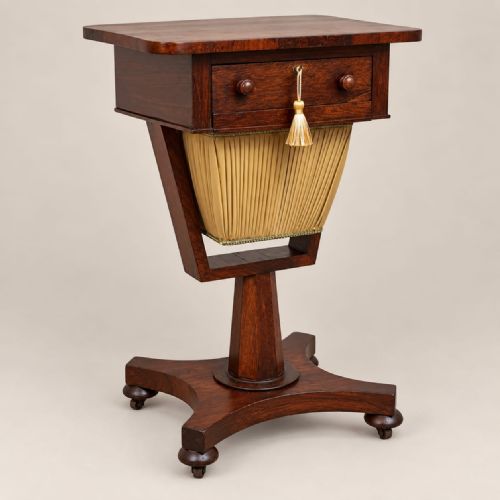
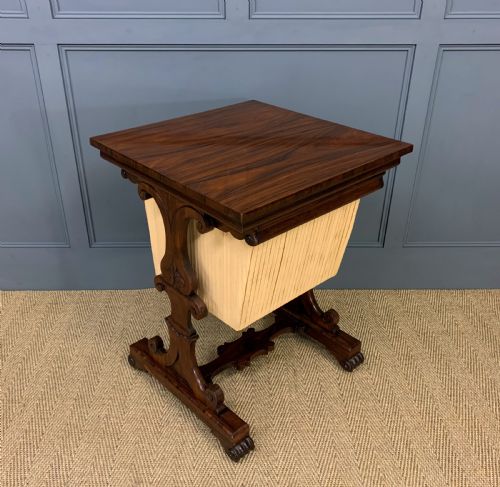
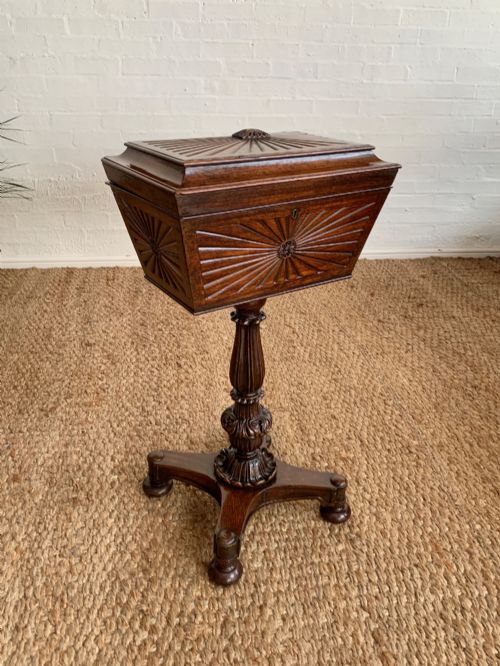
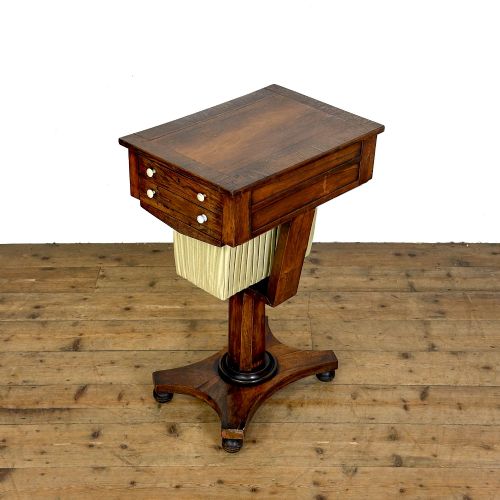
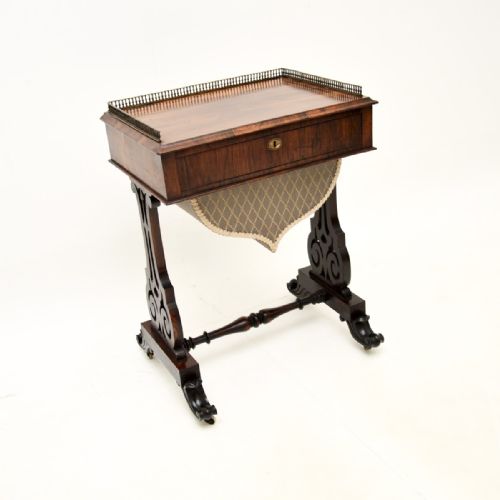
A rosewood work box table is a multifunctional domestic piece designed for nineteenth-century ladies to manage correspondence, needlework, and small personal belongings. These items typically feature a hinged lid opening to reveal a fitted interior with compartments, sometimes paired with a suspended fabric bag for sewing materials. The pieces seen on this page span the Regency, William IV, and Victorian periods, alongside specific years such as 1850, 1860, and 1890.
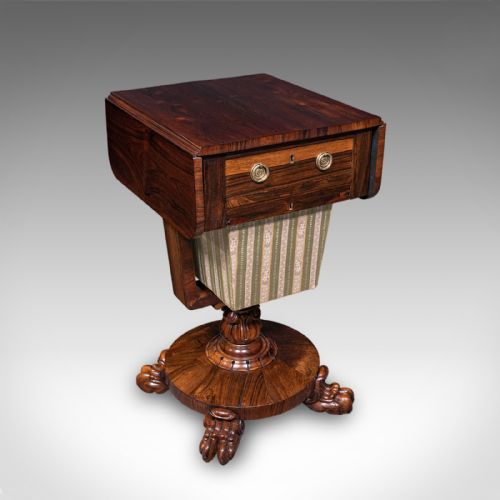
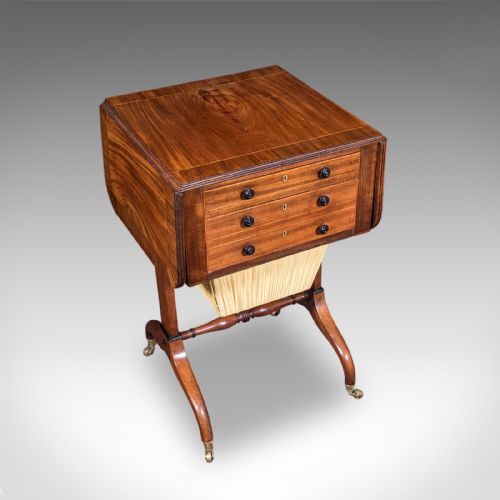
The primary forms appearing in the listings include drop-leaf sewing tables, trumpet tables, caddy-top designs, and occasional or side tables that double as work boxes. Variations range from plain solid rosewood constructions to examples incorporating games boards, reading stands, or writing surfaces. Originating mainly from English workshops, these pieces bridge the gap between utilitarian sewing storage and elegant drawing-room furniture.
How They Were Made
Cabinet makers utilised dense rosewood timbers, frequently applied as veneers over secondary woods or constructed as solid pieces, complemented by secondary timbers like mahogany and satinwood. Artisans enhanced surfaces using brass fittings, wood inlay, and marquetry techniques such as boxwood detailing and sunburst carvings. Interiors often incorporated fabric, velvet, or silk linings within the compartmentalised work boxes.
Structural variations include drop-leaf mechanisms, pivoting caddy tops, and octagonal trumpet bodies supported on pillar and claw feet or pedestal bases. Joinery methods of the nineteenth century ensured stability for tables that served multiple functions, such as sewing, writing, and games playing.
Object forms range from traditional sewing tables and drop-leaf designs to trumpet shapes, teapoys, and combined games and work boxes.
What Varies in Quality
The distinction between standard examples and superior pieces rests on the precision of the marquetry inlay, the complexity of the internal fittings, and the integrity of the rosewood grain. Master workshops demonstrated greater care in matching veneer patterns across surfaces and carving decorative elements like sunburst motifs or pedestal bases.
Completeness of the original internal compartments, silk or velvet linings, and fitted sewing equipment influences the character of a piece. Finer examples retain their original drop-leaf mechanisms, fitted writing slopes, or associated games boards in sound condition.
Gillows of Lancaster
The Rosewood Work Box Table Glossary
- Work box table
- A multi-purpose piece of furniture combining a table base with a lidded box compartment used for sewing, needlework, and writing. It represents a characteristic nineteenth-century domestic form.
- Trumpet table
- A work table featuring an octagonal, flared body resembling the bell of a musical instrument, typically resting on a pillar and tripod base. This form became popular during the Victorian period.
- Caddy top
- A hinged table lid with stepped or moulded edges, styled after tea caddies of the period. It provides access to the storage compartment beneath.
- Marquetry
- The art of applying decorative veneer pieces in wood, brass, or other materials to form geometric or floral patterns. It frequently decorates Victorian rosewood surfaces.
- Drop leaf
- A table top with hinged flaps on one or two sides that can be raised to extend the surface area or lowered when space is restricted.
Rosewood Work Box Table: Frequently Asked Questions
What is a rosewood work box table?
A rosewood work box table is a nineteenth-century piece of furniture designed for ladies' needlework, crafts, and writing. It combines an accessible tabletop with a compartmented interior box for storing sewing implements, threads, and personal items.
Many examples include a suspended fabric bag beneath the box to hold wool or unfinished stitching. These tables served both practical and decorative functions in Regency and Victorian parlours.
How were these tables used originally?
These tables were employed in the drawing room or parlour for daily pursuits such as embroidery, mending, and writing letters. The fitted interior kept needles, thimbles, and bobbins organised while the closed lid maintained a tidy appearance for entertaining guests.
Certain variations incorporated foldover tops for playing games or adjustable surfaces for reading and sketching. They acted as versatile companions for domestic activities throughout the nineteenth century.
How do I date a rosewood work box table?
Dating relies on stylistic shifts across the Regency, William IV, and Victorian periods represented in the design. Regency examples often feature classical pillar supports and brass stringing, while William IV pieces display bolder carved details like sunbursts and heavier pedestals.
Victorian models frequently introduce trumpet shapes, elaborate marquetry inlay, or Gothic influences. Examining the secondary timbers, construction methods, and internal fabric choices helps narrow the decade of manufacture.
Can I use a work table daily?
These tables adapt well to modern living as bedside stands, lamp tables, or occasional desks in a living room. The internal compartments remain useful for storing modern sewing supplies, stationery, or small accessories.
Care should be taken to protect the rosewood surface from excessive moisture, direct sunlight, and heat. Regular dusting and gentle conditioning preserve the timber and any delicate inlay work.