


William IV Work Box
A william iv work box brings together precise timber selection and clever internal fittings designed to house needlework and small treasures.
William IV Work Box
When you search for a william iv work box, you encounter pieces spanning the nineteenth century, including the Regency and early Victorian periods. These functional objects served ladies as sewing tables, occasional tables, and fitted boxes with compartments for threads and accessories.
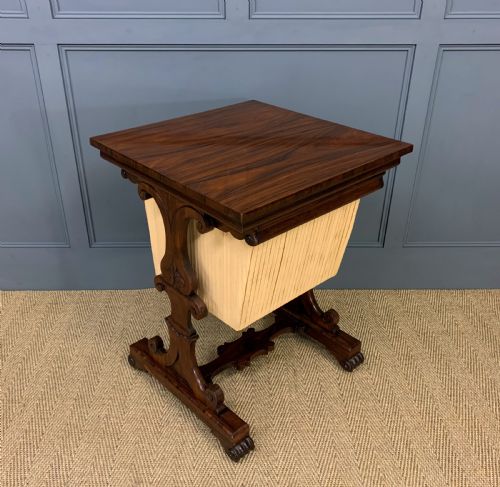
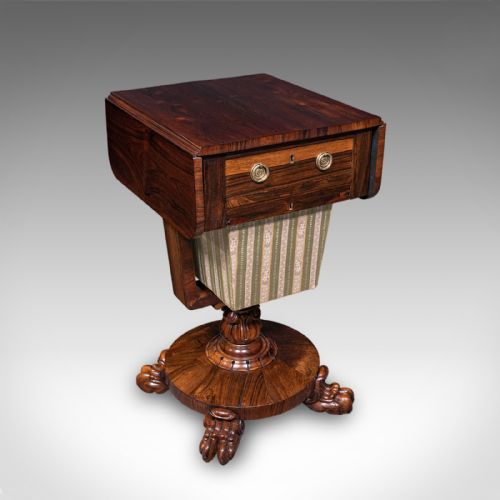
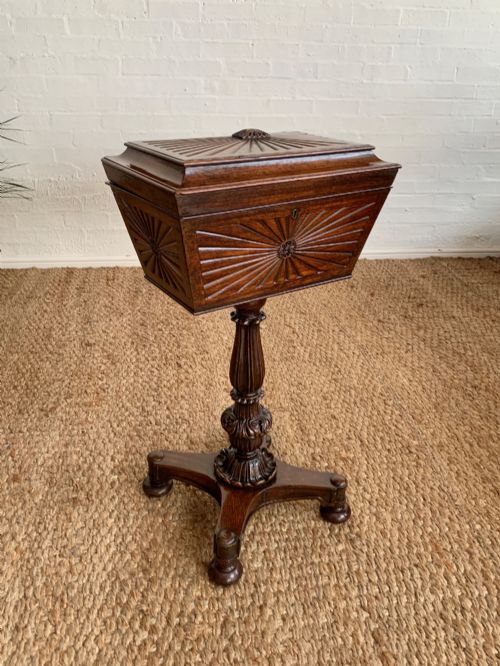
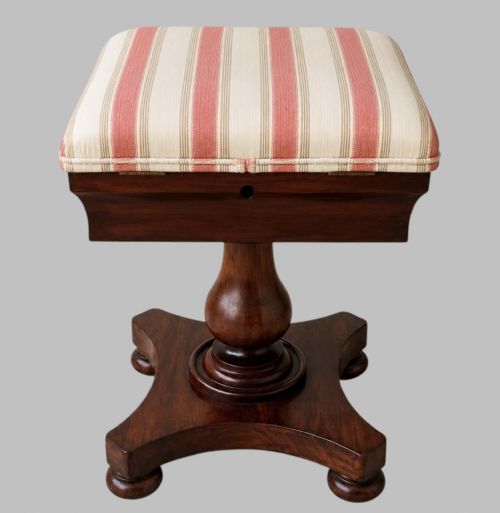
The evidence shows forms ranging from table-height sewing stands with drop leaves and fabric bags to sarcophagus-shaped desktop boxes and ottoman stools with needlework seats. Rosewood and mahogany dominate the selection, often featuring figured grains or flame veneers.
You are most likely to meet rosewood and mahogany work tables supported by pedestal bases, pillar supports, or lyre ends. Many examples incorporate fitted interiors with small lids, compartments, and occasionally writing surfaces or games tables.
What varies in quality
Quality rests upon the choice of timber and the fidelity of the cabinet work, particularly in the selection of richly figured rosewood or flame mahogany veneers. Superior examples display crisp carving on pedestal bases and pillars rather than soft or cast mouldings.
The sophistication of the internal arrangement separates standard pieces from the best work, with fitted interiors retaining original silk linings, compartmentalised trays, and working locks with keys. Structural integrity in the drop leaves, lyre ends, or rise and fall mechanisms also dictates the standing of a piece.
Recorded forms range from compact jewellery boxes and teapoys to full-size occasional tables and ottoman stools.
The William IV Work Box Glossary
- Rosewood
- A dense, dark timber with distinct figuring, frequently used for high-status nineteenth-century cabinet work. It provides a rich, polished surface that defines many work tables.
- Flame mahogany
- A veneer cut to highlight the undulating, flame-like grain pattern of the mahogany log. Cabinet makers reserved this timber for prominent surfaces on better boxes and tables.
- Caddy top
- A hinged or panelled lid style reminiscent of tea caddies, often featuring moulded edges. This form appears on table tops and box units.
- Teapoy
- A small stand or box designed to hold tea canisters, occasionally intersecting with the form of a work box. These pieces share similar pedestal supports and internal compartment layouts.
- Lyre-ended
- A table support shaped in the contour of a classical lyre instrument. This structural form appears frequently on Regency and William IV pillar tables.
William IV Work Box: Frequently Asked Questions
What is a work box?
A work box is a dedicated container or small table designed for storing sewing materials, threads, and needlework implements.
These pieces typically feature internal compartments, trays, and sometimes an attached fabric bag to catch clippings.
How do I tell William IV from Regency?
William IV pieces date from roughly 1830 to 1837 and often show heavier proportions, bolder carvings like sunburst motifs, and rosewood veneers.
Regency pieces lean toward classical lines with lighter pillar supports, brass inlay, and forms influenced by earlier neoclassical designs.
Were these used as writing desks?
Some work tables and boxes incorporate hinged writing slopes lined with leather alongside their sewing compartments.
These dual-purpose items allowed owners to manage correspondence and needlework at the same piece of furniture.
How do I care for rosewood?
Protect rosewood surfaces from direct sunlight to prevent the timber from fading and keep them away from excessive heat sources.
Regular dusting with a dry cloth maintains the finish without requiring heavy polishes or chemical treatments.
What are drop leaves?
Drop leaves are hinged flaps on either side of a table top that lift up to extend the surface area.
Supported by swing brackets, they allow a sewing table to function as an occasional table when extra space is needed.