
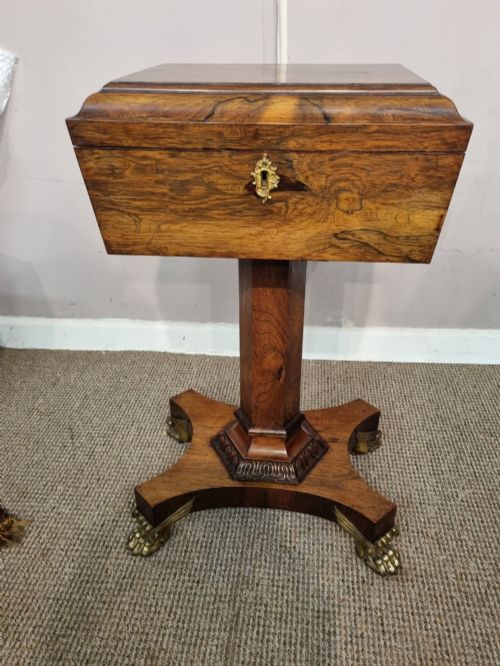
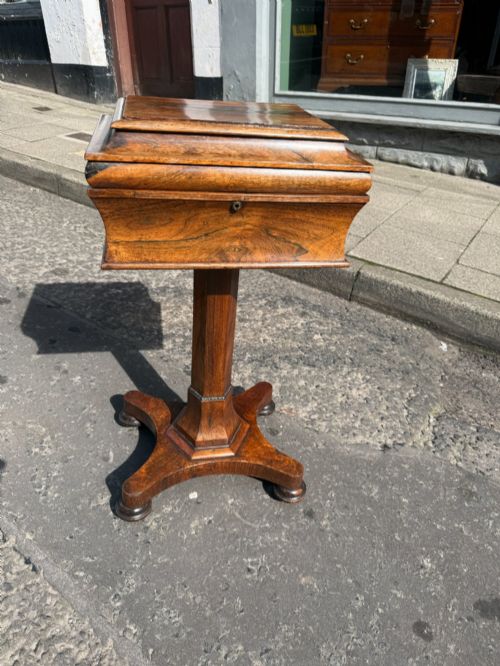
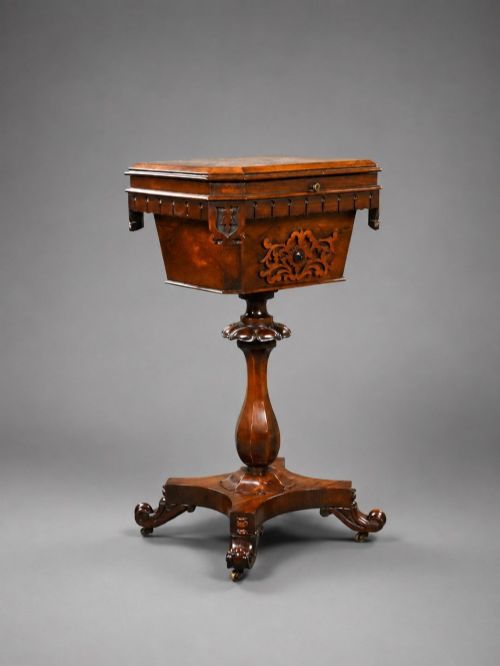
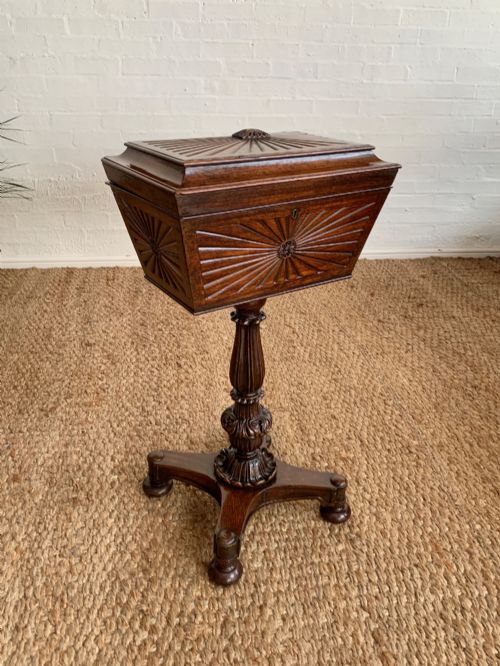
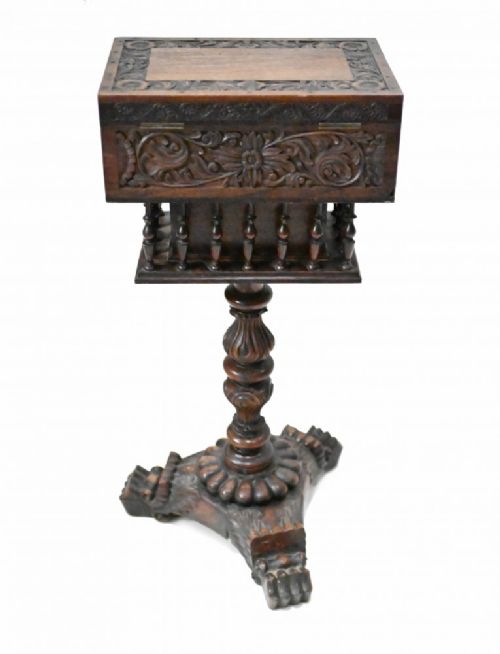


Rosewood Caddy Table
A rosewood caddy table brings refined nineteenth-century tea storage and needlework functionality directly into your principal sitting rooms.
Rosewood Caddy Table
A rosewood caddy table combines the storage compartments of a tea caddy or work box with the freestanding architecture of an occasional table. When you search for this phrase, you encounter teapoys, work tables, and table cabinets originating primarily from the Regency, Georgian, and Victorian periods.
These pieces cross stylistic boundaries from Grand Regency and William IV designs to Anglo-Indian colonial craftsmanship executed in padouk and rosewood. Each variant reflects the domestic habits of nineteenth-century households where portable valuables required secure, lockable enclosures.
Materials and construction
Cabinetmakers utilised dense, richly grained rosewood veneers applied to solid framing timbers, often enhancing the dark surfaces with contrasting brass inlay or mother-of-pearl details. Certain pieces utilise padouk wood or incorporate glass, fabric, and velvet linings within their internal compartments.
Structural support relies heavily on central pillars or columns rising from robust plinths and carved feet, occasionally featuring sunburst carvings or elaborate turned supports. Interior fittings such as lidded tea canisters and removable work boxes demonstrate meticulous joinery designed to conceal specialised hardware.
Some nineteenth-century teapoys double as secret stationery desks, proving that even tea leaves required proper paperwork.
Distinctions in quality
The sophistication of the internal fittings and the precision of decorative inlays largely determine the standing of an individual piece. Elaborate brass stringing, intact velvet or fabric linings, and well-preserved mother-of-pearl embellishments indicate higher-tier workshops.
Proportion and the stability of the pillar base relative to the heavy lidded box dictate the structural integrity. Superior examples maintain crisp carving on the column supports and retain original locking mechanisms alongside matching internal caddies.
The Rosewood Caddy Table Glossary
- Teapoy
- A pedestal table featuring a lidded box on top, originally designed to hold tea canisters and mixing bowls in the parlour.
- Work table
- A small occasional table fitted with internal compartments, trays, or fabric bags designed to hold sewing and needlework supplies.
- Brass inlay
- The technique of embedding thin strips or geometric motifs of brass flush into the wooden surface for decorative contrast.
- Padouk
- A heavy, durable exotic hardwood with reddish-brown tones, frequently utilised in colonial furniture production.
- Table cabinet
- A portable or pedestal-mounted case with multiple internal drawers and compartments for securing valuables and letters.
Rosewood Caddy Table: Frequently Asked Questions
What is a rosewood caddy table?
A rosewood caddy table is a nineteenth-century furniture form that combines a lidded storage box for tea or sewing with a freestanding pedestal base. These pieces served specialised domestic functions in Georgian and Victorian reception rooms.
Most examples function as teapoys or work tables featuring fitted interiors beneath the top surface. The rich grain of the rosewood often coordinates with other formal furniture of the period.
How were teapoys used originally?
Teapoys were kept in drawing rooms where the host would mix and dispense expensive tea leaves for guests. The lidded interior typically housed separate canisters for green and black teas alongside a glass mixing bowl.
As domestic habits shifted, many of these lidded boxes were adapted for sewing equipment, stationery, or general storage. Their lockable compartments kept valuable household items secure from servants and children.
How do I date a Regency rosewood piece?
Dating relies on identifying stylistic markers such as brass stringing, saber legs, and classical pillar supports typical of the early nineteenth century. Regency and William IV pieces often display clean architectural lines combined with dark, densely figured rosewood veneers.
Examining the construction methods inside the storage compartments and secondary woods also helps narrow the date of manufacture. Pieces from this era frequently exhibit hand-cut dovetails and traditional joinery techniques.
How do I care for antique rosewood furniture?
Antique rosewood requires protection from direct sunlight and extreme humidity fluctuations to prevent veneer splitting and fading. Regular dusting with a soft, dry cloth maintains the surface without building up excessive wax residues.
Internal velvet and fabric linings benefit from gentle vacuuming with a brush attachment to remove dust. Maintaining stable indoor temperatures preserves the original polish and structural joints of the table.