



Georgian Rosewood Furniture
Georgian rosewood furniture brings rich timber grain and polished brass inlay into the home through practical tables, cabinets and seating.
Georgian Rosewood Furniture
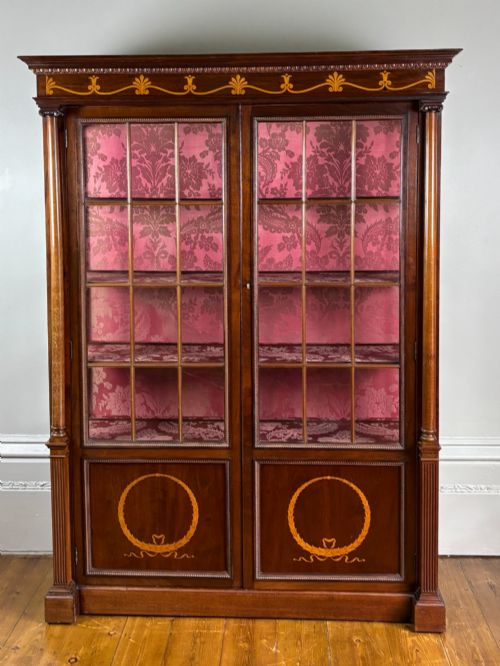
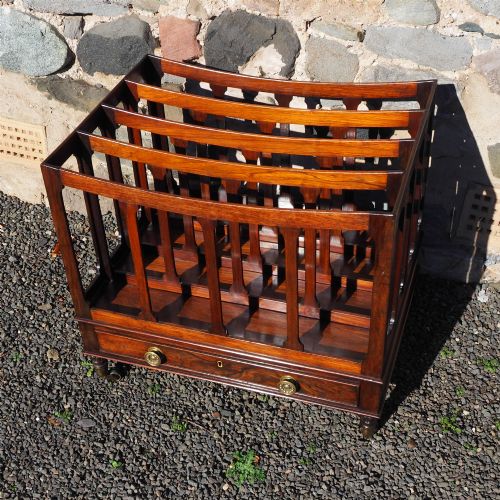
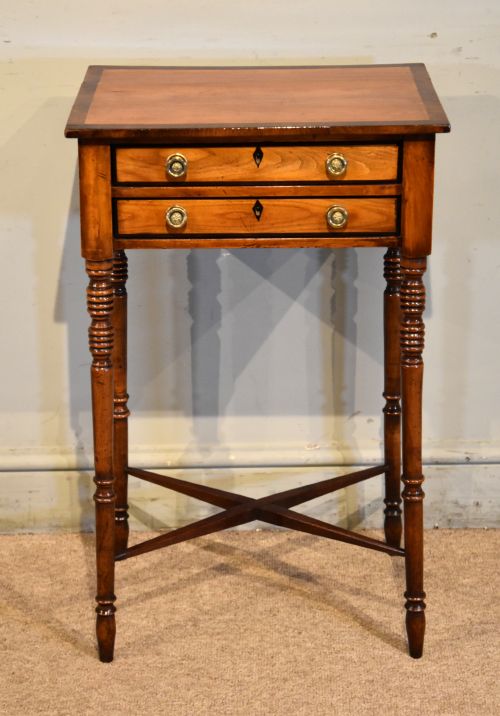
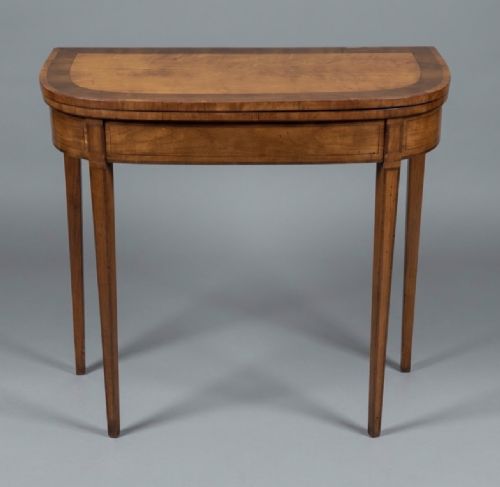
When you search for georgian rosewood furniture, you encounter items predominantly from the Regency period alongside pieces spanning the eighteenth and nineteenth centuries. The selection includes card tables, centre tables, dining chairs, chiffoniers, bookcases and canterburys.
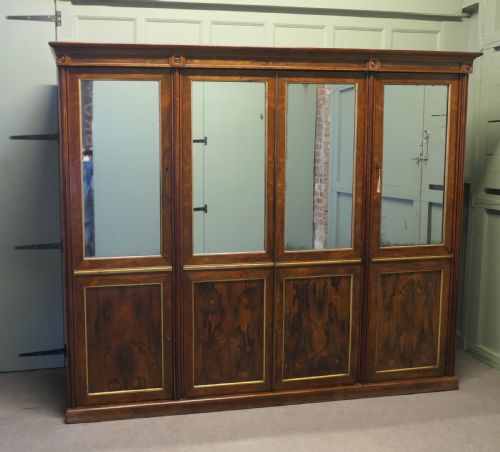
The objects take many forms, from nesting tables and tea caddies to large side cabinets and wardrobes. These items served formal drawing rooms and dining rooms of country houses, reflecting the high status of rosewood in period interiors.
What varies in quality
The calibre of georgian rosewood furniture depends heavily on the crispness of the brass inlay and the depth of the timber's grain. Superior examples display precise joinery and balanced proportions, particularly in complex forms like quartetto tables and revolving bookcases.
Later alterations or replacement decorations can affect desirability. Pieces retaining original surface patination and unblemished brass mounts stand apart from those with extensive restoration or substituted components.
Georgian Rosewood Furniture Retail Price Guide 2026
Typical asking prices for georgian rosewood furniture among the pieces listed under this phrase on Sellingantiques today, from the lower quarter to the upper quarter. They describe what is for sale here now, not the wider market.
The listings span multiple decades including the Regency, Georgian and Victorian periods, incorporating materials like brass, cane, glass and paint.
The Georgian Rosewood Furniture Glossary
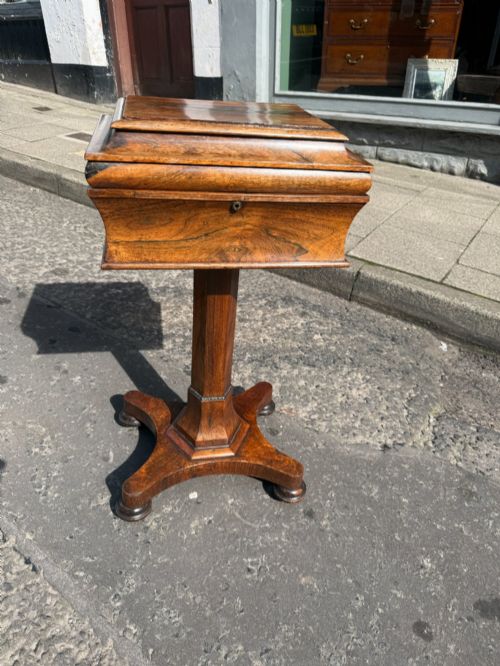
- Teapoy
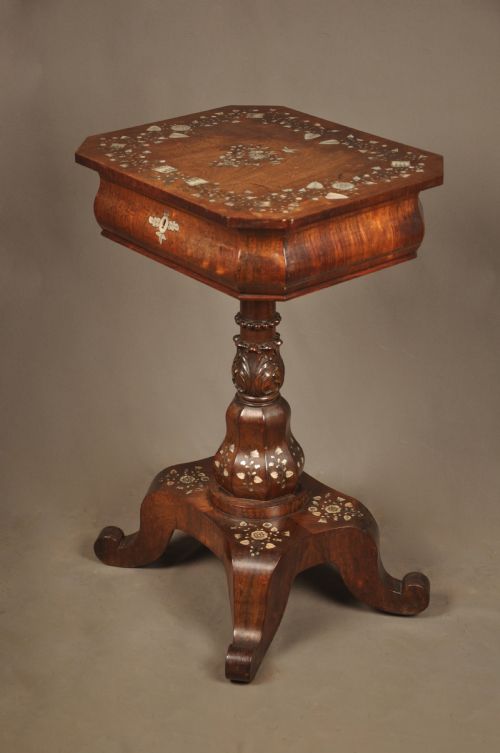
- A small stand or table designed to hold tea canisters, often fitted with internal compartments. These pieces became popular in wealthy households during the Regency era.
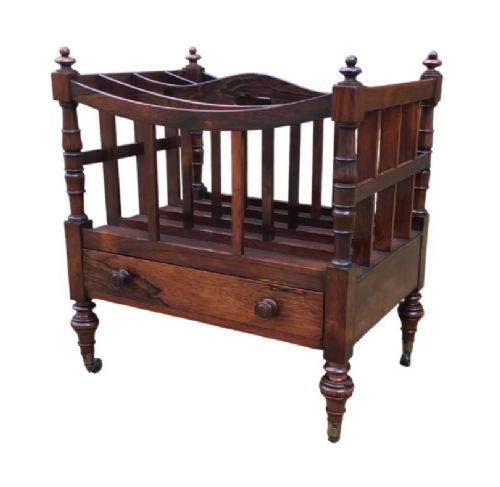
- Canterbury
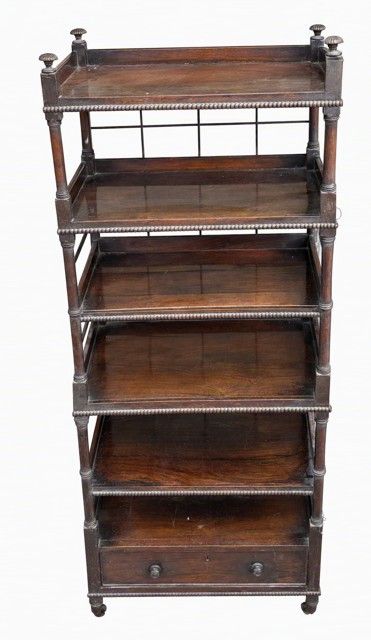
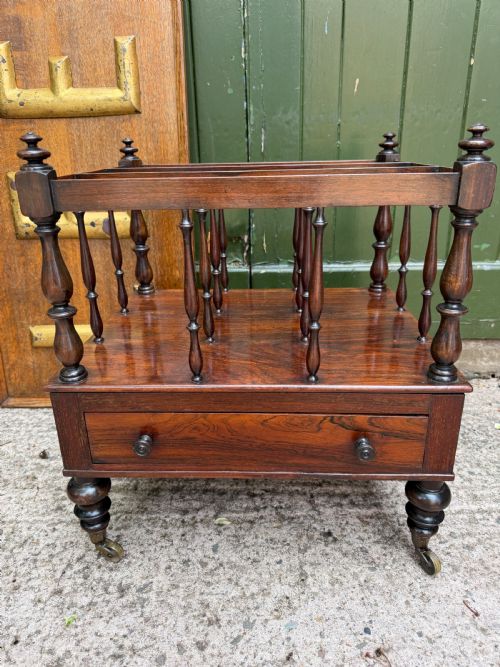
- A low multi-tiered stand used for holding sheet music or magazines, usually featuring slatted dividers. They frequently sit upon short legs with castors for easy movement.
- Chiffonier
- A small sideboard or cabinet featuring shelves or enclosed cupboards, developed in the early nineteenth century. They served to display china and store books.
- Quartetto
- A set of four nesting occasional tables that graduate in size to fit neatly beneath one another. This form saw significant popularity during the Regency period.
- Parcel gilt
- Partially gilded with gold leaf or gold paint to highlight specific carved details or mouldings. This technique accentuates structural elements against dark timber.
Georgian Rosewood Furniture: Frequently Asked Questions
What is a teapoy used for?
A teapoy served as a portable tea chest or small pedestal table where hosts stored and mixed loose tea leaves. They often included internal caddies and mixing bowls.
In the drawing room, these pieces allowed polite society to prepare tea away from the main dining areas. Today they function well as compact side tables.
How do I identify a Regency rosewood table?
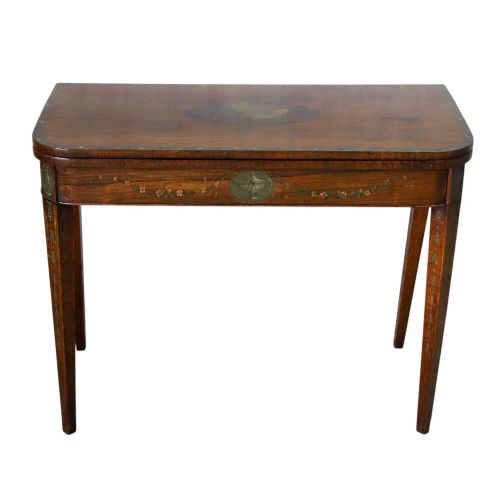
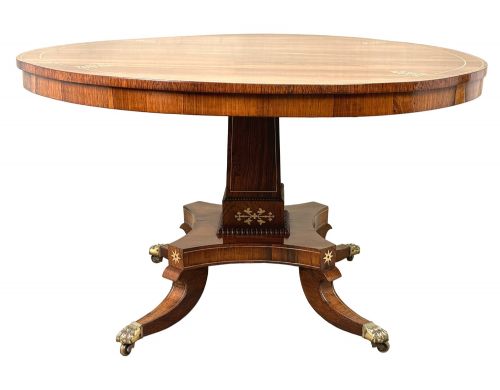
Regency rosewood tables typically display dark, richly figured timber grain combined with classical proportions and brass inlay. They frequently take the form of card tables, centre tables or breakfast tables.
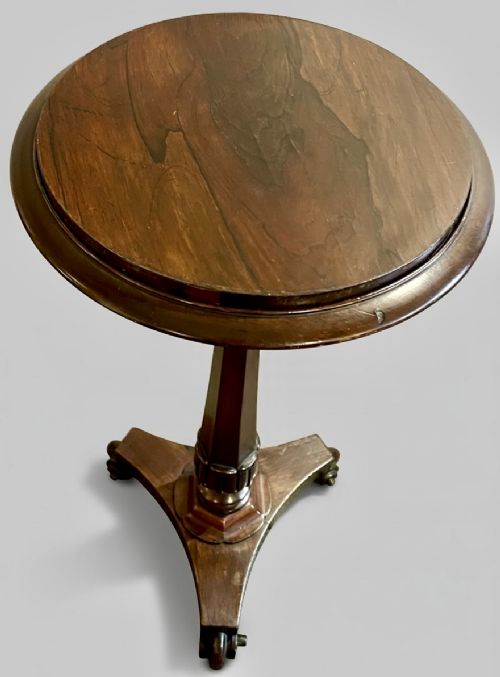
Look for turned pedestals resting on platform bases with splayed legs and brass paw castors. The use of faux rosewood or painted decoration also appears on specific regional pieces.
Where should I place a rosewood chiffonier?
A rosewood chiffonier fits naturally in a dining room or living space where its surface and lower shelves provide display and storage room. These cabinets sit flat against a wall.
They accommodate books, ceramics or decorative objects while adding warmth and dark timber contrast to the room. Avoid placing them in direct sunlight to protect the polish.
What distinguishes an Anglo-Indian rosewood chair?
Anglo-Indian chairs exhibit dense carved ornamentation influenced by traditional craftsmanship from the Indian subcontinent combined with British furniture forms. They utilise solid rosewood timbers.
These library and side chairs display intricate floral or scroll motifs that differ from standard domestic Regency production. They offer an exotic variation within nineteenth-century seating.