

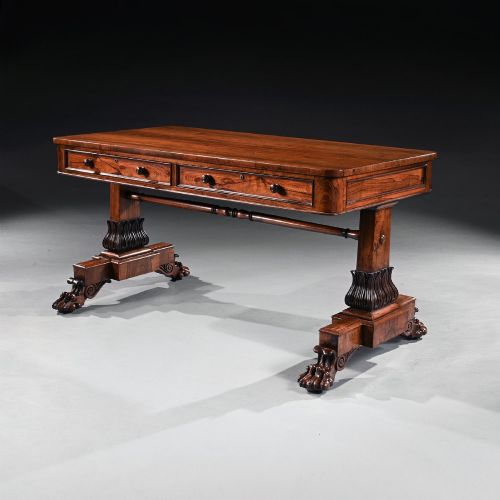
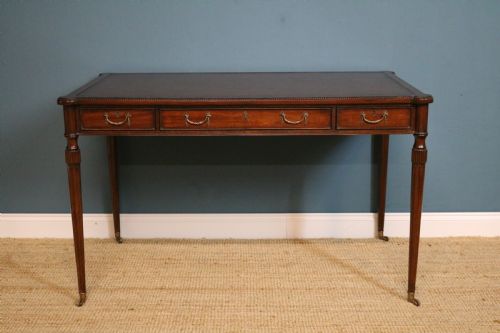

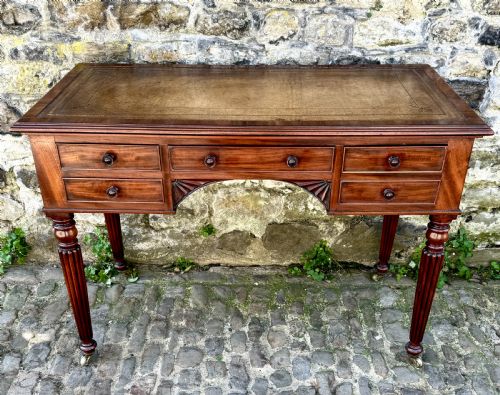


George IV Library Table
A george iv library table brings heavy timber, brass casters, and generous writing surfaces together from the nineteenth century for study or reception.
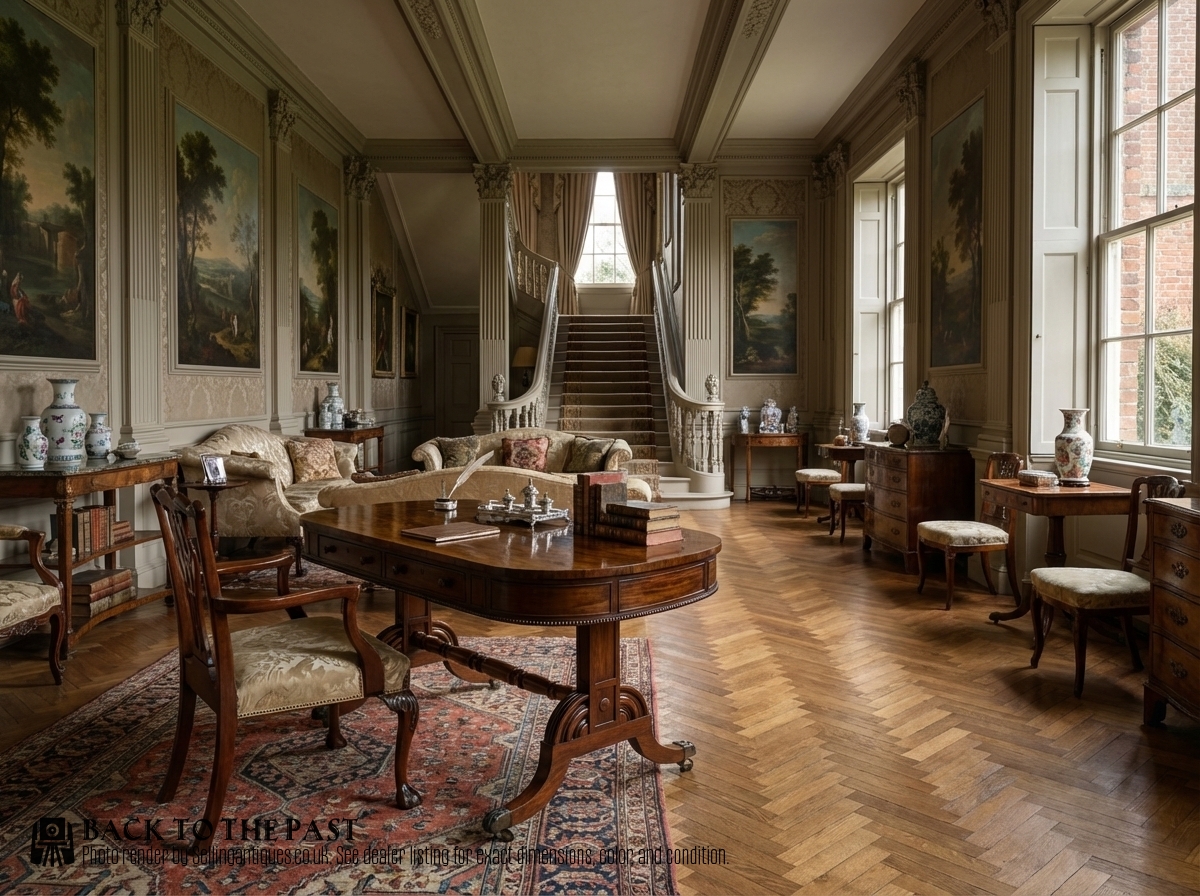
George IV Library Table
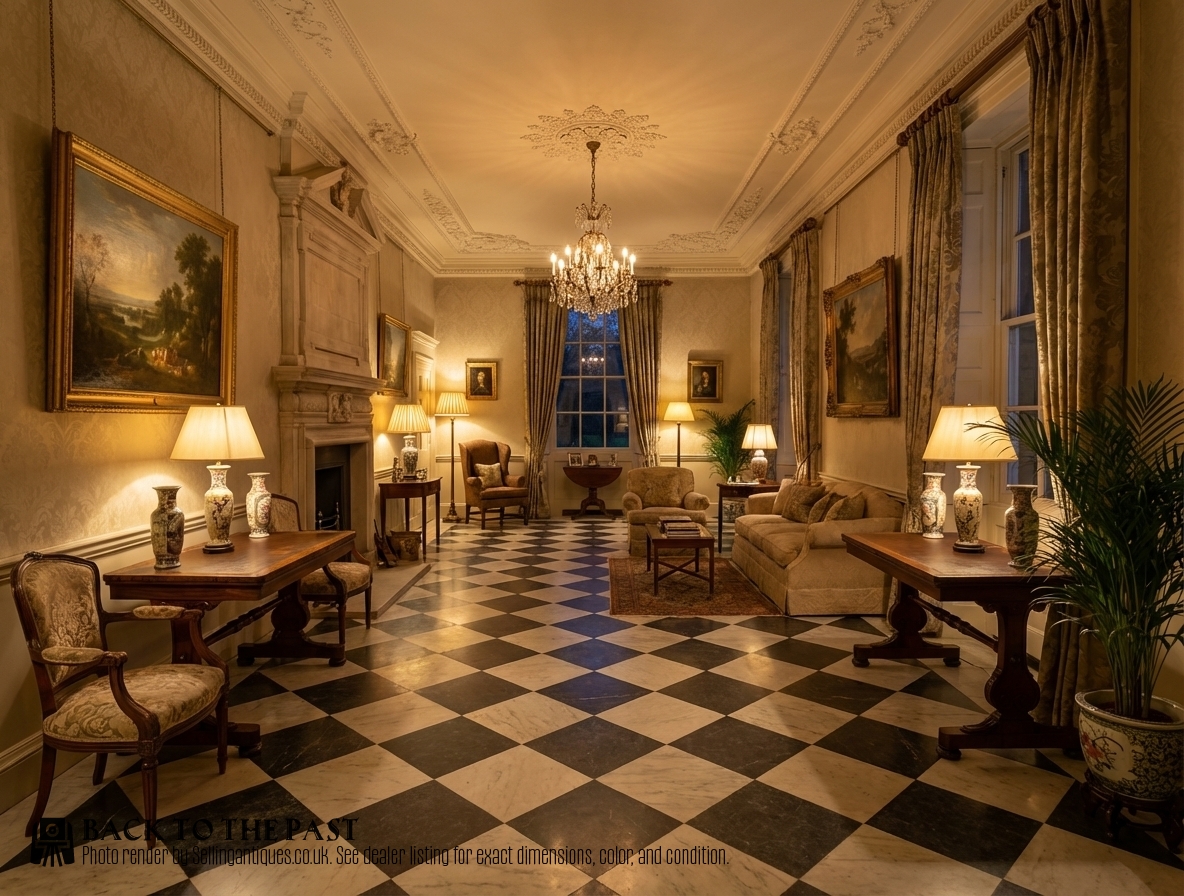
A george iv library table represents large-scale nineteenth-century domestic and institutional workspace furniture designed to stand free in the room rather than against a wall. These substantial writing and reading surfaces appear most frequently in rich mahogany or rosewood, often featuring central pedestals or end supports.
The form spans several practical variants recorded in the archive and current listings, including drum tables, partners desks, and adjustable reading surfaces. Makers of the period engineered these pieces for heavy service in private studies, libraries, and boardrooms.
Originating predominantly from the regency and early nineteenth-century periods, these tables showcase the transition from late georgian austerity to bolder decorative carving. The heavy timber construction ensures that surviving examples remain stable centrepieces for modern interiors.
How they were made
Cabinet makers utilised dense primary timbers such as mahogany, rosewood, burr elm, goncalo alves, and oak, selecting boards for deep grain pattern and natural figure. Secondary framing woods provided structural rigidity beneath the polished exterior surfaces.
Metal components in brass, including casters, paw feet, and handles, supported the movement and protection of these heavy pieces. Inset writing surfaces utilised leather tooled with gilt borders to provide a smooth plane for ink and paper.
Joinery techniques relied on robust pedestal mounts, ring-turned columns, and solid framing rather than simple veneering, allowing the large tables to bear heavy loads of books and papers.
George IV Library Table Retail Price Guide 2026
Typical asking prices for george iv library table among the pieces listed under this phrase on Sellingantiques today, from the lower quarter to the upper quarter. They describe what is for sale here now, not the wider market.
Some library tables contain secret drawers hidden behind false drawer fronts in the heavy frieze.
What varies in quality
The choice of timber grain separates standard production from exceptional pieces, with highly figured rosewood, flame mahogany, and burr elm commanding higher regard among collectors. Figured oak and standard mahogany examples offer simpler surfaces without the intense visual grain of exotic woods.
Original hardware, including brass casters and locks, preserves the integrity of the object. Alterations to the height or replacement leather writing surfaces change the original balance of the table.
Gillows of Lancaster·Taprel Stephen and Holland·William Trotter
The George IV Library Table Glossary
- Drum table
- A circular library table containing a series of frieze drawers around its perimeter, often supported by a central pillar and tripod or platform base.
- Partners desk
- A large double-sided writing table designed for two people to work opposite one another, featuring drawers on both longitudinal sides.
- Pedestal table
- A table supported by one or more central columns resting on a platform base or feet rather than four corner legs.
- Frieze
- The horizontal band beneath the tabletop, frequently housing one or more drawers in library and writing tables.
- Caster
- A small wheel mounted in a swivel frame attached to the foot of a table, allowing heavy nineteenth-century furniture to move across floor coverings.
George IV Library Table: Frequently Asked Questions
Where were library tables placed?
These tables were designed to stand in the middle of a room rather than against a wall, allowing access from all sides for reading and writing.
In period interiors, they anchored the centre of private libraries, studies, and boardrooms.
How do I care for leather inserts?
The leather writing surfaces require gentle dusting and occasional neutral wax treatment to prevent drying and cracking.
Keep liquids away from the gold tooling to preserve the decorative borders.
Can I use a library table for daily dining?
While sturdy, these pieces were built for paperwork and book consultation rather than dining use, and their finished show woods are sensitive to moisture and heat.
Protective covers are necessary if utilised for dining to prevent marks on the polished timber.