



Gillows Rosewood Desk
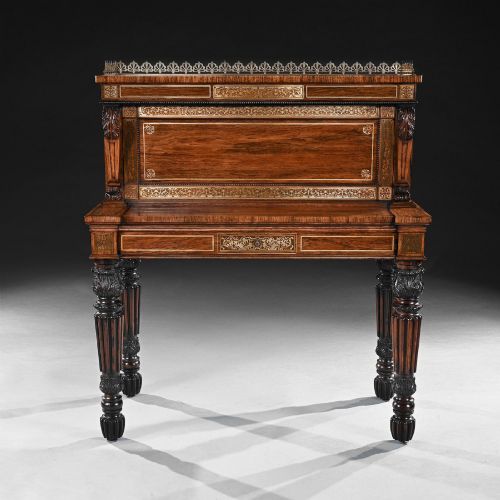
A gillows rosewood desk brings architectural proportion and dense timber grain into a study, built by cabinet-makers who defined English Regency luxury.
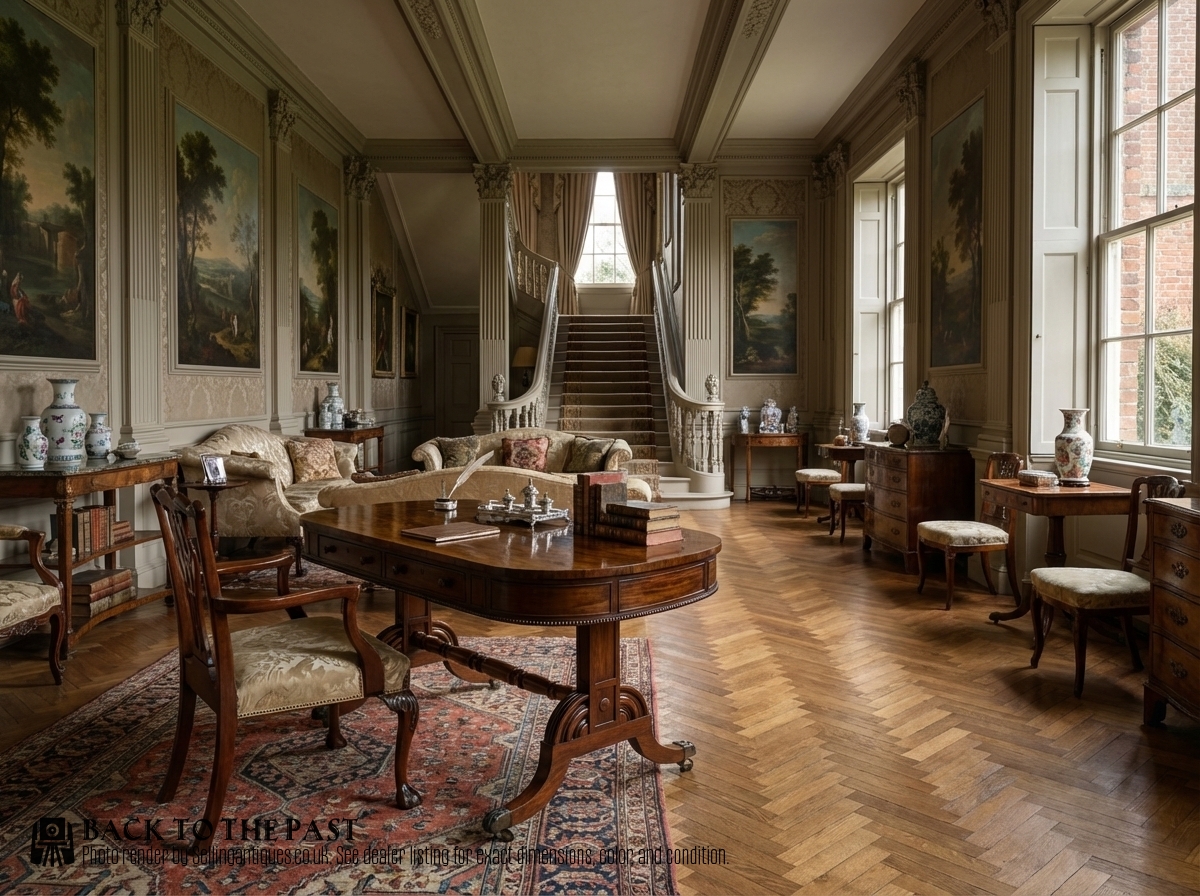
Gillows Rosewood Desk
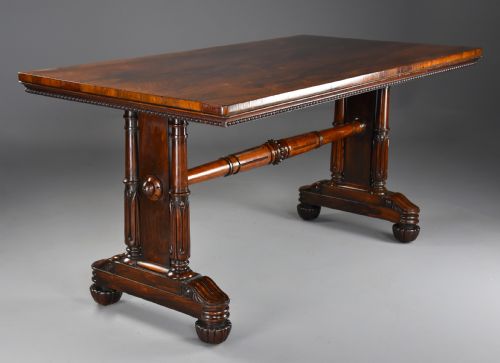
A gillows rosewood desk groups together substantial writing furniture from the nineteenth century, including library tables, Davenport desks, and larger bureau plat forms. Most examples date from the Regency and William IV periods, reflecting the peak output of workshops in Lancaster and London.
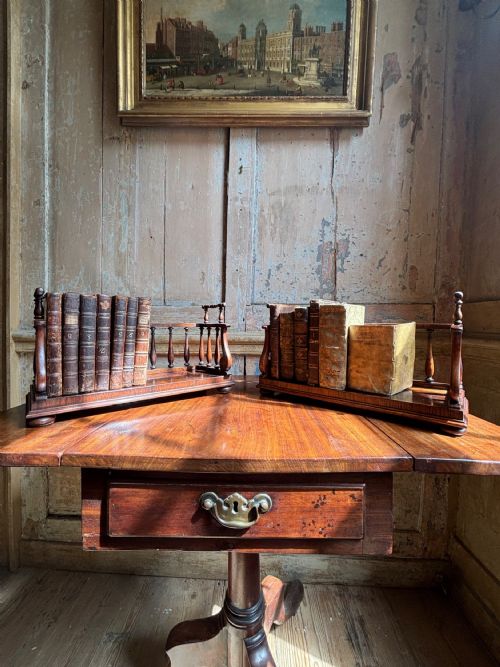
Buyers meet variations ranging from stamped pieces to library tables attributed through construction methods and secondary timbers. Forms extend beyond standard writing desks to encompass reading stands, work tables, and box desk-tidys sharing the same workshop vocabulary.
Materials and Construction
Makers utilised dark rosewood veneers selected for strong grain patterns, frequently laid over solid secondary woods such as mahogany. Brass inlay, cast mounts, and gallery rails provide metallic contrast to the timber surfaces.
Leather and fabric inserts define the writing surfaces of tables and desks, bordered by blind-tooling. Brass casters and turned legs support heavy library tables and writing desks designed for central room placement.
Gillows Rosewood Desk Retail Price Guide 2026
Typical asking prices for gillows rosewood desk among the pieces listed under this phrase on Sellingantiques today, from the lower quarter to the upper quarter. They describe what is for sale here now, not the wider market.
Several box desk-tidys offer miniature storage for nineteenth-century stationery.
Assessing Quality and Workshop Hand
Quality rests upon the crispness of turned members, the precision of brass inlay work, and the thickness of the rosewood veneers. Workshop attribution relies on documented stamps, specific leg profiles, and internal drawer construction.
Desks with secondary functions, such as adjustable reading slopes or fitted interior compartments, demonstrate higher workshop complexity. Proportion and timber selection separate straightforward production pieces from exhibition-grade library tables.
Gillows of Lancaster·Gillows Oxford Street Workshop
The Gillows Rosewood Desk Glossary
- Rosewood
- A dense, dark tropical timber valued for rich figuring and purplish-black grain lines. It took a high polish prized by nineteenth-century cabinet-makers.
- Bureau Plat
- A freestanding library desk finished on all sides with a wide writing surface. These pieces sat in the centre of rooms rather than against walls.
- Davenport
- A compact desk featuring a sloping writing lid above a pedestal of drawers. The form often incorporates side drawers and stationary compartments.
- Library Table
- A large freestanding table designed for heavy volumes and central room use. They frequently feature frieze drawers and substantial turned supports.
- Brass Inlay
- The technique of embedding thin brass strips into timber surfaces in geometric or floral motifs. This detail marks high-status Regency cabinet work.
Gillows Rosewood Desk: Frequently Asked Questions
How do I spot a real Gillows desk?
Look for maker stamps, characteristic brass castors, and specific turning styles associated with the Lancaster and London workshops. Construction methods on internal drawer linings provide further clues.
Attribution often relies on comparison with documented pieces sharing identical timber selection and structural joinery.
What is the difference between a library table and a writing desk?
Library tables are finished on all four sides to stand in the middle of a room, featuring frieze drawers beneath a large top. Writing desks may have back panels or specific internal compartments intended for private correspondence.
Both forms utilise rosewood veneers and brass details during the Regency period.
How should I care for rosewood furniture?
Keep rosewood desks away from direct sunlight and heat sources to prevent the timber veneers from drying and lifting. Dust regularly with a dry cloth and avoid silicone-based polishes.
Maintain stable room humidity to protect both the solid wood and the delicate brass inlay work.
What periods do these desks cover?
Most pieces originate from the nineteenth century, spanning the Regency, George IV, and William IV eras. A few earlier examples extend back into the late eighteenth century.
Stylistic shifts move from restrained classical lines toward heavier proportions as the nineteenth century progresses.