

Leather Top Library Desk
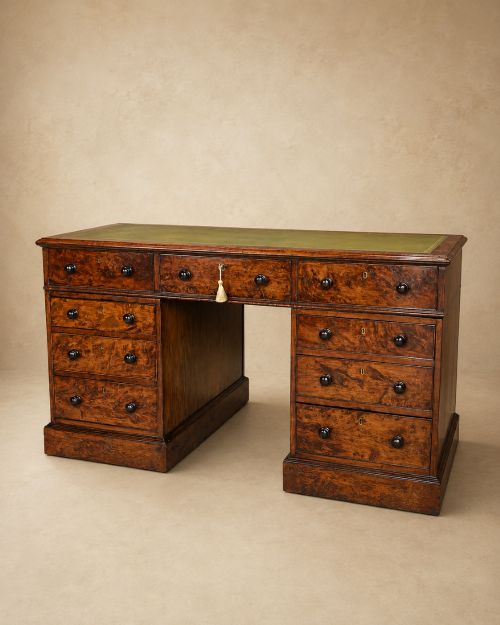
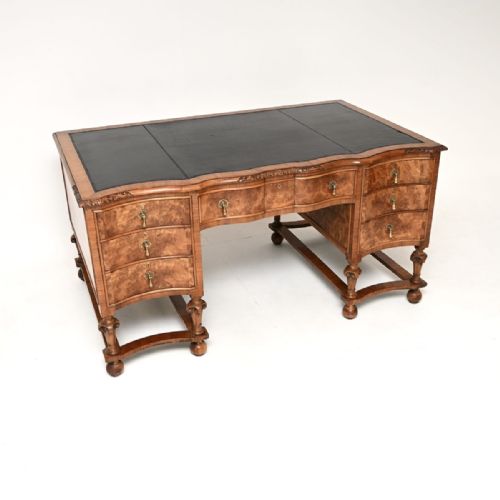
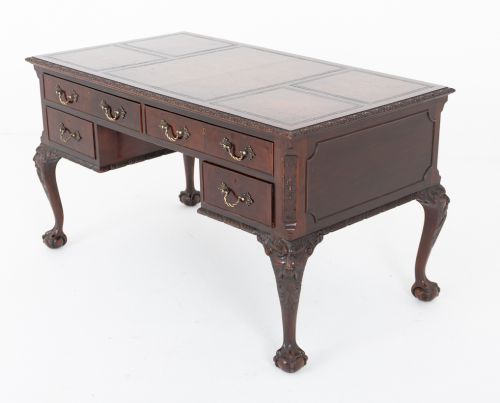
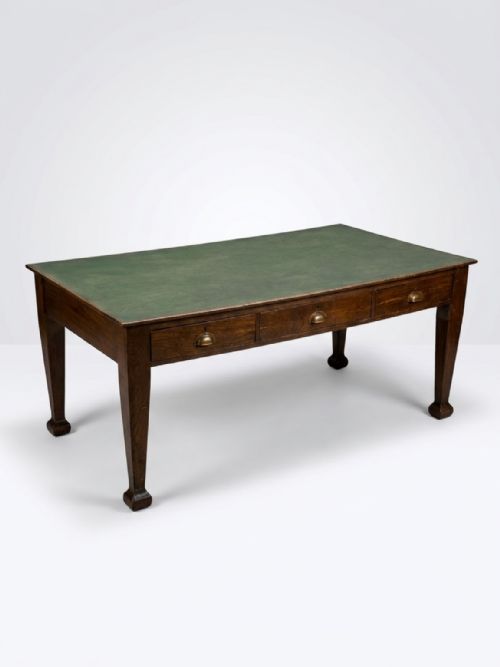
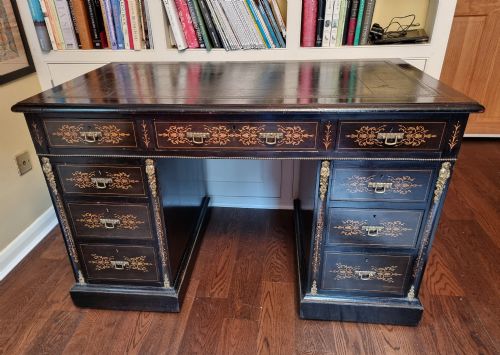
A leather top library desk brings functional elegance to any study, offering a generous writing surface framed in rich timber and supple hide.
Leather Top Library Desk
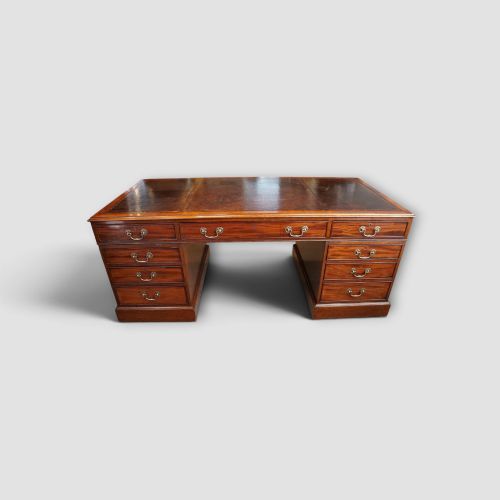
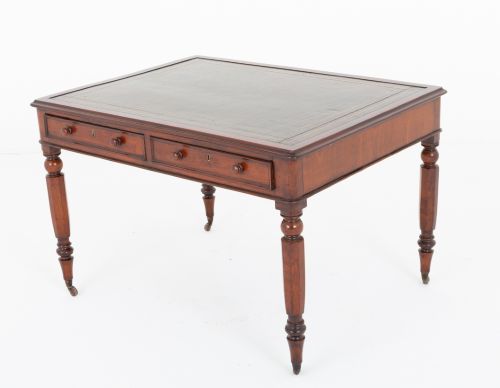
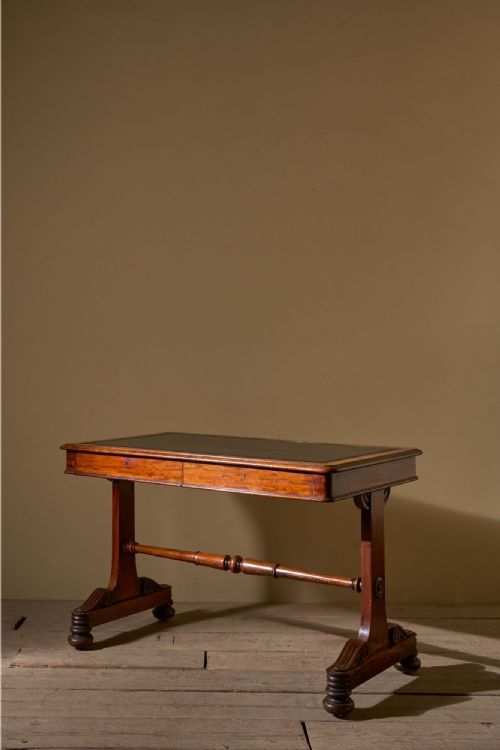
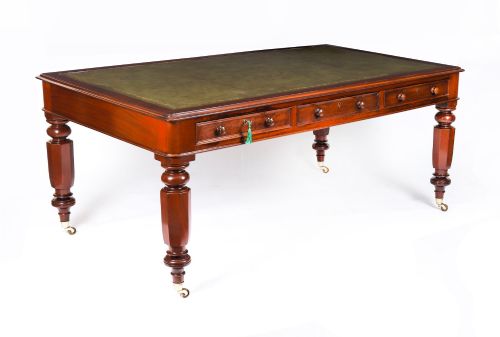
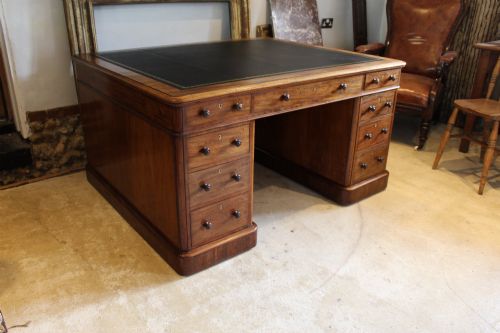
A leather top library desk is a substantial writing piece designed for serious study, administrative work, or library use, originating primarily across the nineteenth century. These forms encompass partners desks, drum tables, and writing tables, offering versatile configurations with multiple drawers or freestanding pedestals.
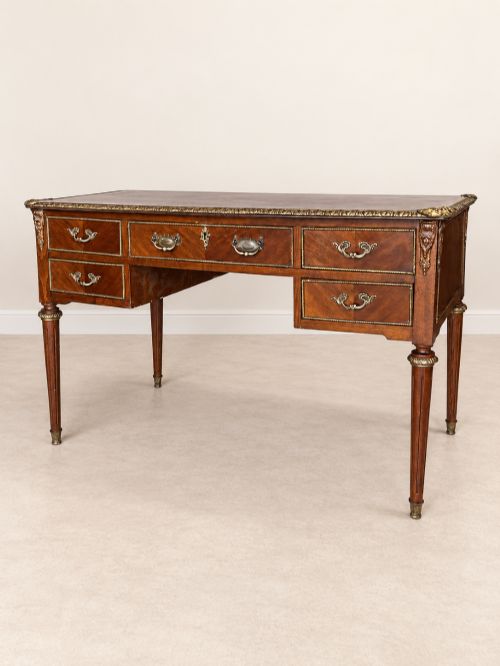
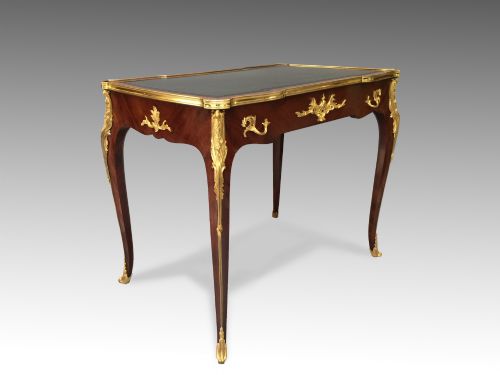
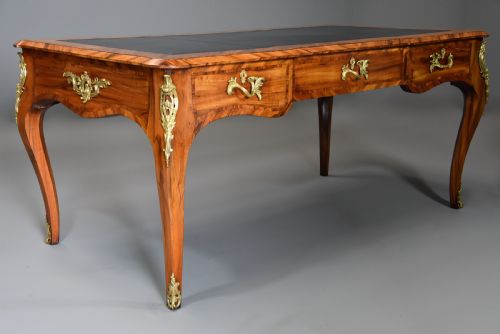
Buyers browsing this selection frequently encounter Victorian mahogany partners desks and walnut library tables, alongside pieces bearing earlier Regency or Georgian influences. The inventory includes both British oak and mahogany creations alongside French bureau plat designs decorated with ormolu mounts.
Pieces span eras from the late eighteenth century through to the Edwardian period, capturing stylistic shifts from neoclassical restraint to ornate Victorian revivals. Whether standing on pillar ends or resting on castors, each item merges utility with period cabinet-making.
How They Were Made
Cabinet-makers constructed these desks using dense hardwoods such as mahogany, oak, walnut, and rosewood, often enhancing surfaces with burr veneers or ebonised finishes. Selected panels were paired with inset leather skivers, occasionally accented with blind tooling or inlaid borders.
Metal components played a structural and decorative role, with brass handles, castors, and gilt bronze ormolu mounts completing the construction. Carved giltwood and painted details appear on select specialist items from the William IV and French revival traditions.
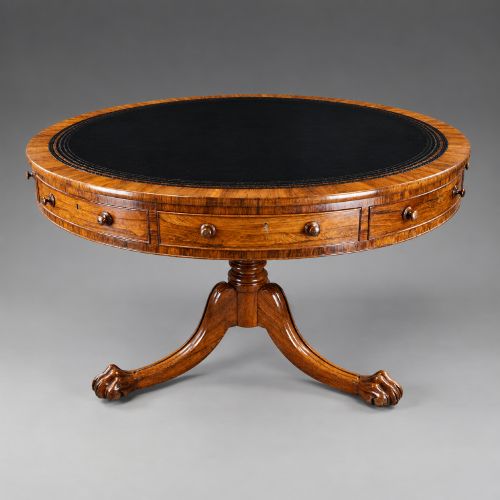
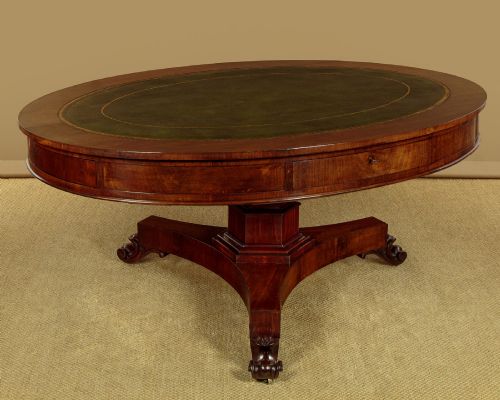
A painted drum table brings a surprising splash of colour to formal nineteenth-century studies.
What Varies in Quality
The distinction between standard examples and superior workshop pieces rests on the choice of timber and the precision of the cabinet-work. Fine grain selection in burr walnut or figured mahogany, combined with secondary timbers like solid oak drawer linings, defines the upper tier.
Execution of detail sets distinguished pieces apart, evident in finely carved mouldings, original brass hardware, and the integration of quality leather work surfaces. Attribution to known makers or documented workshops further separates exceptional examples from ordinary production.
Trollope and sons·Maple and Co·François Linke·Edwards and Roberts·Johnstone and Jeanes·Charles Andrea Nosotti·Holland and Sons·Gillows
The Leather Top Library Desk Glossary
- Partners desk
- A large double-sided desk designed for two people to work opposite one another, featuring drawers on both flanks.
- Bureau plat
- A freestanding French writing table, typically fitted with a leather inset and mounted with gilt bronze or ormolu details.
- Drum table
- A circular library table containing a rotating or stationary top with peripheral drawers, resting on a central pedestal.
- Partners writing table
- A large rectangular table built with storage drawers accessible from both long sides, serving administrative rooms.
- Ormolu
- Gilt bronze mounts applied to furniture, frequently seen on French-influenced pieces from the nineteenth century.
Leather Top Library Desk: Frequently Asked Questions
What is a partners desk?
A partners desk is a large, double-sided piece designed with drawers and cupboards on both faces, allowing two people to work opposite one another.
These desks were traditionally used in studies, libraries, and administrative offices where space was shared.
What woods are typical for these desks?
Mahogany and oak are the most common timbers found in these pieces, alongside walnut and rosewood used for finer decorative effect.
Cabinet-makers also utilised burr walnut and exotic veneers to create striking grain patterns on the writing surfaces.
How should I care for a leather top?
The leather inset requires gentle cleaning with a slightly damp cloth, avoiding harsh chemical solvents or excessive moisture that might damage the hide.
Regular conditioning helps preserve the suppleness and colour of the leather over years of use.