

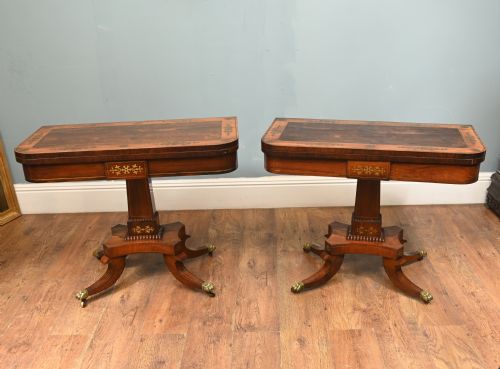
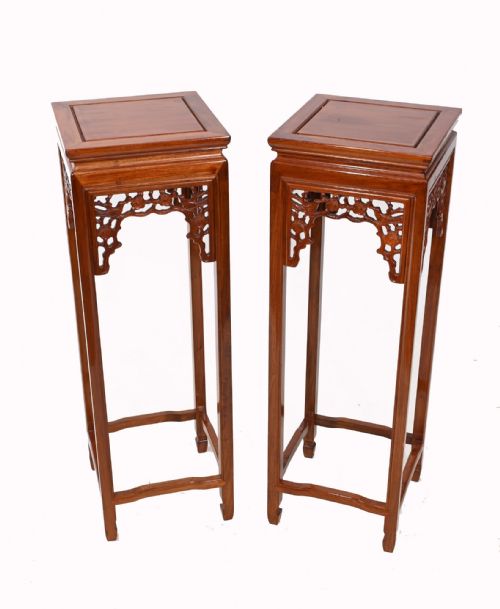
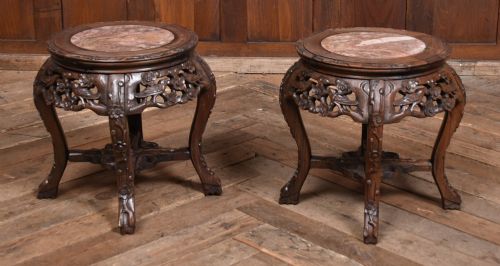


Pair Rosewood Tables
Pair rosewood tables bring symmetry and rich timber grain to a room, spanning formal Regency card tables to Chinese hardwood plant stands.
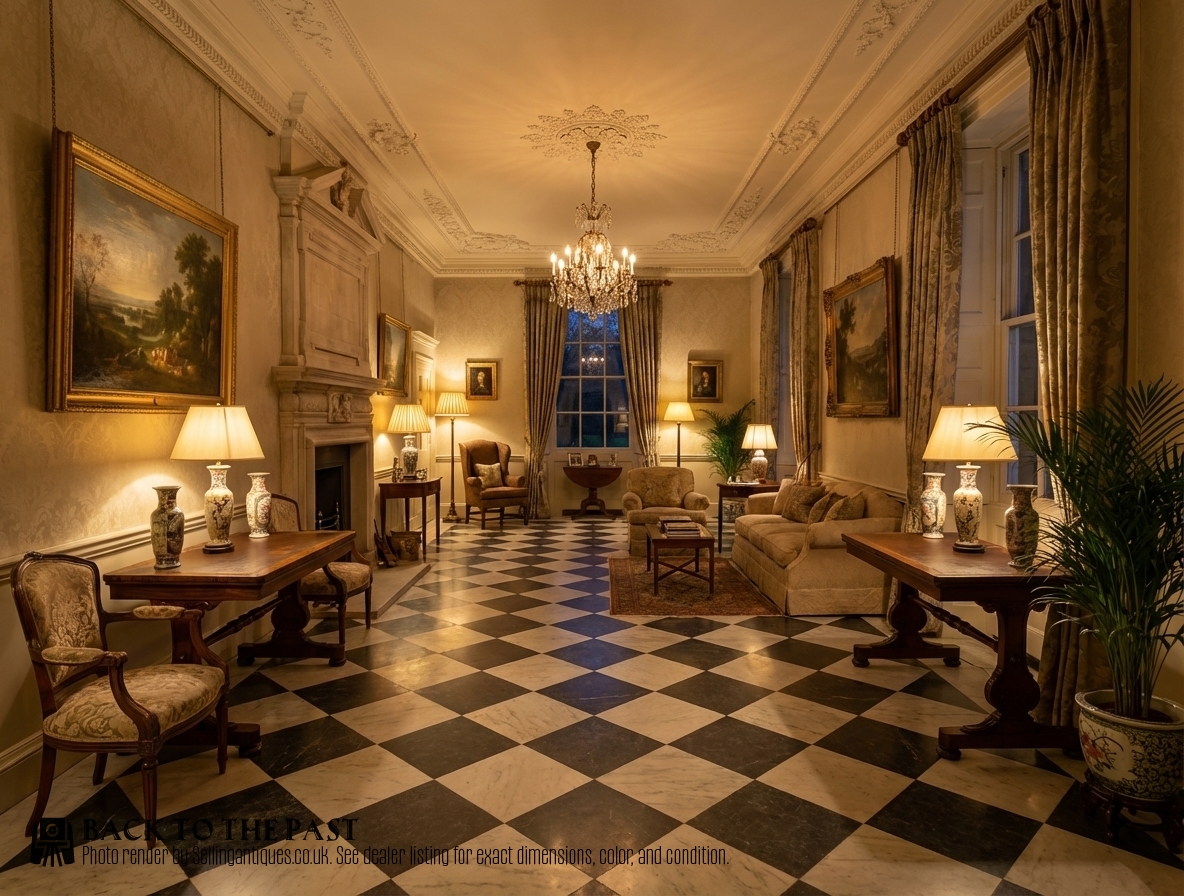
Pair Rosewood Tables
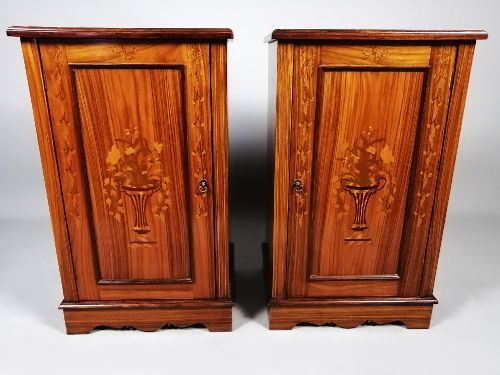
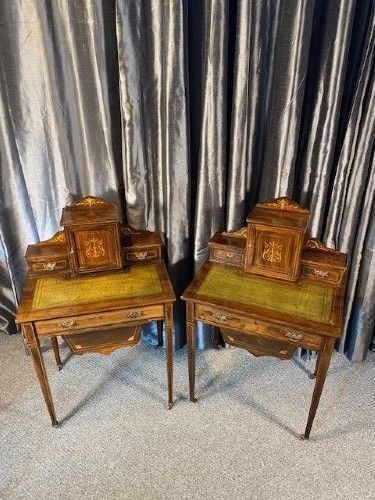
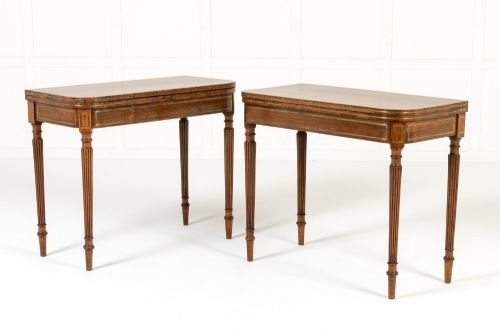
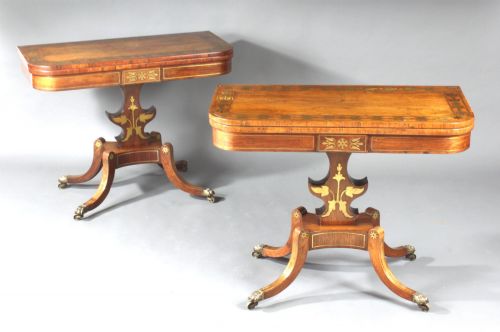
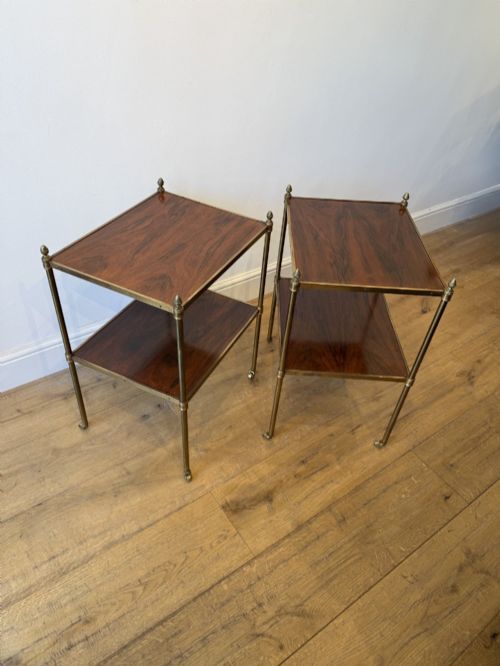
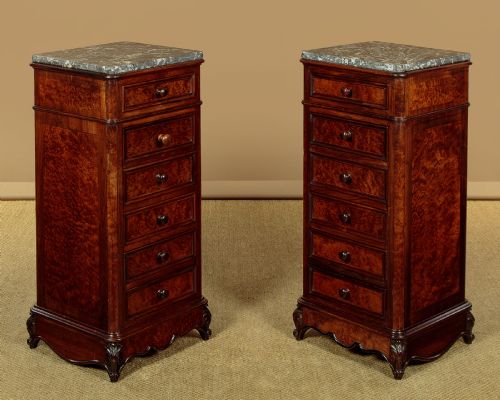
When hunting for pair rosewood tables, collectors encounter a diverse array of forms ranging from English Regency card and library tables to Chinese Qing Dynasty carved huali stands and Victorian bedside cabinets. These matching sets serve functional roles as occasional, writing, or lamp tables while anchoring a symmetrical interior scheme.
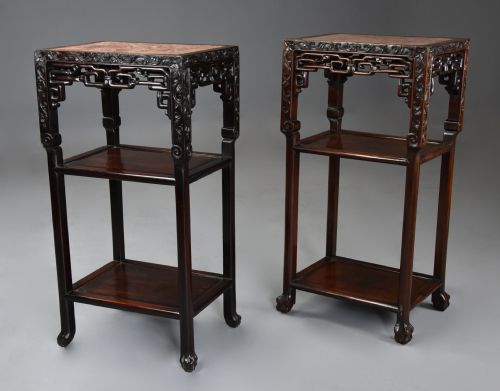
Beyond Western furniture, the selection includes Chinese hardwood stands and low coffee tables utilising padouk and hongmu. These pieces demonstrate the global reach of rosewood cabinet-making across the eighteenth, nineteenth, and early twentieth centuries.
Materials and construction
Cabinet-makers relied on solid rosewood and decorative veneers applied to secondary hardwoods, often incorporating contrasting woods such as satinwood, boxwood, and amboyna for detailed marquetry and inlay work. Brass mounts, stringing, and handles frequently accent the deep, dark grain of the primary timber.
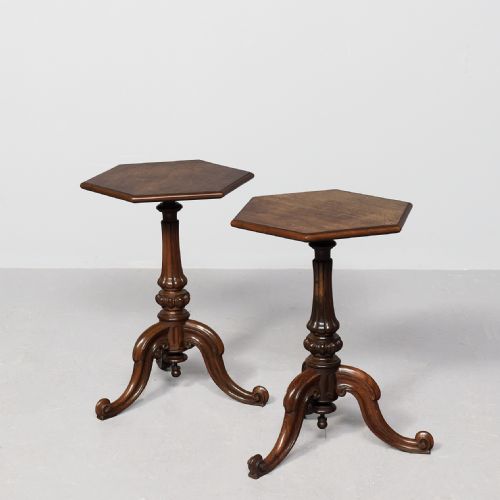
Structural integrity depended on traditional joinery, with turned supports, cabriole legs, and pedestal bases providing stability for wine and occasional tables. Marble tops and inset porcelain panels occasionally surface on French and Chinese stands, adding weight and textural contrast to the timber frames.
Listings span the eighteenth, nineteenth, and early twentieth centuries, incorporating Regency, Victorian, Edwardian, and Qing Dynasty periods.
Distinctions in quality
Quality rests upon the crispness of carved detail, the precision of brass or wood inlay, and the natural figuring of the rosewood grain. Superior examples retain matching timber patterns across both items in a pair, showing deliberate selection by the original maker.
Undivided attention to secondary timbers and internal construction separates workshop output. Pieces attributed to documented makers like Gillows or George Oakley display superior structural joinery and refined proportions that elevate them above standard commercial production.
Mallett·John MaClean·Gillows·George Oakley
The Pair Rosewood Tables Glossary
- Card table
- A folding table designed for games, typically featuring a baize-lined interior surface and a swivelling or fold-over top. These form a large proportion of Regency examples.
- Marquetry
- Decorative patterns formed by fitting together thin slices of various coloured woods and veneers. Craftsmen apply this technique to tabletops and friezes.
- Huali
- A fragrant hardwood native to Asia, frequently utilised in Qing Dynasty stands and tables. It exhibits a distinctive grain and durable structure.
- Etagere
- A set of open shelves for displaying small objects or books, often configured in tiers. These freestanding display pieces appear in nineteenth-century rooms.
- Console table
- A table designed to stand against a wall, frequently secured with brackets. French and English makers shaped these with marble tops and elaborate bases.
Pair Rosewood Tables: Frequently Asked Questions
How were pair rosewood tables used historically?
These tables served various domestic functions, from card playing and writing to displaying porcelain and lighting in formal reception rooms. Card tables unfolded for evening entertainment, while smaller wine and occasional tables stood beside seating.
Bedside cabinets and etageres provided discreet storage and display space in private chambers. Their matched nature offered balanced symmetry across large drawing rooms and parlours.
How do I identify Regency rosewood tables?
Regency pieces often feature classical proportions, brass inlay, and reeded or sabre legs reflecting early nineteenth-century neoclassical taste. Makers frequently utilised rich Brazilian rosewood paired with intricate brass stringing.
Look for crisp turning on pedestal supports and high-grade cabinet construction typical of the period between eighteen hundred and eighteen thirty.
What is the difference between European and Chinese rosewood tables?
European examples generally follow neoclassical, Victorian, or Edwardian furniture styles with veneered surfaces, marquetry, and turned legs. They focus on functions like writing, card games, and bedside storage.
Chinese pieces utilise dense indigenous hardwoods like huali, padouk, and hongmu with carved relief decoration, marble inserts, or porcelain panels. Their forms concentrate on plant stands, vases, and low coffee tables.
How do I care for antique rosewood furniture?
Protect rosewood from direct sunlight and dramatic humidity shifts to prevent timber splitting and veneer lifting. Regular dusting with a soft, dry cloth preserves the polished finish.
Avoid silicone-based polishes and excessive moisture. Traditional wax feeds the timber and maintains the natural lustre of the grain.