


Mahogany Partners Table
A mahogany partners table offers dual-sided workspace, making these generous double-pedestal desks and library tables essential for shared studies.
Mahogany Partners Table
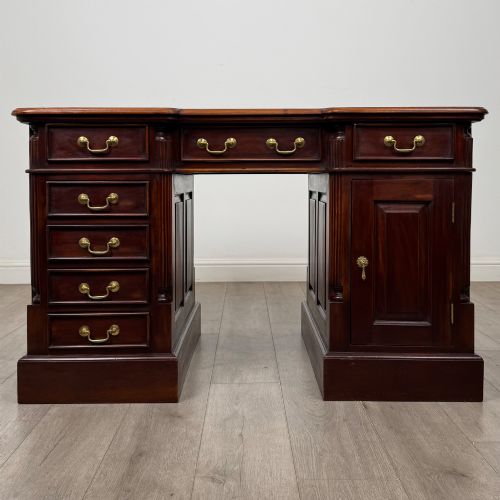
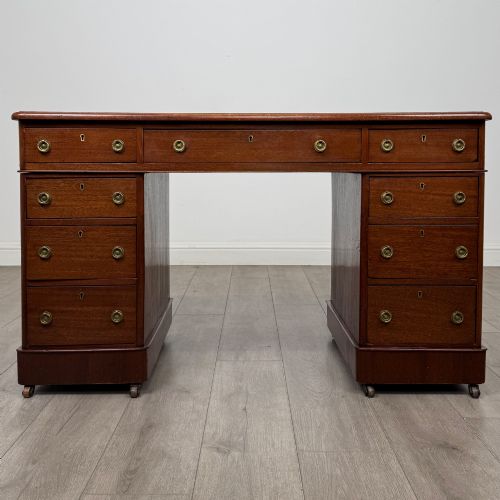
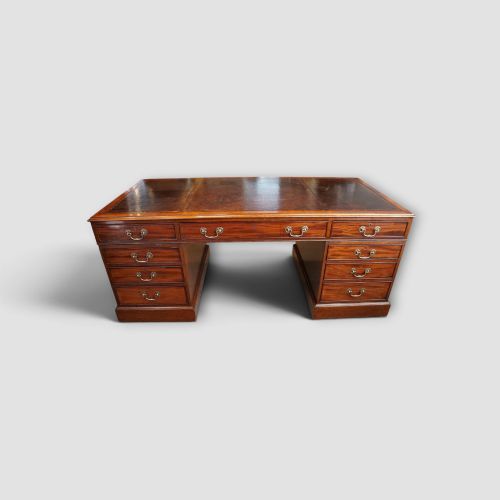
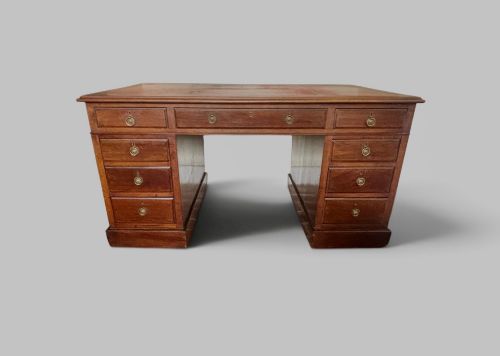
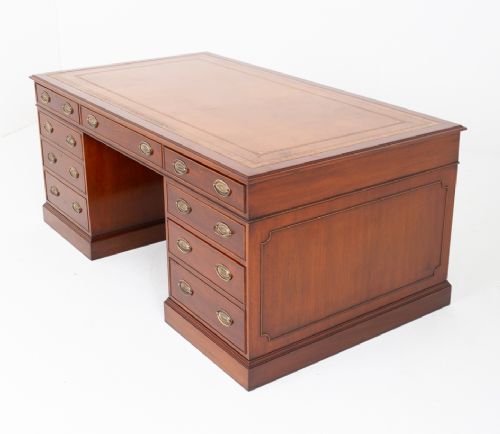
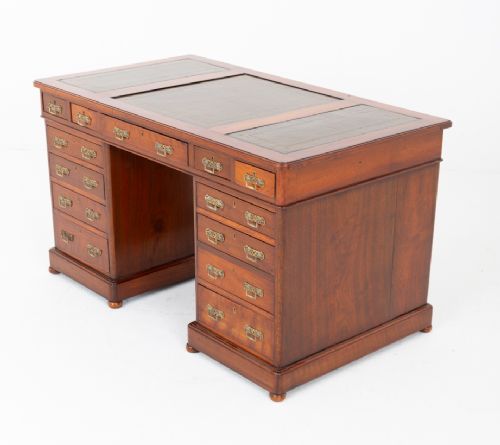
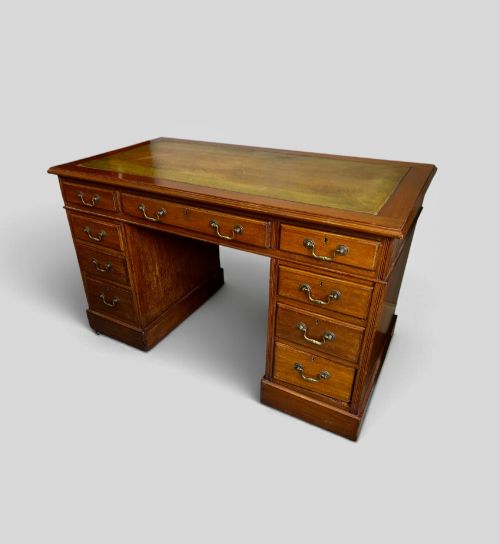
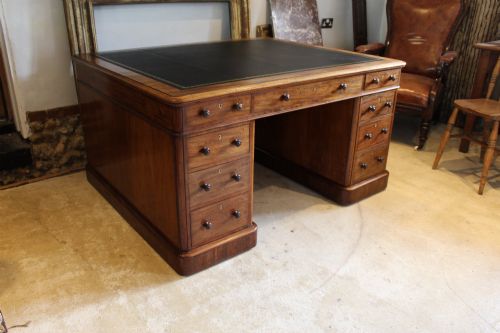
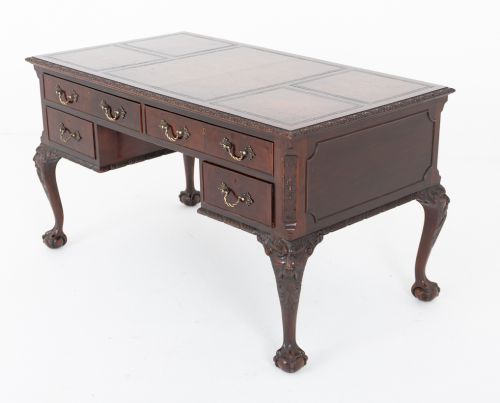
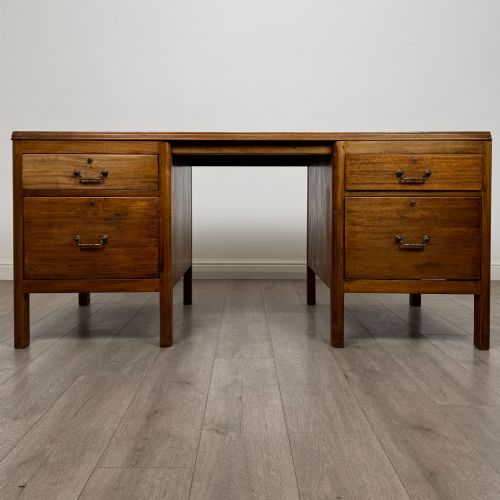
A mahogany partners table is a substantial double-sided desk designed for two people to work opposite one another, incorporating drawers or cupboards on both flanks. You will most frequently encounter Victorian and 19th-century examples on this page, alongside earlier George III, Regency, and William IV iterations.
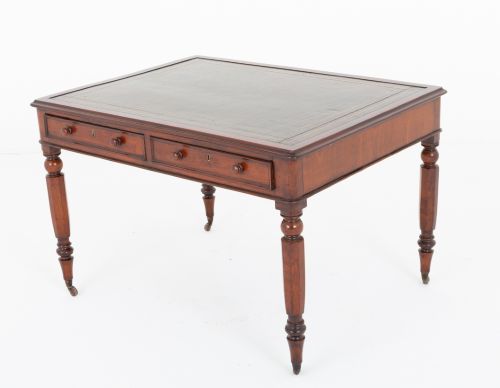
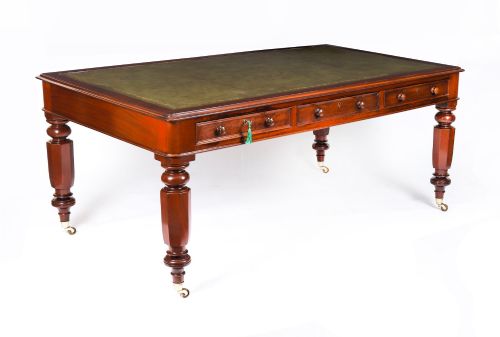
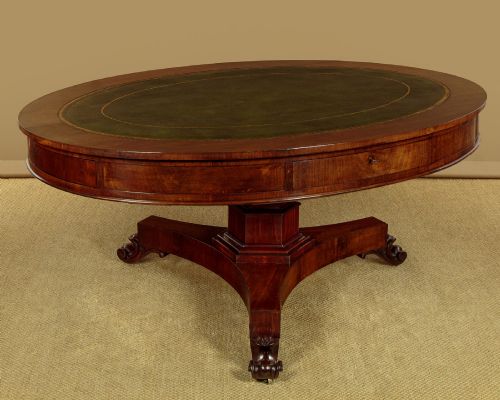
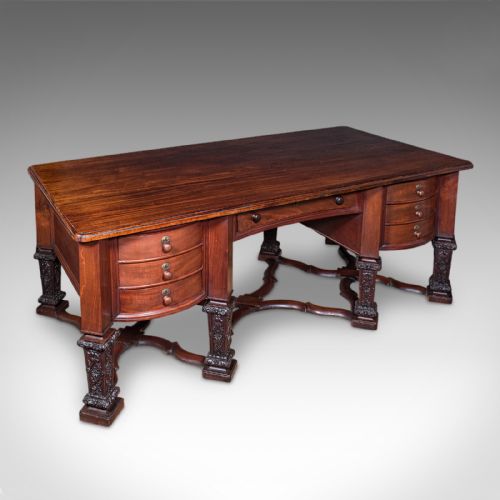
The form spans pedestal desks with banks of drawers flanking a central kneehole, and freestanding library writing tables supported on legs or pedestals. These pieces originate primarily from English workshops, frequently drawing on Georgian design principles or later revivals.
Materials and Construction
Cabinet makers built these tables using solid mahogany and flame mahogany veneers over secondary timbers, often incorporating brass hardware and inset leather writing surfaces. Finer examples integrate satinwood stringing, marquetry inlay, ebonised wood, or gilt wood details.
Construction relies on deep pedestal carcases or robust table frames designed to withstand heavy daily use from both sides. Drawers are traditionally dovetailed, and writing surfaces are often tooled with gold leaf onto leather.
Many partners tables secretly hide tiny locking mechanisms inside the kneehole cupboards, designed to secure confidential ledgers from prying eyes on the opposite side.
Distinctions in Standard
Quality rests upon the selection of timber, particularly the grain and figuring of the flame mahogany veneer used across the principal surfaces. The depth of the carved details, the crispness of any brass banding or inlay, and the retention of the original leather writing surface also dictate the standing of a piece.
Workshop attribution elevates certain examples, with tables bearing stamps or signatures from noted cabinet makers commanding particular attention. The preservation of a fine, faded natural patina over the mahogany separates standard utilitarian pieces from exceptional ones.
Trollope and sons·Charles Andrea Nosotti·Edwards and Roberts·Maple and Co·Gillows·W Priest
The Mahogany Partners Table Glossary
- Partners desk
- A large double-sided desk featuring matching drawers or cupboards on both front and back elevations, built for two people to sit opposite each other.
- Pedestal desk
- A form of desk comprising two independent pedestals of drawers that support a wide top, leaving a central kneehole space.
- Flame mahogany
- A highly figured veneer cut from the fork of the mahogany tree, displaying distinctive flickering flame-like patterns.
- Tooled leather
- A leather writing surface decorated around the outer edges with blind or gold-leaf stamped patterns.
- Kneehole
- The central recessed space beneath the desk top designed to accommodate the sitter's legs.
Mahogany Partners Table: Frequently Asked Questions
What is a mahogany partners table?
A mahogany partners table is a large double-sided desk or library table built with drawers and storage accessible from both the front and the back.
This symmetrical design allowed two people, such as business partners or bankers, to work opposite each other at the same piece of furniture.
How do I style a partners table?
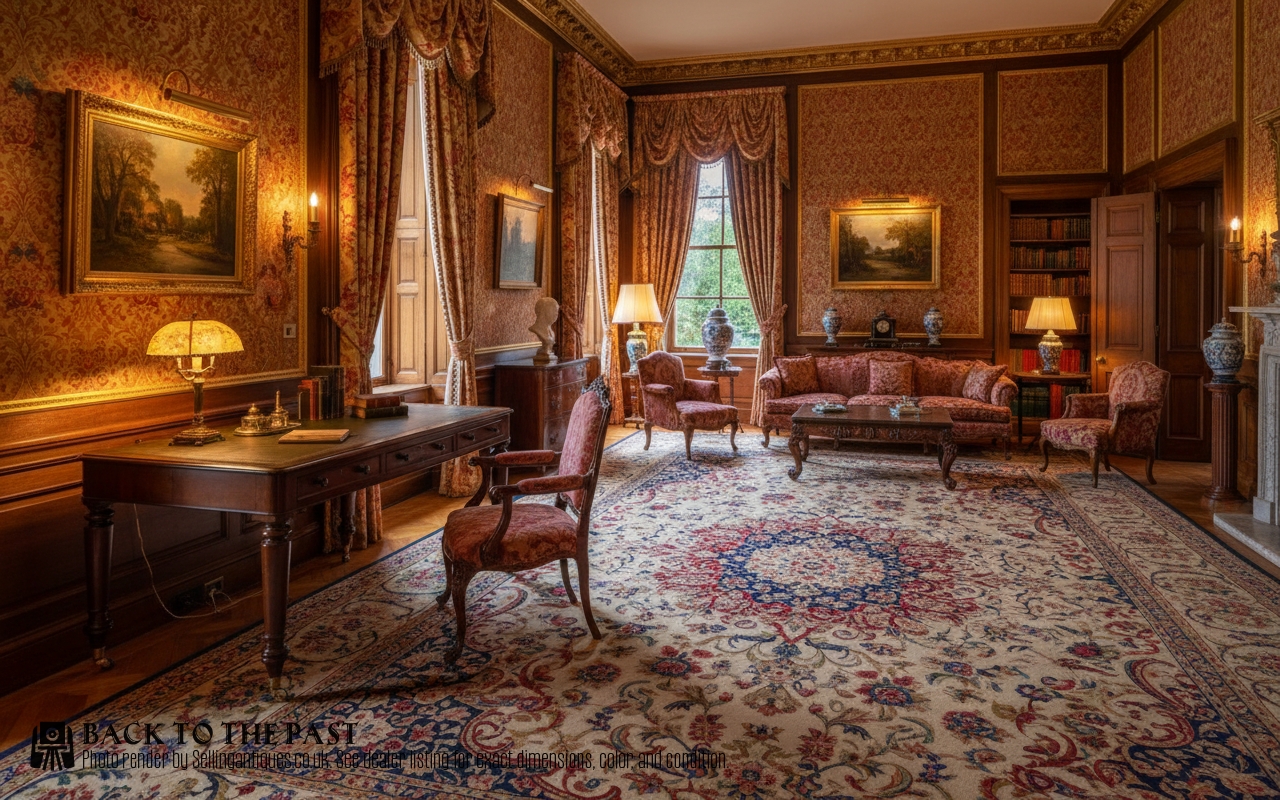
Because these tables are finished on all sides and freestanding, they work best positioned in the middle of a room rather than pushed against a wall.
Pair the desk with a matching leather armchair and ensure adequate floor space around all sides to appreciate the dual-sided drawer configuration.
How do I identify a Victorian partners table?
Victorian examples generally date from the mid-to-late nineteenth century and frequently exhibit dark mahogany timbers, mahogany-lined drawer carcasses, and tooled leather inserts.
They often incorporate traditional revival styles, drawing heavily on earlier Georgian proportions while utilising heavier Victorian mouldings.
What is the difference between a partners desk and a library table?
A partners desk typically consists of two pedestals filled with banks of drawers supporting a wide writing top with a central kneehole.
A library table is usually a freestanding writing table supported on legs or pedestals with a frieze of drawers beneath the top, lacking the heavy twin-pedestal banks.